Budget Law

Deadlines, instalments and files to be amnestied: the decalogue of the new tax amnesty

The facilitated definition is extended by one and a half years, allowing the amnesty also for the loads entrusted to the tax authorities in the period from 1 July 2022 to 31 December 2023. It is possible to pay the amount due in a single instalment, by 31 July 2026, or in a maximum of 54 equal two-monthly instalments over a period of nine years

by Giuseppe Morina, Salvina Morina and Tonino Morina

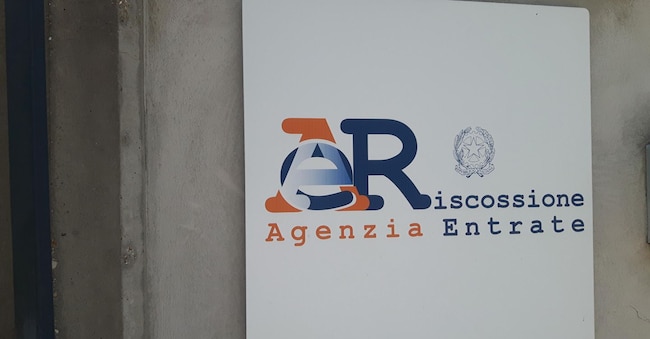
Una veduta esterna della sede centrale dell'Agenzia delle entrate-Riscossione

7' min read

Translated by AI
Versione italiana

7' min read

Translated by AI
Versione italiana

The correction quinquies unravels the cards, extending the facilitated definition of tax bills from 30 June 2022 to 31 December 2023. Considering that with the quater rottamazione it was possible to define the loads entrusted to the tax authorities from 1 January 2000 to 30 June 2022, with the quinquies it will also be possible to scrap any other loads entrusted to the tax authorities in the period from 1 July 2022 to 31 December 2023, thus covering a period of 24 years.

Those taxpayers who have "lapsed" due to non-payment, insufficient payment or late payment of one or more instalments of the "quater" tax amnesty will also be eligible for the "quinquies" tax amnesty. However, debts claimed as a result of an assessment are excluded, even if they were part of the previous amnesty. Payment slips already subject to the "quater" tax amnesty, even after readmission, for which payments were regular as at 30 September 2025, will not be eligible for the "quinquies" tax amnesty.

Loading...

Compared to the previous versions of the 'rottamazione ter' and 'rottamazione quater', the 'rottamazione quinquies' does not provide for the so-called 'tolerance' of five days for payments. The only tolerance will therefore be the calendar tolerance, in cases where the due date is a Saturday, Sunday or public holiday.

1) Defined 24 years of debt, from 2000 to 2023

Article 23(1) of the five-year scrapping rule, which is about to be introduced by the Budget Law for 2026, states that debts resulting from individual loads entrusted to the collection agents from 1 January 2000 to 31 December 2023, arising from the failure to pay taxes resulting from annual declarations and from the activities referred to in Articles 36-bis (automated settlement of amounts due on the basis of declarations submitted) and 36-ter (amounts due following formal control of declarations) of the decree on tax assessment, Presidential Decree 600/1973, and in Articles 54-bis (automated settlement of VAT due on the basis of declarations submitted) and 54-ter (automated controls on taxpayers) of the decree on tax assessment, Presidential Decree 600/1973.

2) How and when to pay

Payment of the sums due (para. 2) may be made in a single instalment, by 31 July 2026, or in a maximum number of 54 equal two-monthly instalments:

(a) the first, second and third, respectively, on 31 July 2026, 30 September 2026 and 30 November 2026;

(b) from the fourth to the fifty-first, respectively, on 31 January, 31 March, 31 May, 31 July, 30 September and 30 November of each year as from 2027;

(c) from the fifty-second to the fifty-fourth, respectively, on 31 January 2035, 31 March 2035 and 31 May 2035.

In the case of payment in instalments (para. 3), interest at a rate of 4 per cent per annum is payable as from 1 August 2026.

3) Application for membership by 30 April 2026

The collection agent shall make available to debtors, in the reserved area of its institutional website, the data necessary to identify the definable loads. Paragraph 5 establishes that the debtor shall manifest to the collection agent his willingness to proceed with the facilitated definition, by making, by 30 April 2026, a special declaration, in the exclusively telematic manner, that the same agent shall publish on its website within twenty days from the date of entry into force of the law; therefore, with the Budget Law in force from 1 January 2026, the declaration of adherence will be published on the website of the collection agent, by 21 January 2026. With the declaration of adherence, the debtor also chooses the number of instalments in which he intends to make the payment, within the maximum limit of 54 bi-monthly instalments.

4) Stop pending litigation

Nella dichiarazione di adesione (comma 6) il debitore indica l’eventuale pendenza di giudizi aventi ad oggetto i carichi in essa ricompresi e assume l’impegno a rinunciare agli stessi giudizi, che, dietro presentazione di copia della dichiarazione e nelle more del pagamento della prima o unica rata delle somme dovute, sono sospesi dal giudice. Per l’estinzione dei predetti giudizi, l’effettivo perfezionamento della definizione si realizza con il versamento della prima o unica rata delle somme dovute. L’estinzione è dichiarata dal giudice d’ufficio, dietro presentazione, da parte del debitore o dell’agenzia delle entrate Riscossione che sia parte nel giudizio o, in sua assenza, da parte dell’ente creditore, della dichiarazione di adesione, e della comunicazione che, entro il 30 giugno 2026, l’agente della riscossione dovrà inviare ai debitori che hanno presentato la dichiarazione, nonché della documentazione attestante il versamento della prima o unica rata. L’estinzione del giudizio com

5) How the amount due is determined

Paragraph 8 of the manoeuvre states that, for the purposes of determining the amount of the sums to be paid, account shall be taken only of the amounts already paid by way of principal included in the loads entrusted and by way of reimbursement of the costs of enforcement procedures and of service of the payment notice. If the debtor has already paid the full amount due as a result of previous partial payments, in order to benefit from the effects of the definition, he must nevertheless express his willingness to adhere to it in the manner provided for in paragraph 5. This may be the case of taxpayers who have 'forfeited' their right to the payment of an instalment under the quater arrangement, but who have already paid the full amount due. The amounts relating to definable debts, paid for any reason, even before the definition, shall remain final.

6) The benefits of definition

Paragraph 10 provides that, following the submission of the declaration, in respect of the definable loads that are the subject thereof:

(a) limitation and prescription periods are suspended;

(b) payment obligations arising from previous deferments outstanding at the date of submission are suspended until the due date of the first or single instalment of the sums due under the definition;

(c) no new administrative attachments and mortgages may be entered, without prejudice to those already entered on the date of submission;

(d) no new enforcement proceedings may be commenced;

(e) previously commenced enforcement proceedings may not be continued unless the first successful auction has been held;

(f) the debtor is not considered to be in default for the purposes of Articles 28-ter "payment by voluntary set-off with tax credits" and 48-bis "provisions on payments by public administrations" of Presidential Decree 602/1973;

(g) the provision of Article 54 of Decree-Law No. 50 of 24 April 2017 shall apply for the purposes of the single document of regularity of contribution (DURC), which may be issued, following the presentation by the debtor of the declaration of his wish to avail himself of the facilitated definition.

7) The Collection Communication

Paragraph 11 provides that, no later than 30 June 2026, the collection agent shall inform debtors who have submitted the declaration of adherence to the five-year arrangement, of the total amount of the sums due for the purposes of the definition, as well as the amount of the individual instalments, which cannot be less than €100, and the due date of each instalment. For debtors who have submitted the declaration in the reserved area of the institutional website of the collection agent, the communication shall be made available exclusively in that area.

8) How to pay

Paragraph 12 states that payment of the sums due for the definition may be made:

(a) by direct debiting to the debtor's current account in the manner indicated in the notice sent by the collection agent;

(b) by means of pre-filled payment forms, which the collection agent makes available on its website;

(c) at the counters of the collection agent.

It is also provided (paragraph 13) that, limited to debts for which the facilitated definition declaration has been submitted:

(a) as at 31 July 2026, the suspended deferrals are automatically revoked and no new deferrals may be granted;

(b) payment of the first or single instalment of the sums due under the settlement determines the termination of any enforcement proceedings previously commenced, unless the first successful auction has been held.

9) When scrapping quater is ineffective

Paragraph 14 states that the definition has no effect in the event of non-payment or insufficient payment:

(a) of the single instalment chosen by the debtor to make the payment;

(b) two instalments, even non-consecutive, of those in which the debtor has chosen to defer payment;

(c) of the last instalment of those in which the debtor has chosen to defer payment.

The limitation and lapse periods for the recovery of the declared loads, which continues to be carried out by the collection agent, begin to run again, and the payments made are acquired as an advance on the total amount due following the entrustment of the load, without the remaining debt being extinguished.

10) Resumption of old, ineffective definitions and red disc for those who are up to date with payments

Paragraph 18 stipulates that they can be extinguished, according to the rules of the quinquies:

(a) even if the ineffectiveness of the relevant definition has been determined with respect to them, also debts relating to the loads entrusted to the collection agents from 2000 to 2017 that were the subject of declarations made pursuant to the rules:

(1) Article 6(2) of Decree-Law No 193 of 22 October 2016 (First Scrapping);

(2) Article 1(5) of Decree-Law No 148 of 16 October 2017 (Scrapping bis);

(3) Article 3(5) of Decree-Law No 119 of 23 October 2018 (rottamazione ter);

(4) Article 1(189) of Law No. 145 of 30 December 2018 (reopening of scrapping ter);

(5) Article 16-bis(1) and (2) of Decree-Law No 34 of 30 April 2019 (reopening of terms for previous scrapping);

(b) also the debts relating to the debts entrusted to the collection agents from 1 January 2000 to 30 June 2022 for which, as at 30 September 2025, the ineffectiveness of the definition has been determined, included in declarations made in accordance with the law:

(1) Article 1(235) of Law No 197 of 29 December 2022, Budget Law for 2023 (Scrapping Quater);

(2) Article 3-bis(1) of Decree-Law No 202 of 27 December 2024 (readmission to scrapping quater).

Paragraph 19 provides that debts resulting from individual loads entrusted to the collection agents from 1 January 2000 to 30 June 2022 for which, as at 30 September 2025, all instalments due by the same date had been paid, and which are included in declarations made in accordance with the provisions of the five-year arrangement, cannot be discharged under the provisions of the five-year arrangement:

(a) Article 1(235) of Law No 197 of 29 December 2022, Budget Law for 2023 (Scrapping Quater);

(b) Article 3-bis(1) of Decree-Law No 202 of 27 December 2024 (readmission to scrapping quater).


Copyright reserved ©
Loading...

Brand connect

Loading...

Newsletter

Notizie e approfondimenti sugli avvenimenti politici, economici e finanziari.

Iscriviti