

Schillaci attacks the regions: 'No more tricks on waiting lists'

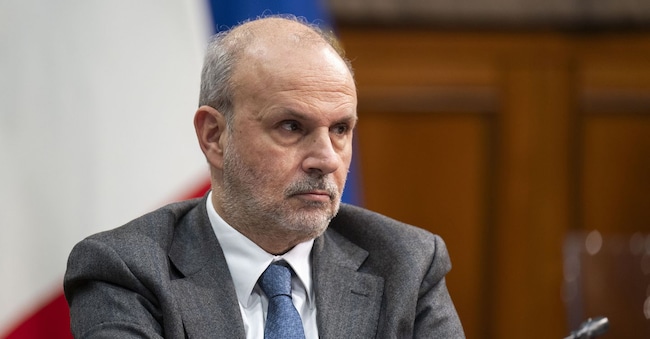
The minefield of waiting lists is once again dividing the Ministry of Health and the Regions. Yesterday, Minister Orazio Schillaci - bolstered by the numbers of the Nas, which in two years of inspections have triggered 1,700 complaints - launched a clear j'accuse against those who administer healthcare at the local level: from the governors down to the managers of ASLs and hospitals, guilty of failing to control abuses, shortcuts, and even tricks to fix the queues that citizens are forced to endure in order to obtain healthcare services. "The regions must commit themselves. The general and health directors must be more attentive. This is not a request: the law provides for it. And here I must be direct. They must immediately stop those practices, and practices is an understatement, that consist in manipulating data to appear in order when in order you are not. Clean agendas on paper, apparently short lists, standards adhered to at least in the records. These are tricks that I call scandalous, they are artefacts just to show standards that then do not correspond to what citizens see every day. The only effect they have is to hide the true conditions of the services those citizens are entitled to receive. This is not a technical problem. It is a problem of honesty.
The minister, who was speaking in the morning at the presentation of the balance sheet of the Nas, which in 2025 alone carried out more than 1,900 checks on waiting lists, tokenisation and intramoenia ("phenomena linked to each other", said General Raffaele Covetti), also returned to the hot topic of waiting lists during the question time at the Chamber of Deputies in the afternoon, defending his law approved a year and a half ago, which is "largely operational", but whose rules "must be applied". In the crosshairs, among other things, the free professional activity of doctors in hospital - the so-called intramoenia - which by law should never exceed institutional activity (that paid for by the SSN): "If a citizen is sent away because the waiting lists are closed, but if he magically pays for it there are doctors, rooms and equipment available, this is not unfair. It is inhuman'. Hence the call for tighter controls where the waiting list game is played, i.e. 'in the wards where every day someone decides whether to respect the rules or circumvent them', as in the case of intramoenia: 'There is an obligation on the part of the company directorates to check. In addition, when waiting lists exceed the prescribed time, the General Directorates must also guarantee services through freelance work, but at the price of the public tariffs, i.e. only with the co-payment'. This is the 'queue-jumping' mechanism envisaged by the law that Schillaci wanted in the summer of 2024 but which remained largely on paper.
Then there is the knot of the National Platform on Waiting Lists, also provided for by Schillaci's plan to make transparent all the data on waits at the level of individual hospitals, a useful service for citizens and for those who govern health care, but still not at full capacity also because of the regions that have asked for more time before publishing them. The platform is managed by Agenas, the Agency for Regional Health Services, which today could see a change in governance with the appointment of the members of the new board of directors at the Unified Conference. Appointments that could cause the current commissioner Americo Cicchetti to lapse, slowing down the start-up of the platform: on the track for the presidency is the name of Jonathan Pratschke, professor of sociology at the Federico II University in Naples (on the recommendation of the president of Campania, Roberto Fico), while as general director the name of Angelo Tanese, a health manager with experience in the secret services, is advancing, useful in terms of cybersecurity, given that Agenas manages delicate dossiers such as the electronic health record of Italians.

