

Schillaci is pushing to bring the NHS budget closer to 6.4 per cent of GDP: an additional 4–5 billion is needed
The meeting between the Minister for Health and the Minister for the Economy, Mr Giorgetti, to decide on the allocation for healthcare spending in the forthcoming Budget Bill

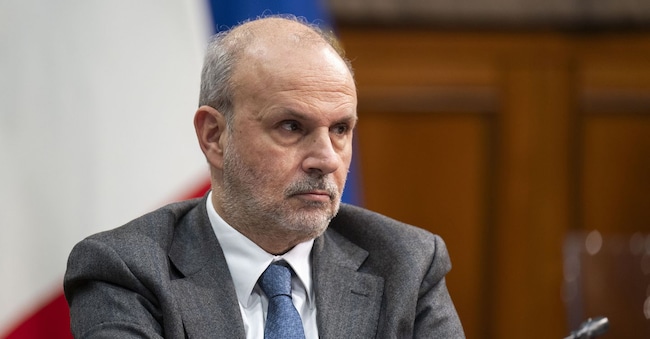
Funding is needed to recruit doctors and nurses for the new local healthcare system, which already has over 1,200 community centres; furthermore, funds are required to reduce waiting lists and to give substance to the new National Health Plan, which will be approved after thesummer; and further resources are needed to make salaries more attractive for those working in the National Health Service. Above all, however, the number one priority is to ensure that the level of the National Health Fund – the resources on which the NHS relies every year – which currently stands at just over 6 per cent of GDP – and to bring it as close as possible to actual healthcare expenditure, which also includes additional resources provided by the regions and other items such as the co-payments made by citizens: a benchmark that in recent years has hovered around 6.3–6.4 per cent of GDP and which holds more than symbolic significance for the entire government. Falling too far below this level – especially now that the 2027 general election is approaching – could leave the government open to attacks from the opposition, which often raises the spectre of cuts to healthcare. That is why today, Health Minister Orazio Schillaci, who is meeting his counterpart at the Ministry of Economy and Finance (MEF), Giancarlo Giorgetti, will reiterate the need – ahead of the forthcoming budget – to secure the resources required to remain above the ‘cuts’ threshold and thus as close as possible to that benchmark. The Health Minister’s demands on the eve of his meeting with the Minister for the Economy are pushing for an additional 5 billion per year over the next three years, not least because last year’s Budget Lawwhich projected the Health Fund to exceed 143 billion by 2026, allocated decreasing levels of funding for the following two years: for 2027, there is in fact only an extra billion, to which they would like to add between 3 and 4 billion through the new budget.
It is unlikely that the Minister for the Economy will fully satisfy his counterpart at the Ministry of Health, but it was Giorgetti himself who, in recent days whilst discussing defence spending, emphasised that there was no intention within the Government “in any way to reduce spending on education and healthcare”. Today, therefore, following the late-morning meeting between the two ministers, we will begin to get a clearer picture of what the actual additional funding available to the National Health Service might be. The NHS will first and foremost have to try to fully implement all the changes introduced by the National Recovery and Resilience Plan (PNRR), which, as is well known, funds the construction of infrastructure but not its day-to-day running. And so, additional funding will be needed to pay salaries and cover recruitment costs.
However, the issues to be resolved in the forthcoming budget bill also concern the thorny issue of expenditure on pharmaceuticals and medical devices. Following on from last year’s budget measures, officials are considering raising the spending caps governing these two sectors, which are consistently underfunded. As for the pharmaceutical sector – which is also at the centre of tensions with Trump’s United States, which has singled out medicines for scrutiny – radical changes to the formulary, which were in the pipeline precisely because of a provision in last year’s budget bill, now appear to have been shelved. The idea put forward by the Medicines Agency to set a lower reference price per therapeutic area – which had sparked protests from pharmaceutical companies – appears to have been shelved: instead, minor adjustments to spending are on the cards.


