
Waiting lists

Rocca (Lazio): 'Schillaci's law works, this is how'

For the president, the money is needed, but 'the point is to start doing good spending', and with regard to the tug-of-war between the minister and the regions over the implementation of the regulations, he explains that 'an arbiter is needed'.
by Barbara Gobbi

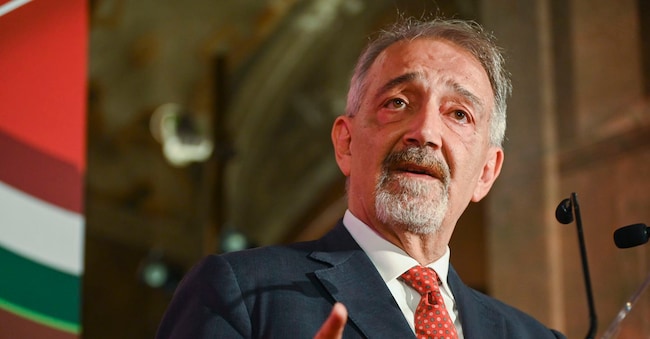
FRANCESCO ROCCA PRESIDENTE REGIONE LAZIO

3' min read

3' min read

"Waiting lists are a systemic problem and to be tackled requires the analysis of an entire territory: this has been our priority. And even before the Schillaci decree, we created the single Cup that includes private accredited providers. To the seventeen centres that refused to make their booking agendas available, the contracts were not renewed'. For Francesco Rocca, at the head of the Lazio Region presented as a virtuous model by Minister Schillaci, the anti-list law 'goes in the right direction'.

Regions complain of a risk-interference by the ministry...

Loading...

The health service is universal and must be guaranteed for all citizens: if there is a major difficulty in a territory, I believe it is right that the national government should deal with it. On the one hand there is an ordinal principle that worries my fellow presidents with respect to the profile of responsibility in the management of healthcare, which the Constitution attributes to the Regions; on the other hand there may be fears of interference, which I personally have never perceived. What is certain is that someone has to referee.

Among other things, the minister denounces wastefulness or non-use of resources.

Many technical tasks we had anticipated and this allows us to appear as the best performers: to have started from the reading of the need in order to respond appropriately and promptly to shortcomings also means spending money well. Putting resources on lists without knowing where to intervene means throwing them into a black hole

Looks like Abc but several regions are far away

I cannot answer for the others, but today we give precise indications and monitor in real time. This is a job that in the past we did not want to do, but in order to govern expenditure I need to know the system as a whole. This is a fundamental and non-negotiable part of the Schillaci law, also because otherwise there is a risk of further increasing demand.

Is there already an issue of excessive demand today?

Certainly: inappropriate prescribing generates bad spending. With pharmaceutical prescriptions from family doctors costing me 76 million in one year, clear guidelines are needed. We are talking about a complex system where each piece is linked to the other. All these issues must be addressed together.

Do you think there is a problem with public health resources?

Money is needed but the point is to start spending well. Those 76 million inappropriate prescriptions can go to improve waiting lists and services. Then it is clear that with an ageing population, needs grow and resources are needed. Not only that: as waiting lists are cut down, we will also recover in the public sector those who today turn to the pure private sector. This means that the queue-eliminating effect of the Schillaci law through Recup will also unfold its full benefits in the medium term.

The big issue of staff shortages and distortions such as closed agendas remain.

With the 14,000 hirings that we will complete by the end of the year, we have increased the number of staff by almost 20 per cent, and even in this case the plan was drawn up once the impact of demand had been analysed. As for the closed agendas, they are unacceptable: as I tell my general managers, once all the staff have been employed, the recipe is not to block the lists but to ask the Region for solutions.

Copyright reserved ©
Loading...

Brand connect

Loading...

Newsletter

Notizie e approfondimenti sugli avvenimenti politici, economici e finanziari.

Iscriviti