
The Minister of Health

Schillaci: 'With the platform we will better manage waiting lists, citizens report abuses'

A year and a half after the approval of the plan, the minister calls on everyone, regions and ASLs, to do their part because rules, resources and tools, starting with the new National Platform on Waiting Lists, are there

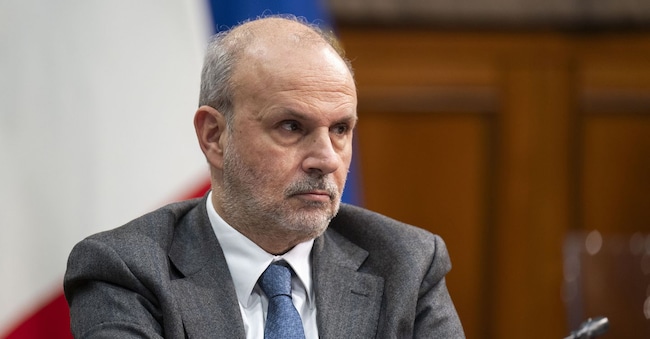
ORAZIO SCHILLACI MINISTRO SALUTE

4' min read

Translated by AI
Versione italiana

4' min read

Translated by AI
Versione italiana

Orazio Schillaci is perhaps the first health minister to take the emergency of waiting lists head-on. Now, a year and a half after the approval of his plan, he is calling on everyone - from the regions to those who manage local health authorities and hospitals - to do their part because rules, resources and tools, starting with the new national platform on waiting lists, are there.

 What do you say to those who criticise you by saying that you see no effects?

Loading...

There are regions that apply the law, for example by opening clinics at weekends, and the results are there. There are realities where recall bookings have recovered many services that would have been lost. There are facilities that have reorganised themselves to better manage diaries and increase availability. Those who criticised in the past simply chose not to deal with the problem. I have done so. We are talking about a phenomenon that has become chronic over decades and that will not be solved in a flash. But if you ever start, things do not change. Today there are clear rules, laid down by law, and in recent years we have also given the resources

The new platform, as the data show, is able to monitor waiting times per service in each hospital. This was not possible before. How will you use the data?

The data help us to really understand trends in waiting times or whether there are too many services in intramoenia, i.e. those paid for by citizens. And this allows us to urge the regions in a targeted manner and also to activate specific controls as we did with the Nas. Citizens can consult the data on a national level through the platform, but the regions have asked us to wait before also publishing the data at the level of individual companies and services. We are ready.

The data show that there are still services for which you have to wait several hundred days in a facility. How do you intervene in these cases?

The ministry has a power of control and supervision, which we are exercising through constant dialogue with the regional presidents who, in various territories, are well aware of the urgent need for a change of pace at the organisational level. It is really unacceptable that denied services are recovered in a flash as soon as a camera appears. We do our part, but the most effective control is that of the facility directors.

In the past few days you have scolded the regions on waiting lists, urging them not to tweak or rig the data. Will there be a need in extreme cases to use the substitutive powers that are provided for by law, or can having the data today allow us to work together?

I am convinced that by working together we can make a breakthrough. Substitutive powers are an extreme solution provided for by law, but it is primarily in the interest of the regions to show their citizens that they are able to improve the efficiency of their services. This means that if a company does too much intramoenia, I expect the general director to intervene to enforce the law; if there are closed agendas - which are prohibited by law - the Region must intervene on the company

Citizens who pay for services in free practice are waiting a few days: should intramoenia be changed or should it be better controlled to avoid abuse and by whom?

The law is clear: intramoenia activity must not exceed that guaranteed by the National Health Service. And the law also says that the general managers of the companies must check that this rule is respected by also intervening with the suspension of intramoenia. The law gives elements to avoid abuses, these are tools that must be put in place if we want to give answers to citizens.

One of the most favourable rules for the citizen that you wanted is the possibility, in the event of a delay, for the Cup to have the service in the private intramoenia free of charge or paying only the co-payment. Is it applied? And can the citizen defend himself if he is refused this possibility?

Some regions have activated services to implement this rule, but it is still not enough. It is a citizen's right that must be guaranteed and the company must do it. It is not permissible for him to be refused. If this happens, it should be reported. And I assure you that we receive reports and we take them up immediately with the region concerned. We will soon start a communication campaign precisely to raise the awareness of every citizen about their rights.

The plan on waiting lists also foresaw some interventions such as the unification of regional Cups in order to have all the availabilities between public and private contracted. Where do the regions stand?

Some regions have already done this, others are doing it. It is a challenge that we must take home: the private contracted parties must make their contribution, it is not permissible for them to provide only the most advantageous services. In addition to this, it is also essential to train Cup personnel.

According to the plan, regions also have the possibility of opening clinics at weekends and in the evenings and paying doctors and nurses better overtime. Is this a possibility they are using and is it working?

In Piedmont it has been done and it has worked. In 2025, more than 250,000 out-of-hours visits were provided, as the Region reports, and they are working on a plan for 2026 as well. A model that I believe is replicable

Copyright reserved ©
Loading...

Brand connect

Loading...

Newsletter

Notizie e approfondimenti sugli avvenimenti politici, economici e finanziari.

Iscriviti