
School Decree: 30 per cent cap on foreign pupils, ban on the burqa and new sixth-form colleges
The measure also provides for increased funding for textbooks and the 4+2 pathway. Technical and vocational schools are to be renamed. From the 2027/28 academic year, Latin (optional) will be taught from the second year of lower secondary school.

Key points
From the 2027/28 school year, headteachers responsible for forming year-one classes will have an additional factor to bear in mind: the 30 per cent cap on pupils with non-Italian citizenship, which until now had been set out in an old circular from 2010 and which now acquires the force of law. Alongside this, on the one hand, are certain codified exemptions to this threshold and, on the other, the provision that, for the subgroup of new arrivals in our country, the teaching staff will decide the class to which they are assigned, without the fixed range of one year above or one year below the class corresponding to their chronological age, as previously provided for by a Presidential Decree implementing the Bossi-Fini Law. This is provided for in the schools decree, which was approved yesterday by the Council of Ministers and which also introduces stricter measures regarding anyone entering a school with their face concealed by a burqa, a niqab or even a helmet.
Ban on the burqa and niqab
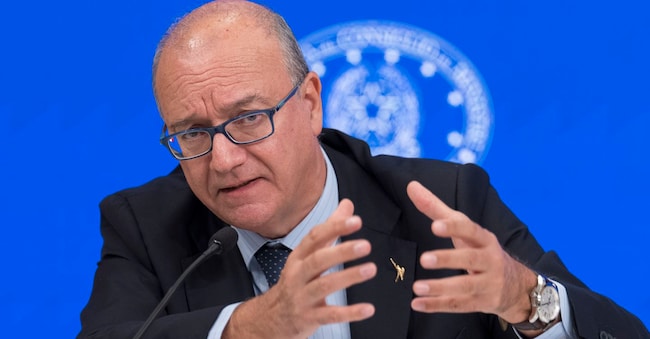
Any offenders will face a fine of between 200 and 1,000 euros, to be imposed by the prefect following a report from the headteacher. The only permitted exceptions relate to ‘specific health reasons’ or ‘reasons relating to teaching and educational activities’. The ban therefore applies to both parents and pupils. Furthermore, should anyone decide to stop sending their children to school in order to circumvent the ban, they would face imprisonment as provided for in the Caivano decree and as reiterated by the Minister for Education and Merit, Giuseppe Valditara, at the press conference following the Council of Ministers meeting.
30 per cent cap on foreign pupils
On that occasion, the Minister for Education highlighted another key provision of the Decree-Law: the 30 per cent cap on foreign students, to apply from the 2027/28 academic year for the first years of school. After mentioning a series of funding measures that have been introduced (including an additional 21 million for textbooks, with a simultaneous increase in the ISEE threshold from 30,000 to 40,000 euros, and 14 million for the electronic teacher’s handbook, which forms part of a wider digitalisation plan for families and teachers), Valditara reiterated that the threshold applies to ‘foreign pupils who do not have an adequate command of our language’. In reality, Article 12 of the measure – at least according to the drafts circulated yesterday – does not explicitly state this requirement, but leaves it to be inferred. It specifies that this applies to primary school pupils who are neither Italian nor born in Italia and who have not completed two years of nursery school, and to those in lower and upper secondary school who have completed three years and have also been promoted.
Italian language courses
For new arrivals, the rule already applies from this year, but 3.4 million has been allocated for 2027 and 14.1 for 2028, which will be used to fund any extracurricular remedial activities in Italian. This is already the case in classes where more than 20 per cent of pupils are new arrivals in Italia. In the event of overbooking, headteachers and local education authorities – who will also be required to appoint an enrolment coordinator – will be responsible for finding a local school.
The crackdown on parents
The requirement for knowledge of Italian is, however, explicitly stated in relation to intervention in cases where the language barriers faced by foreign parents constitute an obstacle to communication with the school, with negative repercussions on the children’s development and learning. In particular, the school is required to report such situations to the relevant local social services so that parents may be required to attend a literacy and Italian language course, provided free of charge by the Provincial Centres for Adult Education (CPIA). In the event of refusal, a fine of between 200 and 1,000 euros will also be imposed. This does not involve the removal of children from their families, as had been suggested in early drafts but was subsequently removed following discussions with the President of the Republic.

Brand connect


Newsletter Scuola+
La newsletter premium dedicata al mondo della scuola con approfondimenti normativi, analisi e guide operative
Abbonati