
Schools and foreign nationals: from language courses to tests and the headscarf – how it works in other countries
From German special classes to the British ‘full immersion’ approach, there are numerous models adopted by other Western countries

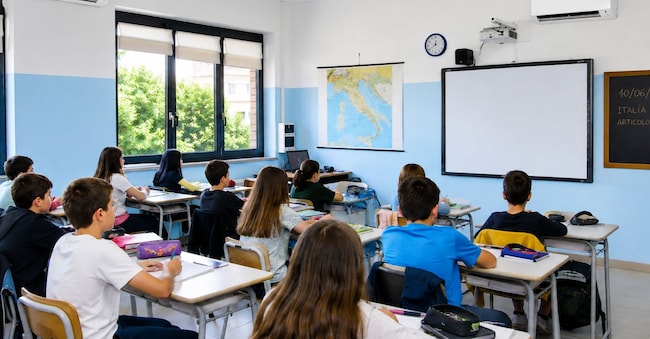
Speaking before an audience of members of Gioventù Nazionale, the Prime Minister Giorgia Meloni announced the imminent introduction of a measure that will cap the number of foreign pupils in classes. The Minister for Education, Giuseppe Valditara, has clarified that the criterion will be ‘purely linguistic’ and has assured that the decree will not break up classes, but the measure continues to spark controversy. From the United States to Sweden, the models adopted by other Western countries regarding the inclusion of immigrant children in their education systems vary. All of them, however, albeit in different ways, are based on an understanding of the language and follow a clear approach: no percentage quotas or rigid caps, but language tests and temporary transition classes.
Europe
In Germany, regulation in this area is left to the individual Länder, but the model adopted involves the temporary placement of children who do not speak the language in special classes (Willkommensklassen). The aim is to bring them up to a minimum standard before integrating them with the rest of the pupils. The idea behind the French system is similar. Integration takes place in two stages. Pupils, who are supported by the Unité Pédagogique pour Élèves Allophones Arrivants, are immediately placed in mainstream classes for non-verbal subjects (such as art, PE or maths), whilst they must attend French language courses for a certain number of hours per week. In the Netherlands, primary school children who do not speak the language are placed in bridging classes offering intensive courses. They may attend these on a full-time, part-time basis or as an extension of the school day.
The British model is different, as it involves a genuine ‘full immersion’ approach and does not include transition classes. Foreign pupils study alongside their peers from the very start, with the support of specialist teachers who are present in the classroom alongside the class teacher.
The situation in Belgium is more complex, as the system varies between the linguistic communities. Whilst in Flanders intensive courses are provided in ‘taalheldklassen’, in the French-speaking community pupils may be placed on Daspa programmes, which offer intensive courses in French and core subjects for up to 18 months, or receive language support through the FLA scheme, which does not necessarily involve a separate class.
The Scandinavian countries
In Sweden, the status of ‘new arrival’ applies for up to four years from the date of entry into the country. Students who do not speak Swedish are placed in special preparatory classes (förberedelseklass), but are also integrated into mainstream classes.

