
Schools: ‘risk of sweltering classrooms’ – the CGIL calls for the start of term to be postponed. Valditara allocates 20 million to cool classrooms
The Minister for Education: “We are also working on a broader plan to improve energy efficiency in schools”

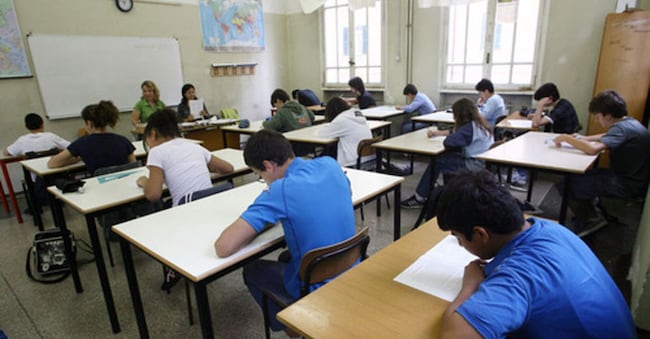
Although it is now September and schools are about to reopen, the grip of the sweltering heat shows no sign of letting up across much of the country. However, according to a survey by the specialist magazine Tuttoscuola, nine out of ten school buildings are reportedly without air conditioning, making it more difficult for pupils to return to the classroom given the high temperatures. It is precisely for this reason that the Flc Cgil trade union has launched an appeal calling for the start of lessons to be postponed ‘if the conditions are not in place to comply with Decree 81 on health and safety’. The Minister for Education, Giuseppe Valditara, has announced the allocation of a 20 million fund to cool classrooms.
The trade unions’ appeal
Gianna Fracassi, a teacher and general secretary of the Flc Cgil, emphasised that ‘there were three months to carry out the work, but nothing has been done, and in some areas it is unbearable to spend 5–6 hours in a classroom with 20–30 people. There are reasons that apply to everyone, not just to building sites in the middle of the road’. Fracassi called on the authorities to take action: ‘The issue is there; let them choose the solutions they want, but let them choose’.
Ivana Barbacci, secretary of CISL Scuola, also commented on the resumption of lessons, albeit in a more cautious tone. “The school calendars,” said Barbacci, “are regional precisely so that they can better accommodate any requirements linked, for example, to temperatures, so there is nothing to prevent the various regions in central and southern Italy from starting the school year after 15 September, whilst paying particular attention to ensuring a minimum of 200 school days, which would obviously mean the school year ending after 15 June.”
Giuseppe D’Aprile, secretary of Uil Scuola, on the other hand, has expressed openness to the idea of postponing the resumption of teaching, whilst emphasising that this cannot be a permanent solution: ‘Postponing the start of lessons by a few days, and making up the lost time later, may be a stopgap solution in the face of particularly high temperatures, but it cannot be the answer to a problem that is becoming structural.’
According to D’Aprile, in fact, the real problem – in the face of climate change, which is gradually prolonging periods of intense heat – “is the outdated state of a significant proportion of our school buildings, which were designed and built under climatic conditions very different from those of today. Around six in ten school buildings date from before 1975, and the vast majority of Italian schools still lack air-conditioning systems’.
Brand connect


Newsletter Scuola+
La newsletter premium dedicata al mondo della scuola con approfondimenti normativi, analisi e guide operative
Abbonati