Austria: the heat is affecting concentration in the classroom
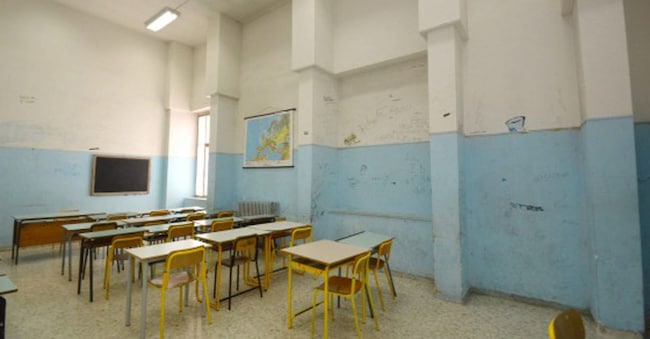
The problem of high temperatures is also evident in Austria. A scientific survey carried out by the Austrian Institute of Technology during the heatwave of June 2026, involving over 1,500 pupils and teachers, found that 88 per cent of those surveyed considered the temperature in school buildings to be a source of discomfort. Three-quarters of the participants reported difficulty concentrating, tiredness and exhaustion, whilst more than half complained of headaches.
Measurements carried out by the University of Natural Resources and Life Sciences, Vienna, at a school in the capital had already highlighted the problem in May and June 2025. Temperatures had exceeded 27 degrees on 25 days and 30 degrees on as many as 16 days. In some cases, classrooms were already too hot in the morning, with temperatures around 28 degrees. Carbon dioxide levels had also repeatedly exceeded 1,400 parts per million.
Elisabeth Gutenberg, headteacher at the Maroltingergasse secondary school in Vienna, explains the impact on teaching. “Every year we see how difficult lessons become during the hottest months, not only for the pupils but also for the teachers,” she said. “Sometimes the classrooms get so hot that the children suffer from circulatory problems.”
Romania: 97 schools still lack adequate toilet facilities
In Romania, some of the most pressing issues relate to sanitation facilities. On 9 October 2026, the government approved 7.849 million lei – approximately 1.6 million euros – for sanitation works in 97 state schools across 16 districts.
The funds are earmarked for institutions with inadequate facilities, including outdoor toilets and premises without running water or connections to the sewerage system. The works were due to benefit from funding already allocated in 2025, but had not been carried out or completed by the end of the year.
The incident also highlights the pace of the administrative process: the school year began on 7 September, whilst approval of the new funding was granted on 9 October.
The problem is not limited to toilet facilities. At the start of the 2026–2027 school year, the Minister for Education, Mihai Dimian, reported that around 700 schools were facing ongoing renovation work, fire safety approvals yet to be obtained, or a shortage of space due to rising pupil numbers. According to the minister, these situations affected around 3 per cent of pupils.
Conditions can vary considerably even within the same area. In the village of Balta Arsă, in the district of Botoșani, over 80 children at the nursery and primary school started the school year in a building equipped with interactive whiteboards and digital tools, but which still has outdoor toilets. The local council explained that the installation of indoor toilets has been postponed pending the construction of a new school, for which a project costing around 3 million euros has been submitted.
The contrast between technological modernisation and a lack of essential services is one of the most striking aspects of infrastructural inequalities. An institution may have up-to-date digital tools at its disposal without yet being able to guarantee adequate physical conditions.
According to Ion-Ovidiu Pânișoară, a professor of Education at the University of Bucharest, the difficulties facing the Romanian school system are also linked to chronic underfunding and a lack of continuity in public policy.
‘A child who arrives at a school in appalling condition learns that school doesn’t matter,’ he observes. ‘Everyone tells them that education is important, but the conditions tell them the opposite.’
The lecturer also drew attention to the situation facing teachers, who face heavy workloads, unattractive salaries and a lack of social recognition. To improve the system, he argues, it is not enough simply to introduce new reforms: long-term investment, greater support for teachers and a specific commitment to reducing the gap between urban and rural schools are needed.
Bulgaria: from modern laboratories to rural schools without heating
In Bulgaria, too, the condition of school buildings reflects regional disparities. According to the OECD report *Education and Skills in Bulgaria*, published in June 2025, more than half of the country’s schools have fewer than 200 pupils. Small schools, particularly in rural and remote areas, face greater difficulties in securing resources.
A 2020 UNICEF study cited in the report highlights that some rural schools continue to face problems with heating during the winter and lack indoor toilets, sports facilities or science laboratories.
In large cities, however, the main challenge is a lack of space. The growth in the urban population has contributed to overcrowded classrooms and the widespread adoption of a two-shift system. In Sofia, more than half of all pupils attend school under this system.
According to OECD data relating to PISA, 24 per cent of Bulgarian pupils attend schools where headteachers report infrastructure shortcomings that hinder teaching, at least to some extent. This percentage remained unchanged between PISA 2022 and PISA 2025.
The government has invested in the modernisation of facilities. On 30 September 2026, it announced the completion of over 2,000 laboratories dedicated to science, technology, engineering and mathematics, as part of a programme involving 2,271 state and local authority schools.
However, difficulties remain regarding the upkeep and quality of the premises. At the start of 2025, according to the Ministry of Education and Science, 865 schools were in need of repairs. By the summer of that same year, 624 schools were still in need of repairs.
Protests by students at a vocational technical school in Varna have shown that these issues are not confined to rural areas. The students have raised concerns about the use of specialist classrooms and equipment, the departure of a number of teachers, and problems relating to the school’s funding and management.
In Plovdiv, however, the reopening of a sixth-form college specialising in the humanities following renovation work has sparked fresh controversy. Parents have published photographs of classrooms so cramped that there is little room to move between the desks. According to reports, some rooms have been partitioned off to create more classrooms, with the risk that this may fail to meet the requirements set out in national legislation.
A European problem, but responses remain fragmented
Whilst there are significant differences between countries, the picture that emerges is one of education systems grappling with common challenges: buildings designed for climatic conditions different from those of today, inadequate maintenance, staff shortages and wide disparities between regions.
The issue of infrastructure is closely linked to that of equal opportunities. In Romania, according to OECD data from PISA 2025, the gap in science results between 15-year-old students from advantaged and disadvantaged socio-economic backgrounds stands at 122 points. In France, it stands at 100 points, compared with an OECD average of 85 and 71 points in Spain.
These figures do not prove that the condition of buildings is the direct cause of differences in academic performance, but they do show the extent to which educational inequalities remain a structural problem.
The issue is also political. In Greece, the programme to refurbish state schools, supported by the Onassis Foundation with a donation of 160 million euros, aims to upgrade schools located mainly in areas facing socio-economic difficulties. However, the project has fuelled a debate on access: according to critics, selecting pupils through entrance exams risks turning the improvement of facilities into an opportunity reserved for only a section of the school-going population.
Essentially, the issue is not merely about renovating a few schools, but about ensuring adequate standards for all pupils. As the Romanian professor Pânișoară points out, the effects of decisions on education are not immediately apparent. ‘If cuts are made today, the consequences may not become apparent straight away. But they will be seen in ten or fifteen years’ time.’
The protests in France and the demonstrations in other countries thus bring back into focus a question concerning the future of European education systems: how credible is it to regard education as a priority when pupils are still having to cope with unfit classrooms, inadequate toilets and lessons without teachers?
*This article forms part of the European collaborative journalism project “Pulse” and was produced with contributions from Theo Anders (Der Standard, Austria), Kostas Zafeiropoulos (EfSyn, Greece), Adelina Mărăcine (HotNews, Romania), Desislava Koleva (Mediapool, Bulgaria), and Lola García-Ajofrín (El Confidencial, Spain).