
Security Decree published in the Gazzetta, here are the regulations that come into force today
President of the Republic Sergio Mattarella signed the security decree, which was published in the evening in the Official Gazette. The provisions of the measure (which incorporates all the remarks that emerged in the discussion with the Colle), almost all of which enter into force today.

5' min read
Key points
- Prevention and counter-terrorism
- Police and military protections
- Bodycam on uniforms and unlicensed private weapons
- Legal protection
- Toughened penalties for those who do not stop at traffic police stop sign
- Jail crackdown
- Roadblock becomes a crime
- The crime of squatting
- Hacking and scamming the elderly
- Begging, punishment for using children up to 16 years old
- Sim to migrants, just an ID card
- Jails and work
- Regulations that do not come into force immediately
5' min read
President of the Republic Sergio Mattarella signed the security decree, which was published in the evening in the Official Gazette. The provisions of the measure (which incorporates all the remarks that emerged in the discussion with the Colle), almost all of which come into force today, Saturday 12 April. From the crime of "possession of material for terrorist purposes" to the strengthened protections for agents and military personnel, the decree that replaces and surpasses the Ddl being examined by the Senate is broad and complex, tracing the articles in their entirety but incorporating the remarks made by the Quirinale. Here are the main measures immediately in force
Prevention and Counter-Terrorism
The first article introduces the offence of possession of material for terrorist purposes. A penalty of two to six years' imprisonment is imposed on anyone who procures or possesses material containing instructions on the preparation and use of deadly war devices, weapons, chemical or bacteriological substances and any other technique or method for the perpetration of acts for the purpose of terrorism. The threshold of punishability is also raised for anyone who distributes, disseminates or publicises by any means material containing instructions for the preparation and use of explosive materials essential for the commission of seriously offensive offences.
Police and military protections
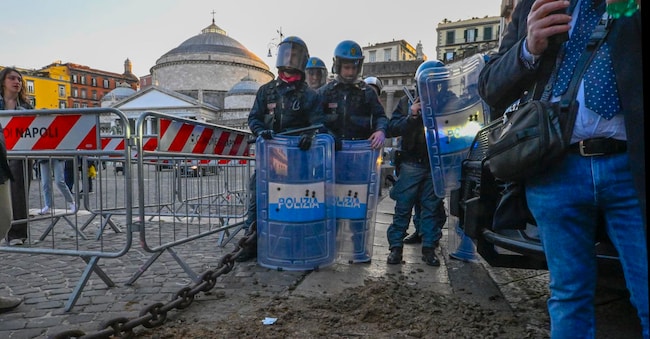
There is a substantial package of regulations for the police and armed forces. An aggravating circumstance is introduced for the crime of violence or threatening and resisting a public official if the act is committed against an officer or agent of the judicial police or public security with an increase in the penalty by up to half. There is also a further aggravating circumstance in the case of violent acts committed in order to impede the construction of an infrastructure (the so-called 'no Bridge or no Tav' rule), but it is specified in the text of the Law Decree that the infrastructures are those 'intended for the supply of energy, transport services, telecommunications or other public services'. It also introduces the new offence of personal injury to an officer or agent of the judicial police or public security in the act or due to the performance of their duties.
Bodycam on uniforms and unlicensed private weapons
.Police forces will be allowed to wear bodycams on their uniforms, i.e. video surveillance devices suitable for recording operational activity in public order maintenance services, territorial control, surveillance of sensitive sites, as well as on trains and on board trains. The same power is provided for in places and environments where persons subject to restriction of personal freedom are detained. Officers are also authorised to carry private weapons without a licence when not on duty.
Legal protection
.For members of the police force, the National Fire Brigade and the Armed Forces investigated or accused for facts related to service activities, the State may pay up to EUR 10,000 for legal costs at each stage of the proceedings. Recourse is envisaged if it is established that the employee is responsible for wilful misconduct. Recourse is excluded, on the other hand, in the event of a decision not to prosecute, for lapse of the statute of limitations, for archiving, and in other cases of acquittal (unless, for the facts contested in the criminal proceedings, the employee has been found liable for gross negligence in disciplinary proceedings). In addition, the defence of movable and immovable property used in the exercise of public functions is strengthened: in the case of defacement and defacement, there is a risk of imprisonment from six months to one and a half years and a fine from one thousand to three thousand euro, with an increase in the maximum term of imprisonment (three years) and in the fine (up to 12 thousand euro), in the case of recidivism.

