
Serbia: state funeral for Ratko Mladic – the shocking announcement sets the Balkans alight
Serbian Minister Vujic: ‘The general will receive civil and military honours.’ Croatia protests. There are also critical voices in Belgrade

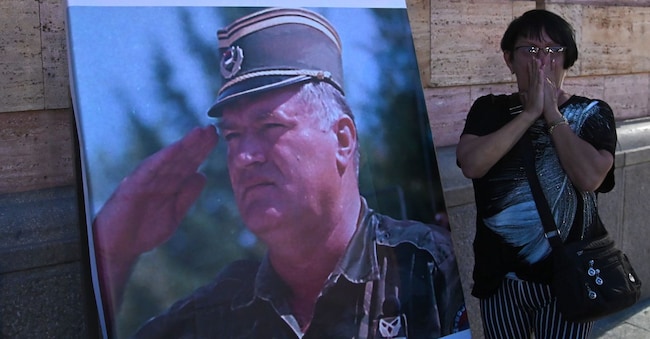
The former Bosnian Serb military leader Ratko Mladic, nicknamed ‘the Butcher of the Balkans’ for his role in the 1995 Srebrenica massacre, is to be given a funeral with ‘all the military and state honours to which he is entitled’. This was announced by the Serbian Minister of Justice, Nenad Vujic, on local radio station K1. Having been seriously ill for months, Mladic died on Thursday 27 August in The Hague, where he was serving a life sentence for genocide, war crimes and crimes against humanity.
“We are ready to leave for The Hague as soon as we know what the next steps will be, whilst fully respecting all the wishes of General Mladić’s family, with whom we in the government are in regular contact,” said Vujić, adding that the family will decide everything regarding Mladić’s funeral. “It is up to them to decide. It is certain that General Mladić will receive all the military and state honours to which he is entitled, as far as state honours are concerned. The family will decide on the location,” said the minister.
Turning to the requests that Mladić be allowed to spend his final days in Serbia with his family, Vujić stated that four letters had been sent since 20 August and that warnings had been issued from the outset that Mladić’s health was at risk. “Unfortunately, yesterday, just as we were finalising the letter to the United Nations Secretary-General, in which we discussed the need for his intervention, the sad news of the General’s death arrived,” said Vujić. The minister stated that, following medical assessments of the severity of Mladić’s condition, it was legitimate to raise the issue of the humane treatment of a person in the final stages of life.
‘It is legitimate to raise the issue of humanity. Even after the first medical report – which was not drawn up by independent experts or Serbian doctors, but by doctors at the prison hospital – we had received information about the need for palliative care. They had even emphasised the importance of the family coming forward as soon as possible. All the signs indicated that the end was near,” said the minister. According to Vujić, Serbia immediately requested Mladić’s release on humanitarian grounds, emphasising that when a person is at such an advanced stage of life, the purpose of punishment loses its meaning.
‘These are also international standards; that is well known. Then there is the fundamental humanitarian aspect, especially when life is measured in days. In such cases, palliative care is provided, which encompasses not only medical treatment but also a homely environment, so that a seriously ill person can spend their final days with their family. These are medical and humanitarian principles,” Vujić emphasised.

