The election campaign in Belgrade

Serbia: ‘This is how the police and the smear campaign target the opposition’

Srdan Milivojevic, leader of the movement that overthrew Milosevic’s regime in 2000 and is now supporting the students who are taking on Vucic on Sunday 25 October, speaks out

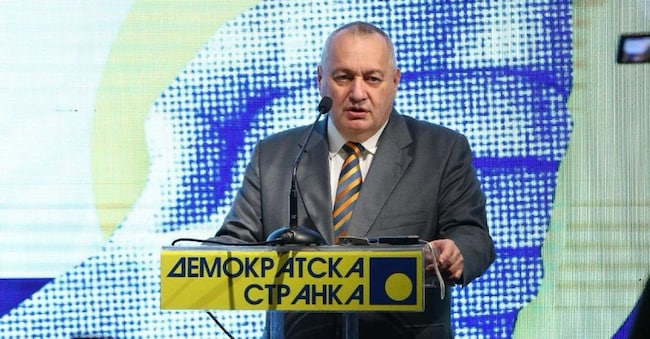
Srdan Milivojevic, presidente del Partito democratico serbo

4' min read

Translated by AI
Versione italiana

4' min read

Translated by AI
Versione italiana

History in Serbia? “I believe that, exactly 26 years on, it will happen again.” In 2000, Srdan Milivojevic was 35 and one of the leading members of Otpor! (Resistance!), the student and civil society movement that, on 5 October, overthrew Slobodan Milošević’s regime in what became known as the Bulldozer Revolution. Today, Milivojevic is the president of the Democratic Party (Demokratska stranka) of Serbia; since 2022, he has sat in the Belgrade Parliament, where he has been a staunch and unwavering opponent of Aleksandar Vučić’s regime; and he has withdrawn his party from the elections on Sunday 25th, with the aim of concentrating votes on the Serbian Students’ List and ousting a corrupt and illiberal government once and for all. Milivojević is the common thread that ideologically links the protests of 2000 with those of today. The students of that time are passing the baton to those of today.

What parallels are there between the revolution of that time and the change that students hope to bring about in Serbia with Sunday’s vote?

Loading...

Let’s be clear from the outset: Milosevic was a war criminal, and half the world had imposed sanctions against him. He was persona non grata. That said, there are certain similarities. Both present themselves as patriots who want only the best for the nation, but beneath the surface they are two men keen to concentrate all power in their own hands. Vučić was already a cog, albeit a small one, within Milošević’s regime. For two years, from 1998 to 2000, he served as Minister of Information: the 1998 law muzzling the press bears his signature.

What scope for manoeuvre did he have in Parliament, from the opposition benches, against Vučić?

I served two terms as a Member of Parliament during Vucic’s presidency, and in all that time he turned up only three times. The members of the SNS, his Progressive Party, have stifled all debate, and as a result Parliament has been stripped of any real function. Ever since the canopy at Novi Sad station collapsed two years ago – an event that sparked the current student movement – we in the opposition have also decided to boycott Parliament, which has now been reduced to a mere sham.

You supported the student movement right from the start: did you come under pressure from the regime because of this?

Back in the 1990s, when I was an activist in the Otpor! resistance movement, I was arrested 44 times – prison doesn’t scare me. Under President Vučić’s administration, I have been brought to trial 17 times on charges of attacking the police during demonstrations. As a Member of Parliament, I could have claimed parliamentary immunity, but I never did: I always appeared in court and won every time, proving that during the marches I was standing between the police and the students to defend the young people, not to attack the officers.

Serbia, 150mila in piazza per il comizio elettorale degli studenti

Has he ever been discredited by the regime’s media?

They’ve written all sorts of things about me: that I served dog meat in my restaurant, that during the war in the 1990s I helped NATO choose targets to bomb in what was then Yugoslavia. Each time, I have taken legal action against the newspapers that published these stories, but Serbian law provides for maximum fines of just 500 euros when the media are found guilty of defamation. Attacking people in the press, in Serbia, comes at little cost, so the regime’s media continue to do so, without worrying about court cases. I, however, am a Member of Parliament; students have had it worse over the past two years; I have seen young people detained for days, some even for months, instead of the mere 48 hours provided for by law. Many journalists opposed to the regime have been accused of terrorism. As his final act before stepping down as president to stand for election, Vučić signed an amnesty for 47 people. Does it seem normal to you that the list has not been made public? We have lodged a complaint with the judiciary; we suspect that there are criminals and drug traffickers amongst them.

Serbia, marcia degli studenti verso Belgrado in conclusione della campagna elettorale

What result are you expecting from Sunday’s election?

Loading...

I believe that the Students’ List has a good chance of defeating Vučić. When we ousted Milosevic in 2000, we didn’t have as much support from the public as the students on the streets have today. Yet we defeated him all the same. The mood amongst the exasperated public is more favourable today than it was then; people are demanding to live in a country free from corruption. The young Serbs taking to the streets have nothing in common with what is happening in Paris or Milan: they are well organised and have a clear objective – to change the government. That is why I am optimistic. Sunday is our historic opportunity to restore democracy to the country.

Copyright reserved ©
Loading...

Brand connect

Loading...

Newsletter

Notizie e approfondimenti sugli avvenimenti politici, economici e finanziari.

Iscriviti