

Vucic resigns ahead of the snap election. To become Serbian Prime Minister
The president’s term of office was due to expire in May 2027, but the Constitution would have prevented him from standing for a third term in the same role; he therefore stepped down and returned to politics as leader of the Progressive Party. His sights are set on the presidential elections on 25 October

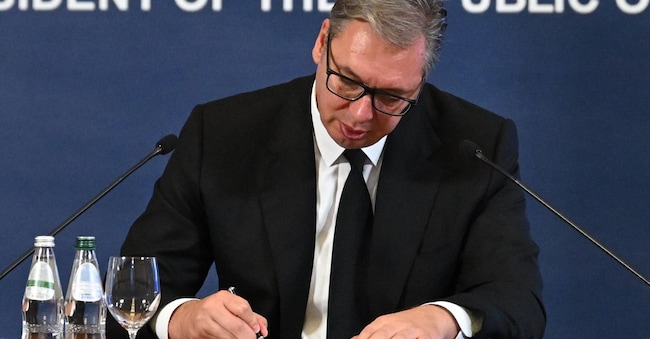
The President of Serbia, Aleksandar Vučić, resigned last night to stand as a candidate for Prime Minister ahead of the upcoming snap parliamentary elections, which will put the Balkan country – shaken by almost two years of protests – to the test.
The second presidential term of Vucic was due to end in May next year. In any case, the Serbian Constitution would have prevented him from standing for a third term, and so Vučić has made no secret of the fact that he has resigned in order to take the reins of his right-wing party, the Serbian Progressive Party, in the elections on 25 October. The vote will take place against a backdrop of high socio-political tension. Since 1 November 2024, when the collapse of a canopy at the railway station in the northern town of Novi Sad claimed the lives of 16 people, young people and students have been rebelling against the Serbian establishment: their struggle for justice and against corruption has grown into a powerful movement that will attempt to curb Vucic.
Before signing his resignation, Vucic briefly addressed his supporters outside the presidential palace in Belgrade. “This evening is a very special occasion for me – my last evening in this beautiful building,” he said, “but I look to the future with joy: new victories await us.” In recent weeks, he had been tirelessly touring the country on live television. He opened new roads, offered financial aid and medicines at reduced prices, and visited voters in their homes. From this morning until the next presidential elections, his role has been transferred on an interim basis to the Speaker of the Serbian National Assembly, Ana Brnabić, a close ally of Vučić and former Prime Minister.
Who is Vucic
Born in 1970, Aleksandar Vučić, a lawyer and journalist, began his political career in 1993 within the ranks of the Serbian Radical Party, of which he was appointed secretary in 1995; As a member of the Marjanović government, he served as Minister of Information from 1998 to 2000. In 2008, together with Tomislav Nikolić, he founded the Progressive Party, and was elected its vice-president that same year. In 2012, he served as Deputy Prime Minister in the Dačić government; he subsequently served as Minister of Defence (2012–2013) and was subsequently appointed Prime Minister in April 2014, following the snap elections held after the resignation of the governing coalition led by Dačić and thanks to the overwhelming victory of the Progressive Party, which had secured an absolute majority of seats.
A staunch supporter of Serbia’s accession to the European Union, and committed to the restructuring of the public economy, he was confirmed as a credible leader by the success achieved in the general election which he himself had called early in April 2016, in which the Progressive Party secured around 50 per cent of the vote, winning an absolute majority in Parliament (150 seats out of 250). Standing in the presidential elections of April 2017, he emerged victorious in the first round, securing 55 per cent of the vote and succeeding Nikolić in office. He was subsequently re-elected for a second term in the first round of the May 2022 elections, in which he secured 59.8 per cent of the vote.

