
Unrelenting drought in the Po basin: pre-Alpine lakes almost dry
The Po District Observatory has confirmed that the water stress level remains ‘high’. Lake Maggiore is experiencing extreme drought, the flow rates of the River Po remain well below historical averages, and the salt wedge continues to advance up the Delta

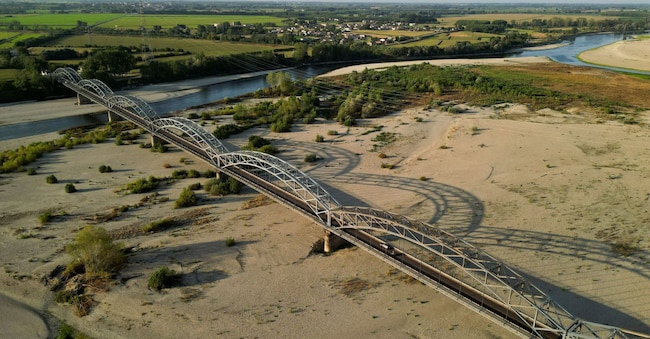
The water crisis in the Po river basin shows no sign of easing. The Permanent Observatory on Water Use in the Po River District, which met on 6 August under the coordination of the District Basin Authority, confirmed a highly critical situation, characterised by persistently above-average temperatures, insufficient rainfall in the worst-affected areas and water levels in the major Alpine lakes now approaching historic lows.
Although there have been a number of thunderstorms in Emilia-Romagna and Veneto in recent weeks, the impact on water reserves has been limited. The rainfall has been concentrated in intense, localised downpours, which have been unable to make up for the deficit that had built up over previous months. In Piedmont and Lombardy, however, rainfall has generally remained below average.
The situation regarding the large regulated lakes in northern Italia is of particular concern, as they represent a strategic reserve for agriculture and for maintaining the flow of the River Po. The most critical case is that of Lake Maggiore, whose water level has fallen to 5.3 per cent, a condition classified as ‘extreme drought’. Lake Como (5.9 per cent), Lake Iseo (5 per cent) and Lake Idro (5.7 per cent) are also in difficulty, whilst only Lake Garda remains relatively stable, with a water level of 50 per cent.
“The persistent high temperatures are putting a strain on the last remaining water reserves – namely the large pre-Alpine lakes. With the exception of Lake Garda, the water levels in Lakes Maggiore, Como and Idro are almost depleted,” explained Alessandro Delpiano, Secretary-General of the Po River Basin Authority. “The emergency continues and there is still no end in sight.”
The situation is particularly critical for the Ticino-Lake Maggiore system, which is vital for supplying Europe’s largest rice-growing region, comprising the provinces of Vercelli, Novara and the Lomellina. Right in the middle of the irrigation season, farms are having to cope with increasingly limited water supplies.

