
Green light given by a simple majority to the restaurant’s lease of the pavement
Provided that priority is given to residents of the block, a short-term let does not entail any penalties and does not alter the property’s designated use

Key points
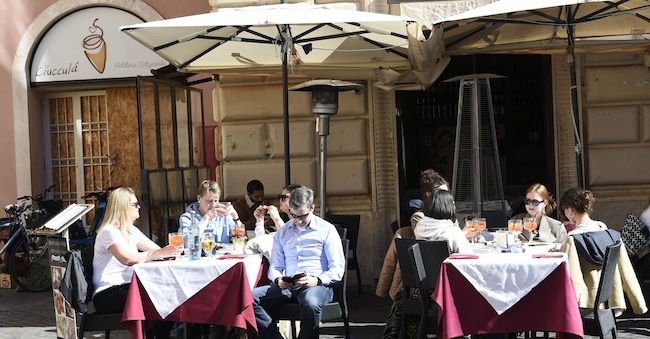
Letting part of the block’s pavement to a restaurant does not require a qualified majority. This is clarified by the Court of Cassation in Order 13618/2026 concerning a case which, during the summer season, is not uncommon.
Temporary tenancy
The case arose from a flat owner’s objection to the resolution authorising the letting, for five months during the summer, of a section of the block’s pavement (the section in front of a ground-floor premises used as a restaurant). According to the opposing resident, the lease changed the intended use of the property and therefore, in order to proceed, a favourable vote from four-fifths of the residents and representing four-fifths of the building’s value was required.
Having lost the case on the merits, the flat owner appealed to the Court of Cassation, reiterating her opposition to the decision. The occupation of part of the pavement with tables and chairs for five months a year, in her view, amounted to depriving the public of free access to the common property for a long period of time, not least in light of the provisions of Article 1575, of the Civil Code, which assigns to the tenant free and full use of the leased property. The Court of Cassation rejects this argument and explains: temporary occupation concerns the use of the property, but its intended purpose is not set to change.
The difference between innovation and modification
On this matter, the judges of the Court of Cassation refer to the established case law according to which ‘innovations’ under Article 1120 of the Civil Code are distinguished from ‘alterations’, governed by Article 1102 of the Civil Code, from both an objective and a subjective perspective. The former consist of works of transformation, which affect the very nature of the common property, whilst the latter fall within the rights granted to the co-owner to achieve the best, most convenient and rational use of the property. As regards the subjective aspect, in the case of improvements, what is relevant is the collective interest of a qualified majority, expressed through a resolution of the owners’ meeting, an element which is, however, lacking in alterations, which do not relate to a general interest but rather to that of the individual co-owner, whose interests they are intended to serve (among others, Court of Cassation 20712/2017 and 3440/2022).
The pedestrian walkway
In a nutshell, the property is not altered: account must be taken of the temporary nature and the short duration of the occupation of the area (five months a year), the maintenance of the right of way on the pavement by the flat owners, who had been allocated a dedicated 1.5-metre-wide corridor, as well as the fact that these restrictions were included in the tenancy agreement, thereby obliging the tenant to comply with them.

