Digital Economy

Siri AI isn't coming to Europe because of a decision by Apple – here's why

The new AI-powered Siri won’t be coming to Europe – who knows for how long – due to a deliberate decision by Apple.

by Alex Longo

3' min read

Translated by AI
Versione italiana

3' min read

Translated by AI
Versione italiana

The new AI-powered Siri will not be coming to Europe – who knows for how long – due to a deliberate decision by Apple. It is not the fault of European antitrust regulations. Apple could have complied with them, but chose not to: the response to the accusations against Apple came from Thomas Regnier, a spokesperson for the European Commission. The decision, he argued, was Apple’s; Brussels had not blocked Siri AI, but had rejected its request for an 18-month exemption from interoperability obligations.

In the narrative put forward by Apple, however, the EU is stifling innovation and threatening the privacy of Europeans. The Commission turns the accusation on its head: Apple wants to launch its own advanced assistant before allowing effective competition from other AI providers, and this is detrimental to both innovation and privacy, and to users’ best interests in general.

Loading...

“The decision not to launch Siri’s AI in the EU is Apple’s and Apple’s alone,” spokesman Thomas Regnier told reporters in Brussels, stating that there was nothing in the European Digital Markets Act (DMA) preventing the company from introducing new products in the EU.

“Apple has simply been unable to develop interoperability solutions that meet the EU’s essential standards on privacy and security,” said Regnier.

“Instead of seeking an appropriate solution to ensure compliance, Apple has simply asked the European Commission to be exempted from its interoperability obligations under the DMA – and that for at least 18 months. That is not an option,” said Regnier.

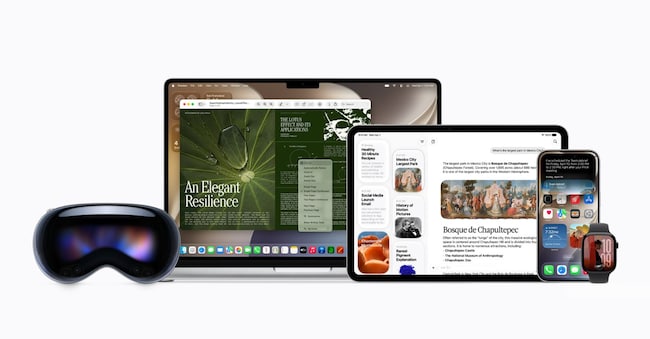
In a press release dated 8 June 2026, Apple states that Siri AI will not be available in the EU on iOS 27 and iPadOS 27, whilst it will remain accessible to European users on macOS 27 and visionOS 27. The company argues that the European interpretation of the DMA would force it to grant any virtual assistant extensive access to personal data and control over installed apps, to the detriment of privacy and security. Hence the proposal for an intermediary system, called the Trusted System Agent, to manage third-party assistants’ access to the same capabilities as Siri AI in a more secure manner.

The Commission takes a different view of the matter. Article 6(7) of the DMA requires gatekeepers to provide third-party developers and manufacturers with effective and free interoperability, using the same hardware and software functions available to the gatekeeper’s own services. The aim is to prevent Siri AI from becoming the sole agent with deep access to the iPhone, whilst others remain confined to lesser functions.

This is where the issue of ‘malicious compliance’—or ‘hostile compliance’, as the Commission calls it—comes into play. Apple does not formally violate the regulation outright, but applies it in the most punitive or politically costly way possible, thereby shifting user frustration towards the regulator. If a feature is missing, the problem appears to be the law. If a design choice causes friction, the reputational cost is shifted onto the regulation.

The EU also dismisses Apple’s claims regarding privacy and security risks. In its decisions of 19 March 2025 on the interoperability of iOS and iPadOS, the Commission set out measures for connected devices and application procedures for developers, explicitly stating that openness must be achieved whilst respecting the privacy, security and integrity of Apple’s operating systems.

The Commission therefore maintains that privacy and security are best safeguarded through compliant, documented and verifiable architectures, not through temporary exemptions that keep the market closed whilst proprietary products establish a permanent foothold.

For Apple, maintaining close integration between hardware, software, services and privacy is part of the iPhone’s commercial value. For rival developers, however, this very model can become a barrier if only the proprietary assistant has the necessary access to offer truly comparable features. The DMA was created precisely to address these bottlenecks and prevent control of the infrastructure from becoming control of the downstream market.

Apple is not the only major platform to turn regulatory compliance into a political message to users, developers and investors. The Commission has just called on Meta to immediately open up WhatsApp to competing AI systems, pending the conclusion of the Commission’s antitrust investigation. “The decision prevents Meta’s behaviour, which at first glance appears to breach EU competition rules, from undermining competition in this growing market,” the Commission wrote on 9 June.

After removing or scaling back certain search functions in Europe to comply with the DMA, Google argued that the changes required would have worsened the experience for European users

Apple, however, is undoubtedly leading the political battle against EU regulations. At stake are its most fundamental economic interests, which are linked to its tight, integrated control over hardware and software.

Copyright reserved ©
Loading...

Brand connect

Loading...

Newsletter

Notizie e approfondimenti sugli avvenimenti politici, economici e finanziari.

Iscriviti