FIRST CONTACT

Skoda Epiq, the preview road test of the compact electric suv

It offers up to 430 kilometres of autonomy and will be available later this year in the 55 version and later in the other two variants

by Giulia Paganoni

2' min read

Translated by AI
Versione italiana

2' min read

Translated by AI
Versione italiana

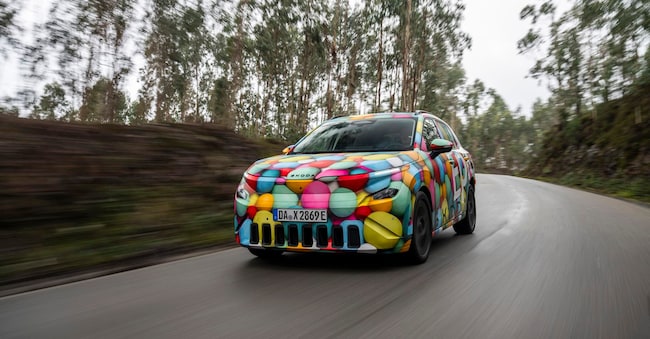
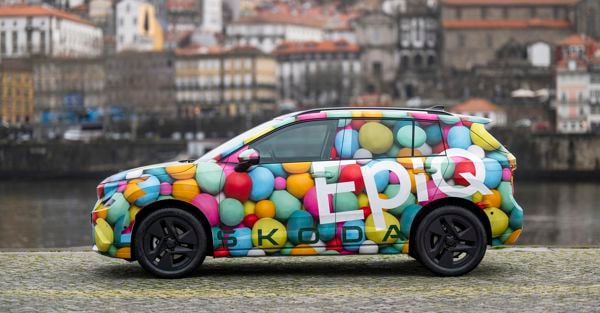
We were in Porto (Portugal) to preview the Epiq, the new electric suv that sits at the bottom of the Skoda range and has a maximum range of 430 kilometres. Still camouflaged so as not to fully reveal its styling, the Epiq will be available for order before the summer at a price of around 25,000 euro, in line with that of the Kamiq, its heat-powered SUV counterpart.
 

Loading...

Compact Size and Modern Solid


Based on the group's Meb+ platform, the Epiq is built at the Navarra plant, where the ID Cross was also created. What distinguishes the models is, of course, the styling, but also certain interior solutions, such as the higher floor chosen for the Epiq to underline the car's vocation for comfort.

A cornerstone of Škoda's strategy to double its electric range by 2026, the Epiq is around 7 cm shorter than the Elroq and boasts compact dimensions: 4,171 mm long, 1,798 mm wide, 1,620 mm high and with a wheelbase of 2,601 mm. Ample is the boot for its positioning, which reaches 475 litres or a maximum of 1,344 litres with the rear seat backs down. In addition, an optional 20-litre front funk will be available.
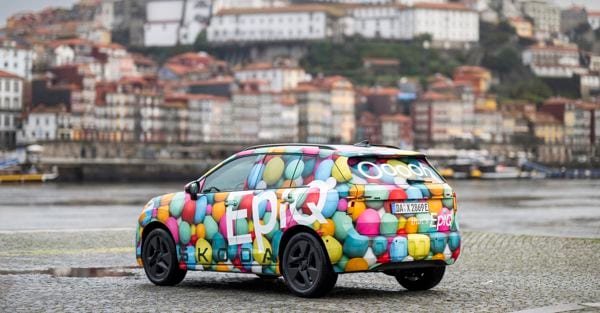
Despite its size, the Epiq reveals robust styling and fully adopts, for the first time, the Modern Solid design philosophy, characterised by a minimalist approach and, in the front area, the Tech-Deck Face is complemented by a new T-shaped light signature for the headlights, also in the rear lights.


Sustainable materials and 3 power levels


Inside the cabin we notice that, for the first time, sustainable materials have been adopted, making it the first animal-free car in the range. In addition to the materials, the new 13-inch screen in the centre of the dashboard stands out, from which the infotainment system and climate can be controlled.

During our first contact, we drove the 55 version, i.e. the one equipped with a 155 kW electric motor and 290 Nm of torque combined with a 55 kWh NMC (nickel, manganese and cobalt) battery, which is joined by the 35 version with an 85 kW motor and 267 Nm of torque and the 40 variant with 99 kW and 267 Nm of torque, both of the latter two being equipped with a 38.5 kWh LFP (lithium iron phosphate) battery.

The first to arrive will be the 44, the most powerful one, to be followed by the other two.

Recharging can be carried out in alternating current at 11 kW and in direct current from 50 to 125 kW from 10 to 80 per cent within 23 to 28 minutes.


First driving impressions

There were only a few kilometres available for the test drive but the car's excellent 55/45 balance and the feeling created with the brake pedal, which is very direct, stopping the car as soon as it is depressed and allowing a modularity that is atypical for a car on tap, was immediately clear. The Brake function is confirmed, allowing the driver to choose the desired level of regenerative braking by selecting it from the central display.

Finally, following the success of Enyaq and Elroq, packages including recharging facilities are very likely to be available at launch.

Copyright reserved ©

Brand connect

Loading...

Newsletter

Notizie e approfondimenti sugli avvenimenti politici, economici e finanziari.

Iscriviti