
Small parcels: a race against time to postpone the Italian tax
The countdown is on to avoid the new rules coming into force on 1 July – coinciding with the new €3 tariff – and to wait for the management levy that will apply across the EU from November

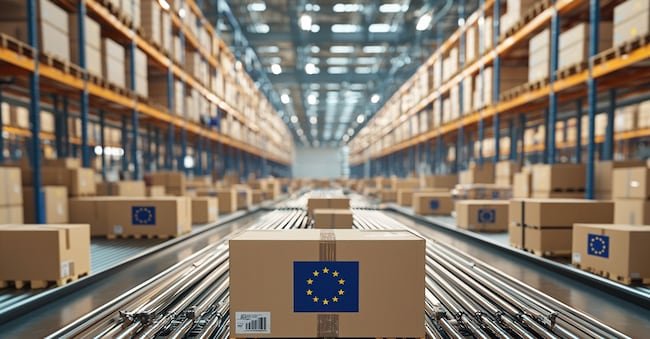
A countdown ticking inexorably towards 1 July. And a very narrow window of opportunity to find a legislative solution to postpone the Italian tax of 2 euros, which will be added to the EU tariffs of 3 euros. The ‘mess’ surrounding small parcels (worth under 150 euros) from non-EU countries risks resulting in a hefty ‘3+2’ bill that will fall on those who shop via ee-commerce, whilst also threatening to penalise the entire Italian logistics sector. All things considered, the financial burden might not be excessive, and relief could come directly from the EU tariffs: 25 per cent of the amount collected goes to each individual importing country.
Expected revenue
This could help to mitigate the impact of the Italian ‘mini-tax’, for which the budget had forecast revenue of 122.5 million euros for 2026, on the assumption that it would in fact begin to yield results from the second half of the year to allow time for monitoring. Indeed, the fiscal decree was able to bring forward its start date to 1 July precisely because no funding was required for the preceding months.
The application of tariffs
The problem stems from the fact that the Italian ‘mini-tax’ had been conceived and introduced before the European Union agreed on the tariffs to be applied jointly from 1 July. This €3 tariff, following the agreement reached in December, was formally approved by the Council in early February and is applied according to a mechanism specific to each different category of items – identified by their respective tariff subheadings – contained within a parcel. To clarify: if a parcel with a total value of less than 150 euros, originating from China or another non-EU country, contains two silk blouses and one woollen blouse, tariffs apply to both, amounting to a total of 6 euros. According to figures from the European Commission, tariffs are justified by the volumes of traffic generated by e-commerce: the number of small parcels arriving in the EU has doubled every year since 2022, reaching 4.6 billion in 2024, with 91 per cent coming from China.
The EU administration fee
Now, however, the problem is that Italia’s attempt to get ahead of the game risks putting it offside. This is partly because the EU Council and Parliament already reached an agreement last spring on a new handling fee to be levied by customs authorities on small parcels sold online. Starting four months ahead of schedule would risk diverting traffic away from Italian ports. In a letter sent to the Minister for the Economy, Giancarlo Giorgetti, Confetra (the Italian General Confederation of Transport and Logistics) emphasised how the mini-tax of 2 euros (although it has not yet been applied) has already led to a shift in import and customs clearance operations towards other Member States that do not levy it – in particular Belgium, the Netherlands and Hungary – with goods then being transported overland to Italia. In fact, the 50 per cent loss in traffic during the first two months of the year, prior to the postponement of the mini-tax, has led to a reorganisation of shipping routes, a trend that could now be further exacerbated during the months when the Italian mini-tax is in force, until the introduction of the EU handling fee. This is another reason why all logistics trade associations are putting pressure on politicians to secure a postponement, in order to avoid a loss of turnover that risks having a knock-on effect on the entire employment sector.


