
How a fast and stable internet connection helps the development of agrifood companies
The case of BBBell, which with its fixed wireless access offer provides the service to agribusiness SMEs not reached by fibre optics

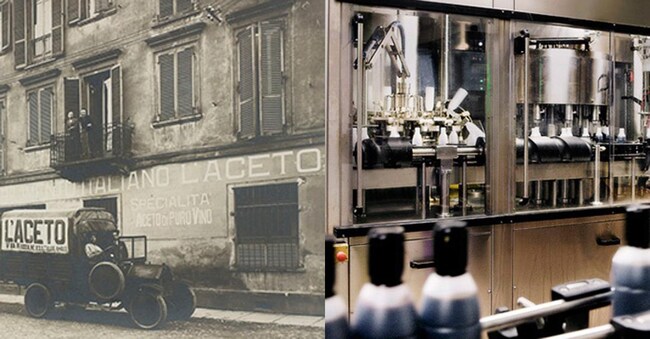
"Varvello - L'Aceto Reale' is an SME with a turnover of 18 million euro that produces vinegar (wine, apple, rice and balsamic glazes). It is located in La Loggia, a town of not even nine thousand inhabitants south of Turin. A peripheral area that is not wired. "For us, a fast connection is essential," says Davide Varvello, the company's managing director, "not only to operate all over the world, which is a crucial issue, since we export 70 per cent of our production. We need to operate all our machinery, connected to the network, remotely. The only solution was a wireless antenna".
In an Italy where so many areas of the territory are still not reached by fibre optics, this company is just one of many in the food sector that, located in rural or mountainous areas, have bet on new technologies to ensure their development prospects. Technologies such as Fixed wireless access that covers the territories guaranteeing the same speed and stability as ultra broadband. And it allows a radio link to cover 10 kilometres in an area line. The effects are explained by Simone Bigotti, managing director of BBBell, a multi-regional operator based in Turin, which between Piedmont and Liguria has 850 stations and serves 11 thousand companies, of which about 20% operate in the food sector.
'The technology,' says Bigotti, 'is difficult to apply in large urban centres, because there are obstacles in the form of large buildings. On the other hand, it lends itself to covering all small, unwired agglomerations, from small shops to large companies. And where there are two technologies, they can be combined so that one backs up the other'. This possibility has existed since the so-calledLandolfi Decree liberalised the market in 2005 to expand the possibility of connecting to the network. With the race towards digitisation, even for many small food businesses located in peripheral areas, a fast (and stable) connection has become indispensable.
This is the case, for example, for Cantine Coppo, a historic winery (it was founded in 1892) in Canelli, in the province of Asti. A town where, as managing director Rossano Savoia explains, the cabling is not sufficient to meet all operational needs. Even this small company (30 employees, revenues of 6.5 million euro, a production of 500 thousand bottles per year) has turned to the antenna to guarantee its connection to the network. "For us, power and stability really make the difference: we export 70 per cent of our production, we always have to send a large amount of data, do webinars and video calls to expand our market," says Savoia. "Now we have strengthened our operations, even equipping ourselves with a virtual switchboard via the cloud that allows us to reach everyone as if they were present in the company.
The same problems were encountered by Paolo Boeri, at the head of Olio Roi, a family business in Badalucco, in the province of Imperia, with 25 employees and a turnover of 7.5 million. Badalucco, 1,100 inhabitants, is in the mountains, in the Argentina Valley. This small enterprise, which mainly produces extra virgin olive oil, exports to 60 countries around the world. 'The fast connection was essential for us,' says Boeri, 'and gave us a strong boost.

