
So Chinese tomato imports to Italy have plummeted by 76%
Italy confirms itself as the leading producer and exporter of tomato derivatives

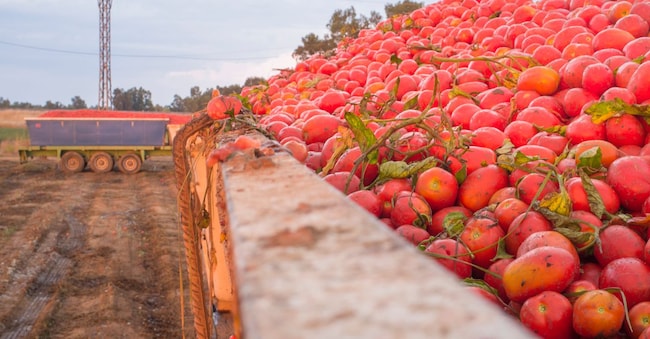
The import of tomato paste from China into our country has plummeted by 76%, from over USD 75 million in value to less than USD 13 million in the first nine months of 2025, and EU-wide exports of red gold from the Asian giant have dropped by more than two-thirds.
More than an alarm over what we eat (in Italy a 2005 law requires the use of 'fresh product, processed within 24 hours of harvesting, for tomato puree' sold on the Italian market), this is a point in favour for the credibility of our processing industry (after years and years of international journalistic enquiries) and a topic of great attention from analysts, because of the 'shock wave' unleashed by the astonishing speed with which 700,000 tonnes of unsold tomato concentrate - the equivalent of about six months' worth of exports - accumulated in the Dragon's stocks.
The theme of the Chinese tomato exported to Italy has been a leitmotiv for at least ten years: that is, ever since Xinjiang - a tinderbox region about 3 thousand kilometres from Beijing due to social tensions and separatist thrusts - became a production colossus (under the aegis of Italian growers), rising from 4.8 million tonnes to about 11 million tonnes. The driving force has come from the bingtuan, the 'production corps' sent by the central government to 'make the territory flourish' at the expense of the native inhabitants, the Uyghurs, who have long claimed independence. Crimes against humanity have been committed against them - of Muslim religion and Turkish-speaking - for years, with the Chinese regime's intention of 're-educating' them.
Much of the concentrate that has fuelled the proliferation of Chinese concentrate has come to Europe, particularly Italy, which has contributed to raising a number of legitimate doubts about the quality of the products available on our market. Italy, however, is the world's leading exporter of finished tomato-based ingredients such as passata, sauces and canned tomatoes and - as stubbornly reiterated over the years by Anicav, the national association of industrial vegetable food preserves - the red gold imported from China is mostly used as a raw material under temporary importation by companies that reprocess it and re-export it outside the European Union, mostly to African countries (and in this case the industry that does the reprocessing is exempt from paying tariffs).
A question - as it were - that is more to do with the ethical sphere (as far as origin and destination are concerned - and on which everyone will draw their own conclusions), but not with the validity or wholesomeness of homegrown pastures.

