
The social economy: the network that provides answers for people
According to Maurizio Gardini, president of Confcooperative, tools are needed to help organisations dedicated to the common good to grow

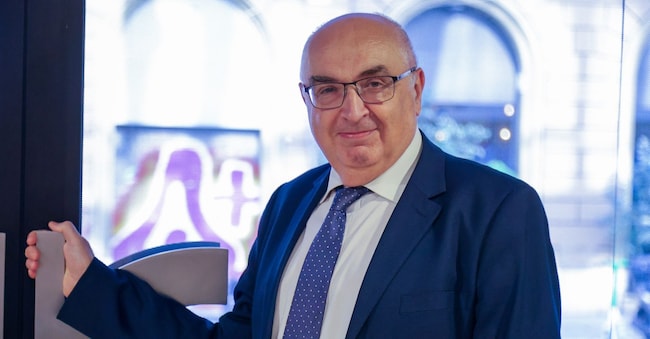
If Europe’s challenge in the coming years is to combine cohesion and competitiveness, a key element in shaping this long-term project is the social economy. Because it is deeply rooted and widespread across the country, because it places the individual at the centre as an end in itself rather than a means to an end, and because it generates value. This is the message that emerges from the first edition of the Social Economy Festival, running until tomorrow in Forlì, just a few months after the Council of Ministers adopted the National Action Plan for the Social Economy in Italia. The Festival was organised by Confcooperative, the Social Economy Foundation, Terzjus, and the E-ius law firm.
The National Action Plan
The plan aims to transform the diverse range of organisations that make up the social economy – co-operatives, third sector organisations, civilly recognised religious bodies, and amateur sports associations and clubs – into a system that is integrated into public policy with the same weight and dignity as the profit-driven economy. “It is a cultural tradition of ours stretching back centuries, which today must take on a new form based on reciprocity and the principle of giving freely. It is time for the social economy to take centre stage in economic policy decisions,” says Gabriele Sepio, the Festival’s scientific director.
According to Maurizio Gardini, president of Confcooperative, given that the Action Plan now falls within a specific government mandate – specifically, under the remit of the Under-Secretary at the Ministry of Economy and Finance, Lucia Albano – it is only natural to expect one law a year dedicated to the sector, setting out policy guidelines and tax regulations. “Recognising the diversity of our organisations,” adds Gardini, “is essential not to grant concessions but to provide tools that can ensure the development of organisations with collective aims for the public good. To achieve social innovation, we need co-design and co-planning.”
Ad hoc financial instruments
The cross-cutting nature of the social economy is emphasised not only in the opening message sent by the President of the Republic, Sergio Mattarella, but also by Under-Secretary Albano, who points out that a clear regulatory, legal and fiscal framework can also enable greater utilisation of public property (68 per cent of which is owned by local authorities). “Certain financial instruments need to be rethought to support organisations in the social economy, such as access to credit, creditworthiness assessment and public guarantees”, comments Albano.
“In 2027, it will be ten years since the implementing decrees of the Third Sector reform came into force, recognising a diverse and richly varied landscape of experiences,” adds Luigi Bobba, president of the Terzjus Foundation. “Regulations are essential, but to translate into concrete results they require networks, people and dialogue. It is precisely through discussion and collaboration – as is happening here in Forlì over the next few days – that the future of the social economy is built.”

