
Social impact: the economic effects on the local areas of five regenerated sites
From the illegal quarries on the Domizio coast to the castle in the Bassa Bresciana region, right through to the confiscated land in Emilia. Five examples of regeneration and impact

The watchword is rebirth. And regeneration for housing estates that have been closed for decades, confiscated land or unauthorised buildings. Ella Studio has undertaken a journey through stories of regeneration, compiling a dossier that traces the history of a series of places now set to undergo restoration and rebirth. ‘From the Campania Nature Reserve to the castles of the Po Valley,’ the report emphasises, ‘right through to the Romagna seafront, here are five Italian places that have managed to redeem their past’.
The Domitian quarries and the castle in Brescia
This journey includes the case of the Nabi Lakes, an area once characterised by illegal quarries and transformed into a Nature Reserve in Campania. ‘Illegal sand quarries had reduced the Domizio coastline to a scene of erosion and neglect. From that scar emerged Campania’s first Nature Reserve,’ the report emphasises, ‘the Nabi Lakes. Thanks to the vision of entrepreneurs Gino Pellegrino and Michele Falco, over 500,000 metres of land have been redeveloped, featuring three lakes covering 300,000 square metres of water, set amidst 250,000 square metres of green spaces restored from a state of neglect.”
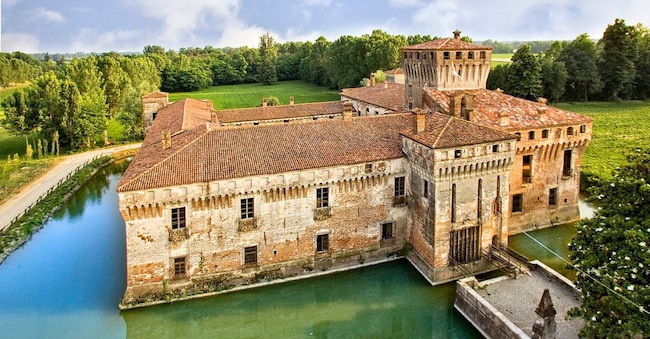
Then there is the case of the Brescia lowlands, where a castle had collapsed and was subsequently ‘forgotten’. ‘Today it welcomes over 45,000 visitors a year and provides employment for around a hundred people. This is down to an extraordinary collective effort,” the study continues, “the Padernello Castle Foundation (the manor of Borgo San Giacomo), led by Domenico Pedroni, has successfully brought together public and private bodies, associations and crowdfunding campaigns to restore this centuries-old heritage to the community.” Inside, guided tours of the frescoes are complemented by Slow Food markets, cultural events, concerts and sustainability initiatives. An entire village has sprung up around the castle: restaurants, artisan workshops offering advanced training, a microbrewery and a ‘spread-out hotel’.
Confiscated property and abandoned settlements
In the heart of the Stirone and Piacenzano Regional Park, in Salsomaggiore Terme, a piece of farmland confiscated from organised crime has been transformed into a centre for culture and learning. ‘The Podere Millepioppi now houses the MuMAB, the Museum of the Ancient Sea and Biodiversity, with a geopalaeontological section in the main building and a natural history section in the former stable,’ the report continues. “Fossils dating back over seven million years, shark teeth, remains of right whales and corals tell the story of the Po Valley and the sea that once submerged it.”
This journey of rebirth in the name of sustainability also includes a ruin that has been transformed into a Michelin-starred restaurant: the Antica Corte Pallavicina, on the River Po. ‘A 14th-century castle in the Po floodplain, purchased in 1990 in a state of disrepair by the Spigaroli family – once sharecroppers for Giuseppe Verdi – and restored to its former splendour after 20 years of meticulous restoration work, brick by brick, using period materials and local craftsmen who are the guardians of ancient skills,” explains the report. “Today, the Antica Corte Pallavicina in Polesine Parmense is a charming relais and an internationally renowned gastronomic destination.”

