

Solar time or summer time? The answers between energy saving and people's well-being
From the quality of 'sleep' to biological rhythms, here is what emerges from forty years of research on time change in a review conducted by the Centre for Sleep Medicine at Irccs Neuromed

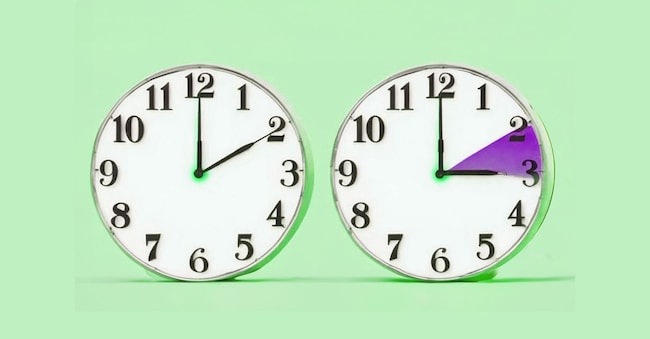
Daylight saving time was introduced at the beginning of the 20th century with a seemingly simple objective: to save energy by making better use of daylight. Since then, it has become customary in over seventy countries, adopted in the name of efficiency and collective well-being. Yet, as time has passed, the focus has increasingly shifted from economic to health aspects, and today there is debate as to whether this shifting of the hands does not, at least for some, bring more disadvantages than benefits.
The Studio
Our review, conducted by the Centre for Sleep Medicine at Irccs Neuromed in collaboration with the University of Pavia, the Mondino Foundation, the National Research Council, the Uninettuno University and the University of Genoa, and published in the journal Sleep Medicine Reviews, brought together and critically analysed studies conducted over the last forty years on the impact of summer time. The aim was to assess whether seasonal transitions (particularly the spring one, when the hands move forward) really do affect sleep, alertness and health in general.
The effects
A clear trend emerges from an examination of the twenty-seven papers included. The switch to summer time leads to a reduction in sleep duration and an increase in its fragmentation. This results in greater daytime sleepiness and, in some cases, a decline in attention and concentration. The effects are most evident in evening chronotypes, the so-called 'owls', people who tend to fall asleep and wake up later, but also in adolescents and shift workers, categories that are already more vulnerable to alterations in the circadian rhythm.
The scientific literature also reports an increase in cardiovascular events and traffic accidents in the weeks following the spring transition. These are not dramatic effects in absolute terms, but signs consistent with the idea that our organism struggles to synchronise with an artificial time. The misalignment between the internal biological clock, the solar clock and the social clock, in fact, does not end in the days immediately following the change: it can continue for weeks, sometimes months, affecting sleep quality and hormonal regulation.
Staying in daylight saving time, i.e. adopting a time shifted forward throughout the year, does not seem to be a better solution either. Evidence suggests that this condition maintains a constant misalignment between natural light-dark cycles and our daily habits, with possible repercussions on metabolism, mood and cognitive performance. Daylight saving time, on the other hand, appears to be more physiological and consistent with human circadian rhythms.

