Third sector

Social enterprises: a growing sector in Italy that is increasingly adopting the community hub model

According to Euricse’s latest report, there were 309 such organisations in 2025 (over 100 more than in 2021). Their prevalence is highest in the North, but economic sustainability remains the key challenge

by Camilla Curcio

Andrey Popov - stock.adobe.com

8' min read

Translated by AI
Versione italiana

Key points

8' min read

Translated by AI
Versione italiana

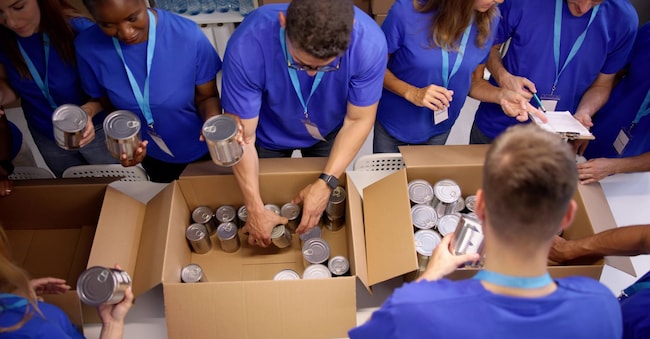
Distribution points for essential goods, which play a key role in combating food poverty in Italia. But also ‘community hubs’ that are constantly evolving, playing a vital role in fostering social cohesion and inclusion. This is the picture of the solidarity shops captured by the new Euricse report ‘Solidarity shops in Italy: beyond food distribution’, produced as part of the research project ‘Enterprising communities in search of practices for social transformation’.

What are fair trade shops?

Small supermarkets aimed at individuals and families in particularly vulnerable socio-economic circumstances who, using a loyalty card issued only to those meeting specific criteria, can choose freely from the available products (these are not standardised supplies: the range of goods varies according to agreements made with local businesses, availability and the needs of specific contexts, and consists mainly of food, but also personal hygiene products, clothing and school supplies), solidarity shops fall within the broad category of ‘enterprising communities’. This is a wide-ranging definition that encompasses all initiatives launched by citizens, associations and organisations operating locally, experimenting with new forms of social and economic development.

Loading...

Although – by definition – they might appear to be static facilities, they are not. This is confirmed, in black and white, by the changes they have undergone in recent years: although they are, in fact, required to focus, as their main and defining activity, on food distribution, several emporia have decided to offer users numerous other ‘ancillary’ activities as well, mainly linked to the recreational sphere (neighbourhood dinners and exhibitions), culture, education (for example, after-school clubs and Italian language courses), volunteering (food drives), counselling and advice (for example, career guidance and psychological support services).

Thus ensuring that the community also has opportunities for positive interaction. Going beyond mere material assistance. This is no longer a ‘passive’ experience, as is often the case with the meals provided by soup kitchens or food banks, but as an expression of autonomy, which also guides people to limit waste and distinguish between necessary and superfluous products. This can also be achieved, for example, through ‘critical consumption helpdesks’, where staff help consumers reflect on their food and nutritional choices. In short, a win-win model.

Who can access it

Of course, social shops are not open to just anyone. Potential beneficiaries are, in fact, identified through a coordinated effort between the shop itself, public bodies and local social sector organisations. This includes both social services and third sector organisations. There are also special cases, such as those of shops managed by Caritas: in this case, selection takes place internally, as it is generally those directly affected who approach the advice centre, which then directs them to the nearest food bank.

Compliance with the established criteria is mandatory: in order to obtain the loyalty card required for purchases, potential beneficiaries are selected on the basis of income (individual or household), with thresholds varying according to individual circumstances; the absence of other financial support; and assessment through interviews with Caritas’s listening centres. However, the rigidity (sometimes excessive) of the criteria also carries the risk of reducing the effectiveness of the interventions and denying support to those who truly need it: it does, in fact, happen that single individuals or elderly couples seek help because they have lost their jobs but, as they live in their own home, do not fall into the eligible categories.

The same applies to the length of time beneficiaries can use the food bank: access is, in fact, limited to a period of six to 18 months, with the option to request an extension after a few months. These timeframes sometimes clash with the fact that some people are unable to escape their difficult circumstances.

Key figures from the report

According to Euricse’s monitoring (which covers the period up to May 2025), in 2025 there were 309 solidarity shops operating across Italia (accounting for 38 per cent of the enterprising communities mapped). This figure represents a significant increase compared to 2021, when there were 193 active shops, a rise closely linked to the increase in vulnerable individuals and families. To date, following a series of considerable peaks at certain times, the phenomenon has stabilised on average, perhaps due to the fact that the shops now boast a widespread and well-established presence across the peninsula. This does not, however, rule out the emergence of new ones.

In terms of geographical distribution, however, these shops are generally found throughout Italia. However, on closer inspection, it is clear that they are concentrated mainly in Northern Italy (around 48 per cent, almost half of the organisations mapped). This is followed by Central Italia (29 per cent) and the South (23 per cent, where traditional forms of assistance still prevail, such as food parcel deliveries and meal distributions in soup kitchens for the less well-off).

At regional level, the largest concentration is found in Lombardy, Piedmont, Veneto and Emilia-Romagna, which together account for over 48 per cent of the food banks in the country. But that is not all: in all four regions, in fact, proper networks of food banks – both formal and informal – have developed, with individual organisations working in tandem to combat poverty and food waste through cooperation and social inclusion.

Legal form

As for the legal form of the organisations that run the community shops, the analysis revealed the central role of local networks and the enormous variety of operational and management models. All are aimed at moving beyond welfare dependency in favour of the centrality of the individual, further highlighting the shift from simple distribution points to complex multi-service hubs and network actors. In the overall picture, Caritas and church bodies (39 per cent) stand out in first place, followed by associations (31 per cent) and voluntary organisations (12 per cent). But there are also social cooperatives (6 per cent), public bodies (5 per cent), foundations (2 per cent) and consortia (1 per cent). In general, most identify as third sector or church organisations, aiming to build community welfare and aligning themselves with the values inherent in these contexts: the culture of giving, solidarity and human dignity.

Turning instead to the 28 fair-trade shops surveyed, the situation changes only slightly: the most common legal form is that of voluntary organisations (57 per cent), followed by social promotion associations, Caritas and church organisations. The preference for these models also reflects the priority given to the use of unpaid human resources. This also represents a weakness of the emporia: as they rely entirely on volunteers, many struggle to ensure continuity and the professionalisation of ancillary services.

As for the Church’s involvement, however, direct or indirect management is strategic: in certain areas, such as property, it provides facilities directly on a loan-for-use basis or acts as a financial guarantor. And the advantages are clear. Not only that: the integration of the emporia into the dioceses’ welfare system also makes a difference in the selection of beneficiaries and the initiation of care pathways.

In general, the prevalence of these two models (Caritas and Volunteer Service Centres) reflects a positive synergy between two different social cultures which nevertheless find common ground in their focus on the individual: on the one hand, the centrality of charity, through human connection and listening beyond material needs; on the other, a vision that draws on active citizenship and empowerment. A framework in which there is also room for citizen involvement through tools ranging from the institutional to the informal level. And, frequently, even the beneficiaries of the services themselves, who give back the welcome they have received, for example through hours of voluntary work and support with loading and unloading goods. The real challenge for the future remains transforming all this from an occasional initiative into structural involvement.

The crux of economic sustainability

In addition to strengthening collaborative networks to avoid operating in isolation and moving towards multidimensional models, the most critical challenge facing the network of community shops remains that of economic sustainability. In order to continue operating, in fact, the shops need to become multi-service hubs so as to tackle the issue of poverty from multiple perspectives, integrating food assistance with responses to low-paid work, social isolation and relational poverty. Diversifying the services offered, in fact, makes it possible to access ad hoc funding (such as for training or psychological support) that would not be available for food distribution alone.

As regards funding, the ecosystem is quite hybrid (and tends to be precarious). Funding comes mainly from three sources: institutional and public support represents the most reliable source of resources and takes the form of both financial grants and the provision of premises on a free-of-charge loan basis; followed by association and diocesan funds and temporary grants, which often provide start-up capital for projects that will subsequently have to learn to stand on their own two feet; finally, relational and private capital, which covers the costs that official channels are unable to cover.

Finally, when it comes to supply, sustainability is closely linked to the ability to manage the logistics of fresh produce and surplus food. Whilst the Agea-Fead channels (respectively the Agency for Agricultural Disbursements and the European Fund for Aid to the Most Deprived) guarantee basic foodstuffs, the real test lies in the capacity for recovery of large-scale retailers. This requires specific investments on the part of individual shops (for example, in vacuum-sealing machines or bags).

The work of volunteers

In community shops, volunteers are clearly an essential piece of the puzzle. Over the years, the profile of the volunteer has changed as a result of the need to strike a balance between tradition and new resources. Although, in fact, the traditional pool of volunteers (who are generally aged 50–60) is still active, the challenge of turnover remains a significant issue. And for this reason, the challenge has been set to seek flexibility: the charity shop model has proven to have a certain appeal for the younger generations, as it allows for ‘a less binding commitment, more closely linked to individual projects’. These are, therefore, ad hoc volunteering experiences of varying duration.

In addition to ethical motivations and civic engagement, volunteers are driven by the fight against food waste, environmental concerns and volunteering as a means of empowerment. And the profiles of those working in the field are increasingly diverse: from professionals working pro bono (such as doctors) to young people involved, for example, through PCTO programmes (formerly work-study schemes), right through to the beneficiaries, namely former service users who become active volunteers.

The value of the network

Being part of to a network, whether formal or informal, is an important tool for ensuring that one is not overwhelmed by the discontinuity of funding, the complexity of the needs to be addressed and the risk of care becoming chronic. And it has a profound impact both on the operational effectiveness of the emporia and on their long-term sustainability.

Within these networks, individual organisations share expertise, organisational models, tools and practical solutions (ranging from strategies for food procurement to protocols for managing volunteers) and work on their ability to adapt to different contexts in order to renew, over time, their modus operandi. Not only that: contact with other organisations also fosters valuable relational investments, which in turn allow access to information and opportunities that would otherwise be inaccessible. This leads to an automatic improvement in the quality of services, a consolidation of social legitimacy and greater openness to dialogue with institutions.

Copyright reserved ©
Loading...

Brand connect

Loading...

Newsletter

Notizie e approfondimenti sugli avvenimenti politici, economici e finanziari.

Iscriviti