
Food waste, food recovery in supermarkets is worth 229 million euro a year
48 thousand tonnes of food recovered: the results of a research promoted by Fondazione Banco Alimentare Ets and carried out by the Food Sustainability Lab of the School of Management of the Politecnico di Milano
by Editors Food
 Aggiungi Il Sole 24 Ore
ai preferiti su Google
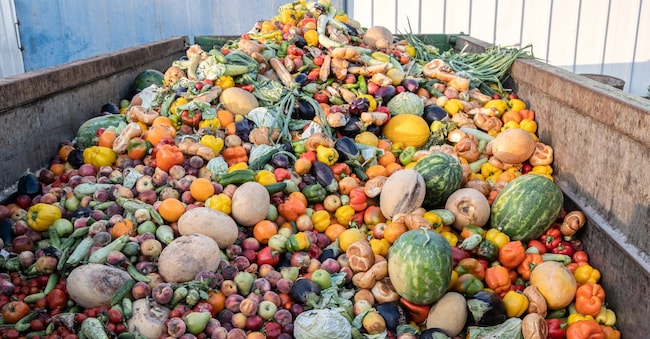
Every year more than 48 thousand tonnes of food products, worth around 229 million euros, are donated for social purposes, thanks to the contribution of some 1,681 companies. This is the picture of the contribution to the fight against food waste by large-scale organised distribution taken on the occasion of TuttoFood from a research project promoted by Fondazione Banco Alimentare Ets and carried out by the Food Sustainability Lab of the School of Management of the Milan Polytechnic, which analysed the role of distribution in the recovery of food surpluses, and by the Fondazione per la Sussidiarietà, which carried out a complementary statistical survey based on the data collected.
Despite the significant results, donation is still not a widespread practice: only about half of the large-scale distribution companies donate surpluses. "There is a strong difference in the adoption of the practice between large (93% of cases), medium-sized (54%) and small companies (43%). For larger large-scale distribution companies," says Professor Paola Garrone, scientific head of the project, "donation is a conscious decision that translates into structured surplus management processes, with the definition of company managers, regular recourse to measurement, and a stable partnership for recovery with specialised third sector organisations, such as the Banco Alimentare. These observations are confirmed by estimates of the quantities donated. To date, big companies contribute 55% of the total amount of donated food, with average donations amounting to 274 tonnes per year per company, but for the next few years important spaces can also be opened up for medium and small-sized companies in the large-scale retail trade'.
"The statistical analysis," observes Giorgio Vittadini, president of the Foundation for Subsidiarity, "reveals the factors that determine the propensity of large-scale distribution companies to donate more than others: the ease of communication with the receiving organisations increases the likelihood that the company donates on an ongoing basis by about 13-14 percentage points; the presence in the company of a manager dedicated to the food surplus increases donations by about 8 percentage points; the territorial proximity of the receiving organisation significantly increases the continuity of donations. With regard to the motivations that drive companies to donate, when they are mainly linked to the intention of improving the company's reputation (thus indicating opportunistic behaviour), they then translate into less lasting donation practices. This phenomenon does not affect companies that have been donating for more than ten years or that have a donation rate of more than 3%, which seem to consider this practice as an integral part of the identity of their entrepreneurial action".
The research also shows that social donation can also be a sustainable choice from an economic point of view, especially when products risk remaining unsold or require large discounts to be placed on the market.
"These data confirm the strategic value of the collaboration between Banco Alimentare and large-scale distribution," comments Marco Piuri, president of the Banco Alimentare Ets Foundation, "but they also tell us that there is still great unexpressed potential. Today only a part of the surplus is actually donated, while we register the request of the 7,600 Opt (territorial partners, ed.) with us, who assist 1,800,000 people in difficulty, to receive quantitatively more food aid. In the last ten years, since the entry into force of the Gadda law, our recovery of food surpluses from this channel has increased fivefold: a concrete sign of how intelligent regulations and public-private collaboration can generate important results. But we need to go one step further and work together with large-scale distribution companies and institutions to make donation increasingly economically competitive. When donating is also sustainable from an economic point of view, value is generated for everyone, especially for those in need'.

