
Solidarity emporiums, growing Italian realities increasingly oriented towards the community hub model
In 2025, the latest Euricse report tracked 309 of them (more than 100 more than in 2021). Diffusion rewards the North but the issue of economic sustainability remains
Key points
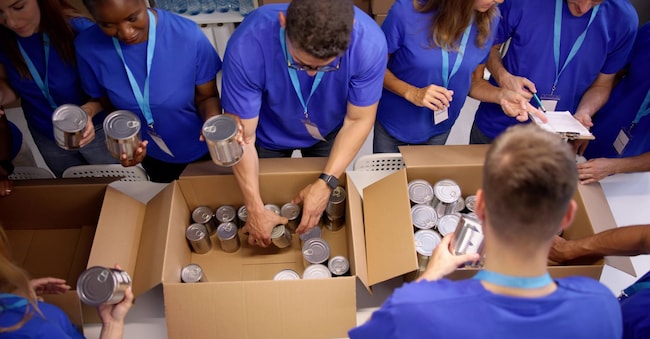
Distribution points for basic necessities, strategic in combating food poverty. But also constantly evolving "community hubs", fundamental in creating aggregation and inclusion. This is the picture of the solidarity emporiums taken by the new Euricse report "Gli empori solidali in Italia: oltre la distribuzione alimentare" (Solidarity empori in Italy: beyond food distribution), realised in the framework of the research "Comunità intraprendenti alla ricerca di pratiche di trasformazione sociale" (Enterprising communities in search of social transformation practices).
What are solidarity emporiums
Small supermarkets aimed at people and families in particularly fragile socio-economic conditions who, through a points card issued only with heterminous requirements, can freely choose from the products available (these are not standardised supplies: supplies change according to agreements made with local companies, availability and the needs of specific contexts and consist mostly of food, but also personal hygiene goods, goods and school supplies), solidarity emporiums fall into the broad category of 'enterprising communities'. A broad definition that encompasses all the experiences born from the initiative of citizens, associations and organisations operating on the territory, experimenting new forms of social and economic development.
Although - by definition - they may look like immovable infrastructures, they are not. And this is confirmed, in black and white, by the evolution that has involved them in recent years: while they are, in fact, required to deal with food distribution as their main and identifying activity, there have been a number of emporiums that have decided to also offer their users numerous other 'collateral' activities, mainly linked to the recreational sphere (neighbourhood dinners and exhibitions), cultural, training (e.g. doposchool and Italian courses), volunteering (food collections), listening and counselling (e.g. professional guidance counters and psychological support).
Thus also providing the community with spaces for positive interaction. Beyond mere material assistance. Which is no longer configured as a 'passive' experience, as can often happen in the case of disbursements provided by canteens or food banks, but as a manifestation of autonomy, which also guides people to limit waste and make a selection between necessary and superfluous products. Also through, for example, 'critical consumption counters', with operators who help consumers reflect on their food and nutrition choices. In short, a win-win model.
Who has access
Of course, solidarity emporiums are not open to everyone. Potential beneficiaries, in fact, are identified through coordinated action between the emporium itself, public realities and private social realities in the area. Thus, both social services and Third Sector entities. Then there are special cases, such as the emporiums run by Caritas: in this case, the selection takes place internally, because it is generally the directly interested parties who apply to the listening centre, which then directs them to the nearest emporium.

