

Somaliland: Irro’s tour to secure US recognition and the Berbera military base
President Abdirahman Mohamed Abdullahi is stepping up the pressure on Washington. At stake, above all, is the long-standing strategic quid pro quo concerning the coastline
from our correspondent Alberto Magnani
 Aggiungi Il Sole 24 Ore
ai preferiti su Google
Key points
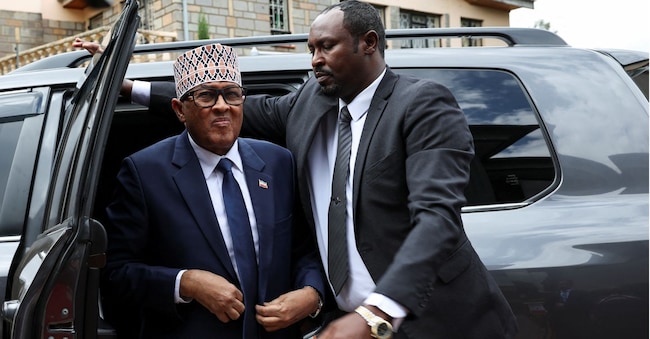
NAIROBI – The President of Somaliland, Abdirahman Mohamed Abdullahi, known as ‘Irro’, had not yet set foot in the US since his election in 2024. He broke the ice in early September with a two-week tour de force alongside several key ministers, on a trip punctuated by meetings with US business leaders and institutional representatives.
The stated reason for the visit was to ‘promote the interests’ of Somaliland in the country, strengthening ties already fostered by the Somali diaspora. The underlying aim and hope were already made clear in the title of a speech he gave in the middle of the month at the Hudson Institute, a think tank in New York: Somaliland as a Strategic Partner in the Horn of Africa.
The mission of Irro to the USA forms part of Hargeisa’s long-standing pressure on Washington regarding its most obvious ambition: US recognition of a republic that declared its independence from Somalia in 1991 and still finds itself isolated in an increasingly turbulent region, straddling the Horn of Africa, the Red Sea and the Gulf. Things began to stir in late December 2025 following an initial significant endorsement from Israel through a diplomatic blitz that secured Tel Aviv a key foothold in the area and sparked new tensions along the coast. Now the pressure is mounting on the US, with a clear counter-offer on the table: access to the port of Berbera, a key hub on the Gulf of Aden currently under threat from the Houthis and the unrest sweeping across the Red Sea.
Ports and minerals: the revitalisation of Hargeisa
This line of argument is not new. The government of Somaliland has already set out in the past its ‘package’ of offers to the US in exchange for a rapprochement: ports and minerals, two sensitive issues for Washington and consistent with the strategy already deployed by the United States in situations such as the Congolese-Rwandan conflict or the Sahel. ‘We are prepared to grant exclusive access (to our minerals, ed.) to the United States. Furthermore, we are open to offering military bases to the United States,’ Minister Khadar Hussein Abdi told the AFP news agency. This approach was repeated during President Mohamed Abdullahi’s latest mission, amidst a flurry of proposals and announcements aimed at the figure who had slipped off his US agenda: Donald Trump. In his speech at the Hudson Institute, Irro put the port of Berbera on the table and emphasised its strategic importance in the midst of the latest Middle East crisis. In an interview with the publication Semafor, he reiterated the ‘factories and mining’ pairing and clarified the terms of the relationship: ‘We’re not giving anything away for free,’ he said.
‘We have something to offer and we expect our partners to provide similar opportunities for us.’ In a further interview with the Council on Foreign Relations, a think tank, a proposal emerged to rename Berbera Airport in honour of Trump himself, following the example set by Morocco with its Tiznit–Dakhla motorway (now known as the ‘Donald J. Trump Highway’).


