In orbit

Every day, three pieces of space debris re-enter the atmosphere. Why should we be concerned?

ESA report: ‘By 2025, the long-term impact of our space activities had worsened by an order of magnitude in just one year’

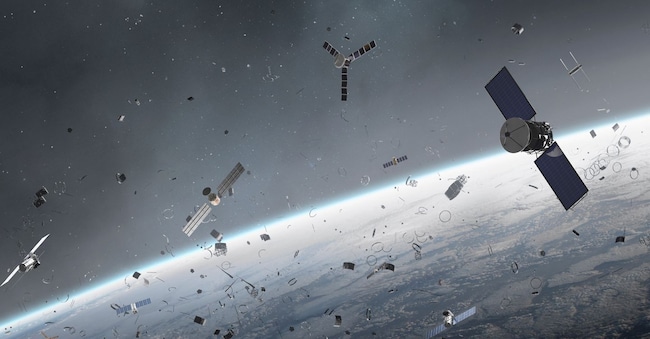
Illustrazione (AdobeStock)

2' min read

Translated by AI
Versione italiana

2' min read

Translated by AI
Versione italiana

On average, more than three intact satellites or rocket stages re-enter the Earth’s atmosphere every day. And, at the same time, ten new payloads are launched every day. ‘By 2025, the long-term impact of our space activities will have worsened by an order of magnitude in the space of just one year.’

The report

This is highlighted in the annual report on the space environment (Space Environment Report), which ESA’s Space Debris Office has been publishing since 2017 to ‘provide a transparent overview of global space activities and assess the effectiveness of international debris mitigation measures in improving the long-term sustainability of space activities’.

Loading...

According to the study, some orbits ‘are becoming saturated and are increasingly crowded with debris’.

The report also includes data on past and ongoing activities, excluding projects that are still in the preparatory phase prior to launch.

The summary of the 2026 report, based on data collected at the end of 2025, highlights that ‘the number and size of commercial satellite constellations continue to increase year on year’.

Three bodies a day

‘An insufficient number of satellites are being left to drift in heavily congested orbits at the end of their operational lives, creating a growing risk of collision,’ the report continues. ‘On average, more than three intact satellites or rocket stages re-enter the Earth’s atmosphere every day. At the same time, ten new payloads are launched every day.’ According to the ESA, although ‘the figures are low compared with the risks of everyday life, the probability of accidents resulting in casualties has increased in recent years due to the intensification of space traffic’.

A worrying trend

Not only that, but the trend of steady growth has led to a worrying development in future projections. “By 2025,” the study continues, “the long-term impact of our space activities will have worsened by an order of magnitude in the space of just one year.”

Cleaning the space

Hence the need to press ahead with what is known as ‘space clean-up’. This is a trend that is already gaining traction in various quarters but which, according to experts, is not yet sufficient. ‘Some indicators point to growing interest and greater uptake of space debris mitigation measures,’ it is emphasised, ‘but we need to act more swiftly, consistently and reliably.’

According to experts, ‘active debris removal is necessary to halt the increase in the number of objects over time, caused by the fact that space debris itself generates new fragments as a result of collisions’.

Copyright reserved ©
Loading...

Brand connect

Loading...

Newsletter

Notizie e approfondimenti sugli avvenimenti politici, economici e finanziari.

Iscriviti