
Space flight sales open: how much does a boarding pass cost
Virgin Galactic resumes suborbital flight activity and opens the way to space tourism
by Enrico Netti
 Aggiungi Il Sole 24 Ore
ai preferiti su Google
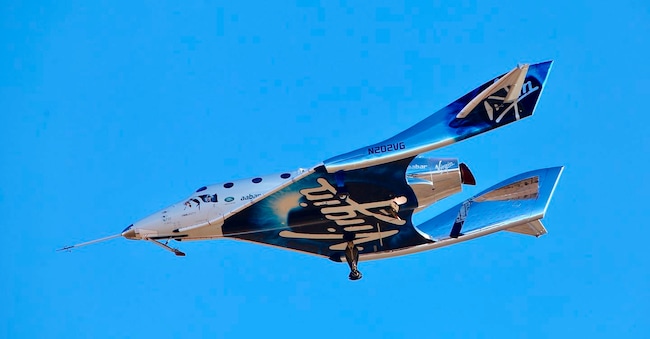
It is a stellar price to pay to join the elite of space travellers. After a hiatus of a couple of years Virgin Galactic, a company founded by British Richard Branson, has announced that it is resuming commercial space flights and selling several tickets for suborbital voyages - expeditions. The price of the boarding pass is $750,000, about $100,000 more than last years' offer, Virgin Galactic, after the abandonment of Blue Origin founded by Jeff Bezos, remained the only major company focused on short space journeys at a suborbital altitude between 80 and 90 kilometres for tourism purposes.
A new generation of spacecraft, the Delta class, will be used for these flights, which should allow flights on a weekly basis with a capacity of six passengers. It is precisely the transition to the Delta class that is intended to be more efficient. Among other things, Virgin expects a second SpaceShip to enter into service between the end of the fourth quarter of this year and the beginning of 2027, a period in which the company intends to increase its space flights. The company has decided to discontinue flights in 2024. At the moment, the backlog of requests received is around 700 bookings. "We have sold about 700 tickets and have decided to limit sales for the time being because of the waiting list," Branson told the British press.
Thanks to the Delta-class spacecraft, it will be possible to schedule a couple of flights a week using a hybrid rocket system. If everything goes as planned, the company should be able to send the 700 customers who have bought tickets into space much faster than before. In the history of mankind about 750 people have been in space. 'One of the big advantages of the new Delta-class spacecraft is that we won't have to keep them on the ground for two or three months between flights,' Branson added. 'We're building them more like aircraft, so we should be able to make a second flight every 48 hours or less. This will make the programme cheaper, which means that over time we will be able to lower the prices. When the prices come down, more and more people will have the opportunity to go into space'. In addition to commercial and tourist flights, suborbital altitude flights are used for scientific missions and will remain an important part of the programme.
Branson created several companies in the transport sector. He launched Virgin Atlantic in 1984, when the airline's first flight, made by a chartered Boeing 747, left London Gatwick bound for New York. With headquarters in California and launch bases in New Mexico, Virgin develops commercial spacecraft and offers suborbital flights to space tourists. Virgin Galactic's suborbital vehicles are launched by a carrier aircraft, the White Knight Two. Virgin Galactic's maiden flight took place in 2018 with its VSS Unity spacecraft.

