
ROSAIA and LINK: Italia and NASA are pioneers in the robotic maintenance of satellites in orbit
ROSAIA, the Italian prototype developed by ASI and IIT, and LINK, NASA’s mission to rescue the Swift telescope, are both tackling the same industrial challenge: space technologies that can be maintained in orbit.

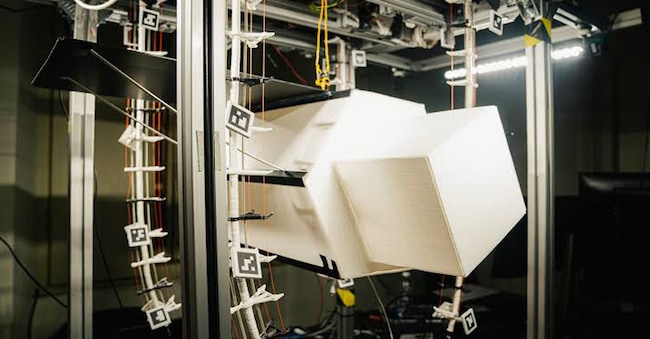
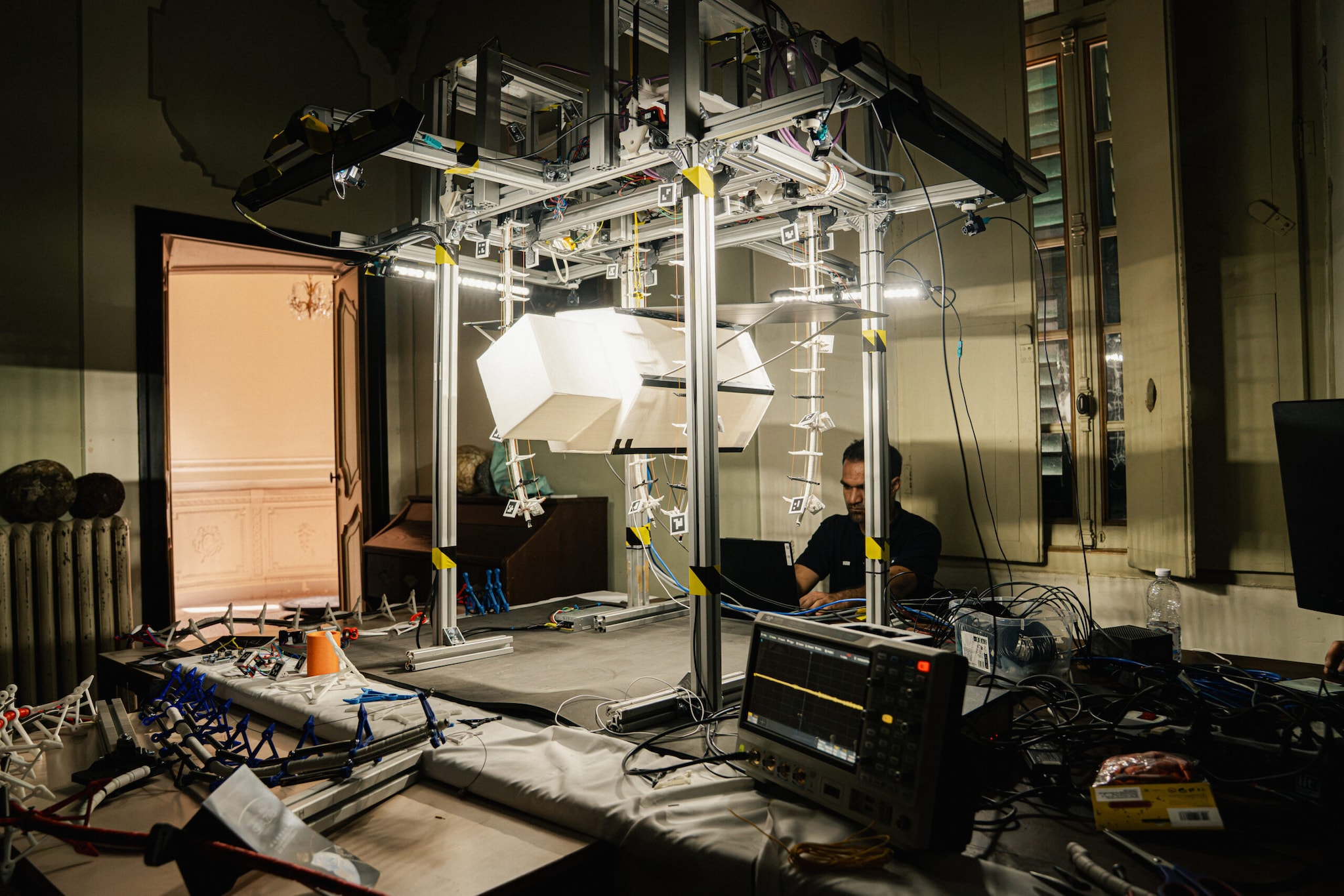
On 3 July, at the Busalla Space Festival, near Genoa, four robotic arms docked with one another in front of cameras and industry professionals. What looked like a scene from a robotics fair was in fact the first public appearance of ROSAIA, the Italian prototype designed to do in space what no one has yet managed to do consistently: approach, dock with, inspect and maintain a satellite without sending a single human being beyond Earth’s atmosphere.
An acronym for “Continuous Parallel Robot with Active Damping based on Artificial Intelligence”, ROSAIA is a multi-arm system coordinated and controlled by artificial intelligence. Funded by the Italian Space Agency (ASI), it has been developed by the Industrial Robotics Facility at the Italian Institute of Technology (IIT) in Genoa. As explained by ASI’s project manager, Orietta Lanciano, and the IIT project lead, Ferdinando Cannella, ROSAIA comprises four flexible arms, each approximately 75 centimetres long, capable of ensuring a secure grip on the target object; the design is conceived to be scalable to different sizes, depending on future applications, which will include approaching, docking with, inspecting and maintaining satellites still in operation, as well as removing inactive equipment and hazardous debris. The artificial intelligence architecture will be crucial in managing movements and ensuring the overall safety of the manoeuvre, in an orbital environment where the absence of friction and microgravity mean that any collision is a potential cause of failure.
It is worth noting that ROSAIA’s debut coincided with another piece of news, which arrived from across the Atlantic at around the same time: on 3 July, NASA launched LINK – a vehicle built by the US start-up Katalyst Space Technologies under a $30 million contract awarded in September 2025 – using an airborne Pegasus XL rocket. The objective: to reach the Swift space telescope – which has been in orbit since 2004 and is the size of a van – to return it to its original operational altitude of around 600 kilometres, following an orbital decay caused by intense solar activity that has brought it closer to Earth, threatening its very existence. If the mission succeeds – which will not happen until at least the second half of August, and it will take weeks to reach the correct orbit – it will mark the first time a commercial spacecraft has captured a US government satellite not designed to be serviced in orbit.
Two news stories, two continents, one challenge: to ensure that the imminent future of orbital equipment is no longer ‘disposable’, but maintainable. This is at the heart of in-orbit servicing, the sector that ASI, NASA and the European Space Agency (ESA) — together with operators such as Astroscale, Northrop Grumman SpaceLogistics and Katalyst itself — identify as the next industrial frontier in space.
Of course, this is not uncharted territory: in 2022, China had already successfully moved one of its own satellites into a graveyard orbit, demonstrating that the operation is technically feasible. However, what LINK will attempt in the coming months is a leap in complexity which, if successful, NASA does not rule out replicating with ‘the rock star of space telescopes’, the Hubble Space Telescope, which is also in a state of slow orbital decline.

