The new destinations

Fuels, Spain and Slovakia the low-cost filling countries

The Iberian country has become a 'fuel tourism' destination for motorists coming from the borders of France and Portugal, attracted by lower petrol and diesel prices, following the fiscal measures launched on Friday by the government to mitigate the consequences of the conflict in the Middle East
by Rome Editorial Staff

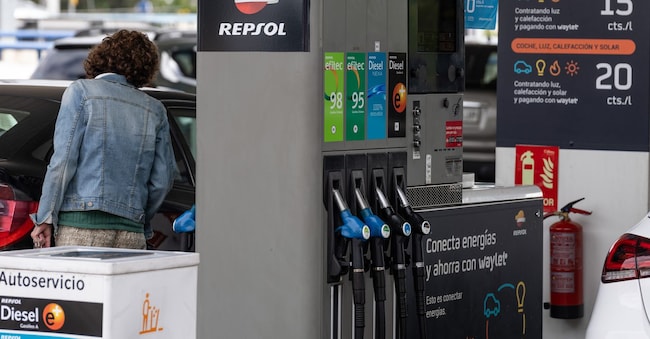
Una cliente fa rifornimento alla propria auto in una stazione di servizio Repsol SA a Madrid, in Spagna.   (Fotografo: Claudia Paparelli/Bloomberg)

3' min read

Translated by AI
Versione italiana

3' min read

Translated by AI
Versione italiana

Spain has become a 'fuel tourism' destination for motorists from the borders of France and Portugal, attracted by the lower prices of petrol and diesel, following the fiscal measures launched on Friday by the government to mitigate the consequences of the conflict in the Middle East. The cut in VAT on fuel from 21% to 10% and the reduction in excise duties have made refuelling significantly cheaper than in neighbouring countries.

According to data released by the public broadcaster Tve, the price of petrol in France has reached an average of EUR 1.99 per litre and that of diesel has exceeded EUR 2.12, compared to EUR 1.62 and EUR 1.80 respectively in Spain. A difference of up to 40 cents per litre, making it worthwhile to cross the border to refuel.

Loading...

The result is queues at petrol stations at the borders. "We are better off coming here to fill up," assured some French motorists interviewed by the public broadcaster, pointing out that on average, savings on a fill-up can exceed 20 euros.

There is also an increasing flow from Portugal: in the Lusitanian country, prices average EUR 1.85 for petrol and EUR 1.97 for diesel, with savings in Spain of between 15 and 20 cents per litre.

The measures adopted by the executive led by Pedro Sanchez as a response to the economic impact of the war unleashed by the United States and Israel in Iran and Tehran's retaliation, had an effect on immediate refuelling, while limits were imposed on the transport of fuel in containers. The Spanish Confederation of Petrol Station Entrepreneurs called the tax reduction 'a more effective solution' than previous measures, while the Organisation of Consumers and Users estimates an average saving of 8 euros per fill-up in Spain. But there is no shortage of criticism from haulage associations and farmers, who consider the measures 'insufficient' compared to the rising costs of oil and gas.

Bratislava, from 19 March restrictions on fuel sales and export ban

Since 19 March, a restriction on the sale of diesel and a ban on the export of fuel abroad has been in force in Slovakia for thirty days. The government of Prime Minister Robert Fico has also ruled that drivers of vehicles with foreign number plates will have to pay a higher price for diesel than Slovak citizens, set on the basis of the average price of fuel in the Czech Republic, Austria and Poland, where diesel is currently more expensive than in Slovakia. To approve the restrictions, the government made use of the state of oil emergency, declared by Bratislava in February following the interruption of crude oil supplies from Ukraine via the Druzba pipeline. "A situation has arisen in which dozens of petrol stations in northern Slovakia are left without fuel because the price is significantly lower than in Poland. It is convenient for Polish citizens to travel to Slovakia for shopping and refuelling. This creates instability, which is why we decided to introduce restrictive measures,' Fico explained, according to the Aktuality.sk website. Natural 95 petrol at Slovnaft petrol stations located off motorways in the Bratislava area generally costs EUR 1.539, while diesel costs EUR 1.534 per litre.

Slovakia, EU: 'more expensive fuel for foreigners discriminatory'

Slovakia's decision to introduce differentiated fuel prices between domestic and foreign vehicles, with consequent surcharges for vehicles with foreign number plates, is "highly discriminatory" and "contrary to EU law". This was stated by Ricardo Cardoso, spokesman for the European Commission, during the daily press briefing. "We understand the need to support citizens at this particular time," he added, acknowledging the energy price hike, but measures to counter it "must not discriminate on the basis of nationality, nor undermine the integrity of our single market. We will take appropriate legal action to ensure that this is respected: at the moment it is important that Member States do not act unilaterally on these issues and that these measures are coordinated,' he concludes.

Copyright reserved ©
Loading...

Brand connect

Loading...

Newsletter

Notizie e approfondimenti sugli avvenimenti politici, economici e finanziari.

Iscriviti