

Starace: 'Psychiatry in the doldrums and we need 20 times more funds for personnel'
The president of the Society of Psychiatric Epidemiology promotes the Mental Health Action Plan launched by the Unified Conference including the checks on the Regions but warns: the first resources tied up in the budget law are insufficient to fill the need for operators

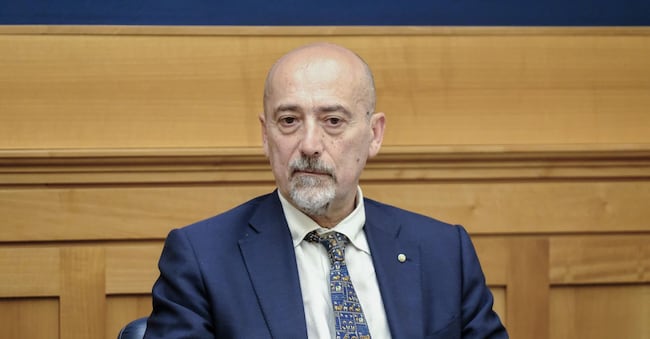
"We welcome the Plan that updates mental health programming, we also welcome the six priority areas on which we are asked to impact more effectively and efficiently. And welcome, above all, the monitoring scheme with which the Plan is endowed: we trust that it will commit the regions to a more careful verification of what is being done and what has not yet been achieved. Unfortunately, today's data, both quantitative and qualitative, show an exhausting situation for the psychiatric care system'. This is how Fabrizio Starace, president of the Italian Society of Psychiatric Epidemiology (Siep), comments on the go-ahead for the new 2025-2030 strategy, fine-tuned by the ministerial round table led by psychiatrist Alberto Siracusano and voted by the Unified Conference after months of impasse and a revision requested by the Regions.
With the budget law, resources finally arrive
This is undoubtedly good news, including the decision to provide restricted funds for recruitment. But we are still a long way from the necessary personnel requirements: compared to the 30 million made available by the manoeuvre for permanent contracts, to reach the standards defined by the Agency for Regional Health Services-Agenas would require a figure 20 times higher. The point is that with respect to personnel, which is the crucial element in mental health activities, we continue to see a huge gap. The manoeuvre is therefore a first timid step, which we hope will be matched by a greater sensitivity on the part of the legislator in allocating the necessary funds to mental health for a fully operational activity. Otherwise, we even risk the boomerang effect: that is, of creating in users and families expectations of worthy assistance, which the system will not, however, be able to match.
Psychologist and community houses are among the keywords of the new Plan
The presence of professionals from the psychological area at the point of most immediate contact and proximity with users is an important indication, but it will be necessary to carefully coordinate these activities with those of the mental health services for both adults and children and adolescents, to avoid the risk of duplication or unconnected activities, which therefore once again do not activate virtuous pathways but are limited to a symbolic presence, unable to set a functioning system in motion.
The organisation of care has been much debated: in your opinion, should the integrated and inclusive mental health department be the sole director of the system?
Everyone involved in health planning is convinced of this. And yet, the delays in approving the Plan have also been linked to the difficulty posed by the professional addiction groups, which have reaffirmed their autonomy, including management autonomy with their own departments. Instead, everything should be brought back to unity, including the management of child and adolescent neuropsychiatry. Otherwise, hot topics such as the transition to adulthood will remain a mirage that no plan will ever be able to cure.

