The war in the Gulf

Starmer convenes summit with 35 countries for the Strait of Hormuz

The PM is distancing himself from Washington and wants to strengthen ties with the EU

by Nicol Degli Innocenti

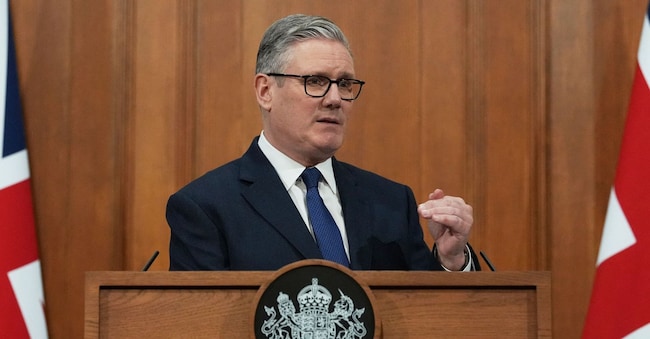
Keir Starmer. (Reuters)

2' min read

Translated by AI
Versione italiana

2' min read

Translated by AI
Versione italiana

LONDON - The British government has organised a virtual summit with 35 countries, including Italia, for tomorrow, Thursday 2 April, in an attempt to alleviate the crisis in the Strait of Hormuz. Prime Minister Keir Starmer announced that Foreign Minister Yvette Cooper will host the meeting to discuss concrete plans to restore free movement in the strait, effectively blocked by Iran in retaliation for the US attack.

The meeting "will consider all possible diplomatic and political measures we can take to restore free navigation, ensure the safety of ships and sailors stranded in the strait, and resume the movement of crucial raw materials," Starmer said.

Loading...

London is aiming for a diplomatic solution and preparing for the next stage

The British government has already turned to military strategists who will study how to 'make the strait safe and accessible after the ceasefire', the premier explained. The first phase will focus on detecting and neutralising mines, while the second will aim to protect oil tankers and other ships crossing the strait.

Starmer reiterated that Britain does not intend to be 'dragged into war' and that reopening the Strait of Hormuz is the best way to prevent further increases in energy and other commodity prices that are hurting all countries involved.

The 35 invited countries

The 35 countries that will attend the summit are those that last month signed the Joint Declaration proposed by London, criticising Iran for closing the strait but saying they are "ready to contribute to appropriate efforts to ensure safe passage through the Strait of Hormuz", while respecting international law. The declaration also expressed appreciation for 'the commitment of nations that are making preparatory plans' in this regard.

In addition to the seven original signatories of the 19 March Declaration - the United Kingdom, Italia, France, Germany, the Netherlands, Canada and Japan - several other countries have joined in recent weeks, including Denmark, Sweden, Norway, Estonia, Australia, New Zealand, South Korea, Bahrain and the United Arab Emirates.

The UK must forge ever closer relations with Europe

The global instability caused by the Iran war shows that the UK needs to forge ever closer relations with Europe on both the economic and defence fronts, Starmer said. Details will be discussed at a summit with the EU planned for this summer, which will have 'more ambitious goals' than previous meetings and will go beyond agreements already reached on trade, energy, fisheries and defence.

"It is increasingly evident that as the world follows this unpredictable path, our national interest requires closer long-term relations with our allies in Europe," said the PM, warning that, regardless of the length of the conflict, the consequences of the war in Iran will have a lasting impact.

Starmer had gone to great lengths to ingratiate himself with US President Donald Trump and establish friendly relations with him, but in recent days Trump, offended by London's refusal to actively participate in the conflict, has repeatedly targeted the British PM, calling him a "coward" and "not up to Churchill's standards."

Starmer has maintained a dignified silence, but his actions count for more than words. The premier, who campaigned against Brexit ten years ago in the referendum campaign, is distancing himself from Washington and wants to strengthen ties with the EU.

Copyright reserved ©

Brand connect

Loading...

Newsletter

Notizie e approfondimenti sugli avvenimenti politici, economici e finanziari.

Iscriviti