
Soya strategic for PDO and biofuel: 'National plan needed to produce more'
Agricultural associations and industrial giants such as Eni and Cereal Docks: join forces in the supply chain to reduce the deficit, which today amounts to 80% of requirements

3' min read
3' min read
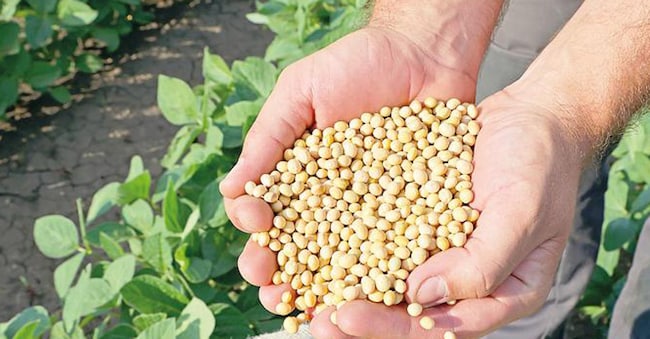
A plan to increase national production of soya, a strategic raw material for the agro-industrial supply chain and the production of renewable energy, which currently, despite Italy being the leading European producer, covers just 20% of requirements, with one million tonnes of rigorously non-GMO seeds (while a new import derogation has just been approved) against a need for more than five. This is a production at the basis of the great national PDOs, mainly used in animal feed but with growing uses in biofuels and environmental benefits such as improved soil fertility and reduced use of pesticides.
The definition of a shared agro-industrial plan to support production was the objective of the meeting promoted in the Senate by the Chairman of the Agriculture Committee Luca De Carlo at the initiative of Cereal Docks, the Vicenza agro-industrial giant with a turnover of 1.6 billion led by Mauro Fanin, active in the import and processing of soya, including GMOs, which buys more than half of the national production. Italy is trying to lead the way where Europe has stopped: the definition of a protein plan has always been the phoenix of agricultural policy, always invoked but never done, so much so that the EU deficit, at 90%, is more serious than the Italian one.
To achieve this, first of all resources are needed, as Coldiretti President Ettore Prandini recalled, well beyond the current specific aid of the CAP. Then there are the bureaucratic problems, with a certification cost three times higher than in Germany: "We have done a great job to obtain the valorisation of waste oil but the authorisation expires at the end of 2025, an extension is needed and it must be made stable to guarantee investments". For years, recalled Cia president Cristiano Fini, 'soya was snubbed while today its strategic importance for the food and energy industry is recognised. We must incentivise farmers, who are grappling with unprofitable prices and yields, and accelerate the approval of the EU Tea Regulation. On biofuels we have a great opportunity that we are not exploiting.
The needs of the feed industry are also set to increase, indicated Silvio Ferrari, vice-president of Federprima (the association of the first-processing industry), which is why supply chain contracts are an important tool but not enough. "Italy must go back to cultivating 800,000 hectares as it did 40 years ago," said the president of Confagricoltura Massimiliano Giansanti. "We have a market to build linked to the energetic use of vegetable oils. If we were able to transform all the oils in Italian warehouses, we would be able to produce enough energy to power 15 hospitals such as the Policlinico di Roma'.
In recent years Brazil, a big global player together with the USA, has increased production to 170 million tonnes and covers 70% of European needs, which in the meantime with the new deforestation regulations risks adding another tariffs to those in North America. The real issue remains, however, that of European funding, and on biofuels the battle cannot be only Italian, we need a regulatory framework and a European market to incentivise investment. This is why the supply chain is asking the institutions not to penalise them: until a few years ago the operator who used traced oil to produce electricity was rewarded, today the only driver is the price; a mechanism that favours the purchase of oil from national supply chains must be reintroduced.

