Food economy

Farmers' associations: 'To mediate tariffs buy maize and soya from the US'

Reconnaissance by Il Sole 24 Ore among the main Italian agricultural organisations in view of a possible EU-US negotiation to reduce the tariffs threat

by Giorgio dell'Orefice

3' min read

3' min read

Accelerating the import of commodities from the US, particularly products for which Italy has a deficit. Seek wide-ranging collaboration on agriculture 5.0 technologies as well as genetic research, but no concessions on the protection of geographical indications.

This is the result of a survey promoted by Il Sole 24 Ore among the main Italian agricultural organisations with a view to a possible EU-US negotiation in order to defuse the tariffs threat.

Loading...

The point is that it is difficult to continue to demand freedom of access to the US market without at the same time opening up to some concessions. And until recently, the attitude of Italian and European farmers has been one of total closure on all of Washington's main agricultural demands: no to GMOs, no to the import of cereals treated with glyphosate, no to hormone-treated meat and - above all - no to the liberalisation of PDO and PGI names, hence no to Parmesan and Asiago made in the USA.

But after the first few months of tariffs and faced with little possibility of replacing an outlet market such as the US (a little less than 8 billion in made-in-Italy food exports, 1.9 billion in wine alone), attitudes are changing.

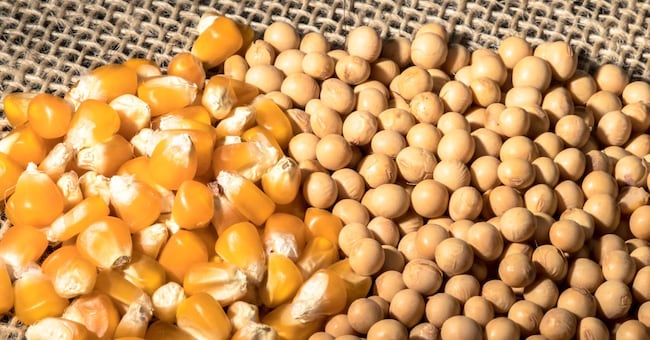
Important was the recent bilateral meeting that Agriculture Minister Lollobrigida had with US Agriculture Secretary Brooke Rollins. At the end of the meeting, the American 'minister' asked: Why are you importing maize and soya from Brazil and Ukraine instead of the US?

'Effectively,' replied the president of Coldiretti, Ettore Prandini, 'we are talking about commodities in which we are lacking and which we must find abroad. In doing so we should remember the specific weight that the US market has for Italian agri-food products and at the same time the much less significant role of the Brazilian market'.

Certainly the fact that for soya and maize produced in the USA there is the GMO component will also have weighed heavily, while for durum wheat the greatest criticalities are linked to the use of the herbicide glyphosate. "On the soya and maize front," added the president of Confagricoltura, Massimiliano Giansanti, "these are products destined for animal feed and certainly not human consumption, and this reduces fears about the presence of GMOs. While with regard to durum wheat, the use of glyphosate is more common in Canada than in the United States. In addition, it should be remembered that the US currently has a problem with China over its soya exports. We could fit into this context and replace China, at least in part, by buying a product from the US in which we are in deficit'.

'The GMO issue at least for these major commodities is outdated,' added the Chairman of the Italian Farmers' Association, Cristiano Fini. 'These are products for animal feed that we do not produce and have to import. Better to import them from the USA than from other countries'.

Where it is possible to go a long way together is on the front of technology and innovation understood both as Agriculture 5.0 and as genetic innovation.

'On precision agriculture,' Prandini added, 'the Americans have very advanced research centres. While we are seeing great interest from the US in agronomic research, new assisted evolution techniques (Tea) and cisgenetics, which represent an outgrowth of the old GMOs. There is therefore great scope for joint work'.

On PDO and PGI, on the other hand, there seems to be no room for negotiation. "The PDO economy for Italy and Europe is too important to make concessions,' Prandini added. 'In the PDO supply chains, value is created that is redistributed not only to milk producers but also to those of cereals for animal feed, and to fodder producers. It took us years to build this system, we cannot weaken it or allow ourselves any concessions that could then fuel confusion in the market'.

"The great challenge that the US and the EU must face together," concluded Confagricoltura President Giansanti, "is to increase agricultural productivity margins to meet the new demand that will come with global population growth. Global demand for agri-food products is expected to grow by 30% in the next 20 years. We have to work together with the US to meet it if we do not want to keep talking about tariffs and leave this great opportunity to Asian countries'.

Copyright reserved ©
Loading...

Brand connect

Loading...

Newsletter

Notizie e approfondimenti sugli avvenimenti politici, economici e finanziari.

Iscriviti