
Prevention

Stroke risk, carotid stent reduces it by more than 50% when combined with medical therapy

This minimally invasive procedure against the accumulation of atherosclerotic plaques came under the lens of the Crest-2 study: the procedure is performed without surgical access, with very short hospitalisation times and with excellent results, especially in centres with great experience

by Matteo Stefanini *
Adobestock

3' min read

Translated by AI
Versione italiana

3' min read

Translated by AI
Versione italiana

Asymptomatic carotid stenosis, i.e. the narrowing of the carotid artery due to the accumulation of atherosclerotic plaques, in people without previous neurological symptoms, has always been one of the most delicate challenges in stroke prevention.

For years, the scientific debate has focused on two crucial questions: when to intervene and which treatment strategy is most effective, between medical therapy alone and revascularisation by stent or endo-arteriotomy.

Loading...

The Studio

The recent international Crest-2 study, recently published in the New England Journal of Medicine, represents a turning point. With 2,485 patients followed over a 10-year period from 2014 to 2025, enrolled in high-volume centres capable of ensuring standardised and safe procedures, it is one of the largest trials ever conducted on this scientific topic.

What is carotid stenosis

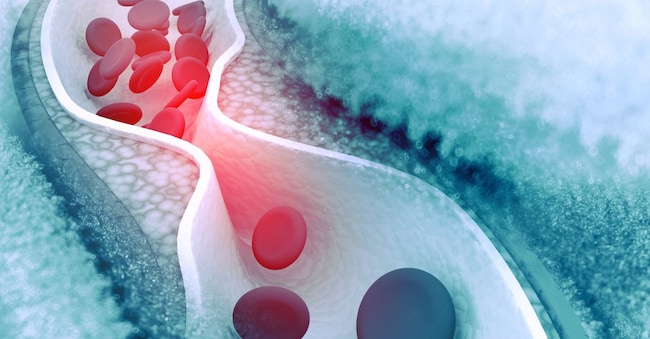
Carotid stenosis is the narrowing of the carotid artery, the main blood supply route to the brain. It can be: symptomatic, when it causes fleeting symptoms such as Tia (transient ischaemic attack) or even more complex symptoms such as stroke; asymptomatic, when it causes no clinical signs, i.e. no symptoms at all. The risk that stenosis may grow and then increase is linked in particular to certain risk factors such as hypertension, hypercholesterolaemia, diabetes, smoking and a family history of cerebrovascular events.

What Crest-2 proves

Crest-2 compared three strategies: intensive medical therapy alone, carotid stenting plus medical therapy, and endarterectomy plus medical therapy. The medical therapy adopted was particularly strict, especially in the controls: careful control of blood pressure, reduction of Ldl cholesterol below 70 mg/dl, lifestyle interventions and dedicated coaching.

The most significant finding concerns stenting: the 4-year stroke risk was 2.8% with stenting plus medical therapy, compared to 6.0% with medical therapy alone.

The carotid stent procedure is a technique that has been established for many years and consists, through the puncture of a peripheral artery in the arm or leg, in the insertion of a small metal mesh that keeps the artery open, thus avoiding problems in the brain.

It is a minimally invasive procedure, without surgical access, with very short hospitalisation times and with very good results, as the study showed, especially in centres with great experience.

Crest-2 therefore changes the paradigm: today it is no longer a question of whether to intervene, but where and in which patients, favouring high-volume centres with documented results.

The implications for patients

The first consequence is that intensive medical therapy remains the indispensable basis. The addition of stenting in patients with stenosis ≥70% provides a clear and measurable long-term benefit.

Patient selection becomes more rigorous and stratified, as the choice between intensive medical therapy and revascularisation is no longer based solely on the degree of stenosis, but on an overall assessment of individual stroke risk, procedural risk, life expectancy and centre experience.

This stratification makes it possible to identify patients who derive a real benefit from stenting, maximising the safety and efficacy of treatment.

In addition to this, an Echo-Colour-Doppler of the epiaortic vessels, a simple, rapid and non-invasive examination, is sufficient for diagnosis. More widespread use of this examination in the population would allow early interception of patients at risk.

The Policlinico Casilino case

Policlinico Casilino is today one of the Italian centres with the highest volume of carotid revascularisations: 229 procedures in 2023 (source: Pne 2024). This figure is not only numerical: it reflects specific experience, a dedicated team, shared protocols between interventional radiologists and vascular surgeons, and the ability to manage both the procedural phase and follow-up.

In a context where Crest-2 proves that 'where you intervene' is as decisive as the technique, the high volume of our centre translates into safer procedures and predictable results. Disclosing this data means offering a concrete opportunity to improve stroke prevention in an often silent but high-risk population.

* Head of Diagnostic Imaging and Interventional Radiology Unit - Policlinico Casilino, Rome

Copyright reserved ©
Loading...

Brand connect

Loading...

Newsletter

Notizie e approfondimenti sugli avvenimenti politici, economici e finanziari.

Iscriviti