

Stroke, 'spy' protein discovered: will tell how severe it is and how it will evolve, for tailor-made treatment and rehabilitation
It is called BD-tau: a blood test is enough to know the values. It will help understand the damage of ischaemic stroke and especially predict its outcome over time
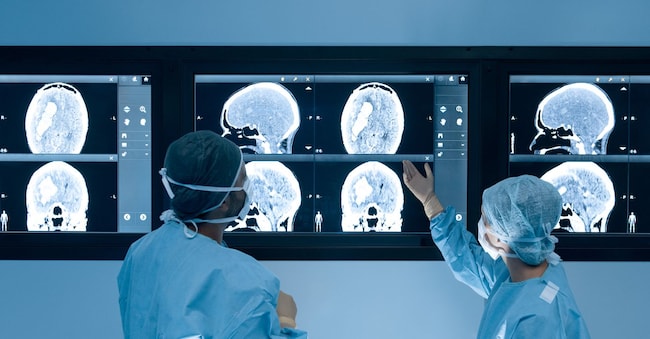
"Time is brain. Time is brain. When blood does not reach the neurons, they die. And as much as can be done with rehabilitation, what is important is to get there as soon as possible with treatment. Having remembered this first rule to bear in mind in the event of symptoms that may suggest a stroke, once in hospital there are two main questions to be settled. The first is how much and how intense the acute damage is, the second relates to the rehabilitation course and subsequent recovery over time. In short: in addition to diagnostic imaging, linked for example to CT or MRI, there is a need for a simple and reproducible examination that can answer the patient's and family members' questions. In short, a blood test is needed. Well, according to research published in Science Translational Medicine and co-ordinated by experts at the LMU - Ludwig-Maximilians-Universität University Hospital in Munich, it appears that the brain-derived protein tau, or BD-tau, could become this sort of constant 'tell-tale' of the situation in the case of ischaemic stroke, by far the most frequent.
Valuable information
The research, coordinated by Steffen Tiedt, looked in 2013 at the possibility of developing a reliable blood test that could continuously monitor brain injury and make the effects of treatment measurable. This led to the identification of the brain-derived protein tau (BD-tau) as a promising biomarker, as it 'fetches' the tau protein originating in the central nervous system. In the study, this parameter was assessed repeatedly from hospital admission up to day seven and then re-measured in further research, until more than 1,200 stroke subjects were collected. The results were further validated in two independent multicentre cohorts, including a biomarker-based analysis as part of a phase 3 clinical trial. In total, data from more than 1,200 stroke patients were included in the analyses. what emerged? Basically, that blood levels of BD-tau can 'draw' the extent of brain damage, both immediately and over time. In particular, what was detected early, within a few hours of the onset of symptoms, was associated with the actual damage and the topographical definition of the final brain lesion.
Monitoring over time and beyond
The indications offered by BD-tau, however, were not limited to the immediate course of the patient after the acute event. Thanks to the 'spy' protein test, it was possible to draw a kind of 'pathway' of the evolution of brain damage over time. It was seen, for instance, that high BD-tau values in the first 24-48 hours correlated with a development of the lesion, as well as a possible increased risk of complications and recurrence. Not only that. Analysing the BD-tau was a strong predictor of recovery, with a sort of reliable three-month 'prediction' of the patient's functional outcome, obviously in comparison with other blood tests. Finally, with BD-tau it was possible to predict the results of treatment, for instance after removal of the thrombus obstructing a vessel and causing the ischaemic stroke, i.e. after thrombectomy treatment. BD-tau increased less when the vessel was completely reopened. And there are early observations that the test could also be used to assess the neuroprotective action of drugs under investigation. 'We not only need a picture from the beginning of a stroke, but a way to follow the course of the brain injury over time,' Tiedt explains in a note. BD-tau could become a kind of 'brain troponin' (troponin is extremely useful for monitoring cardiac health, ed.), an objective blood marker that makes the progression and effects of treatment measurable'.
Interesting perspectives
"This study, if confirmed by others, has enormous clinical implications for the treatment of people with ischemic stroke because it provides a biomarker that can be easily used to assess prognosis, monitor the course of the disease and the response to treatments, probably including rehabilitation treatments," is the comment of Antonio Uccelli, professor of neurology at the University of Genoa, scientific director of Irccs Azienda Ospedaliera Metropolitana Regione Liguria and of the extended national neuroscience partnership Mnesys. Its presumably low cost and ease of application - a simple blood sample that can be repeated several times in the first few days after a stroke - would make it commonly usable in clinical practice more easily, cheaply, and quickly than the radiological examinations currently used'.

