

Stroke: the artery has been reopened but the blood isn’t flowing – the brain’s malfunction following ischaemia
Microclots block small arteries as a misguided defence mechanism. ‘Two-faced’ proteins and inflammatory molecules for personalised therapies

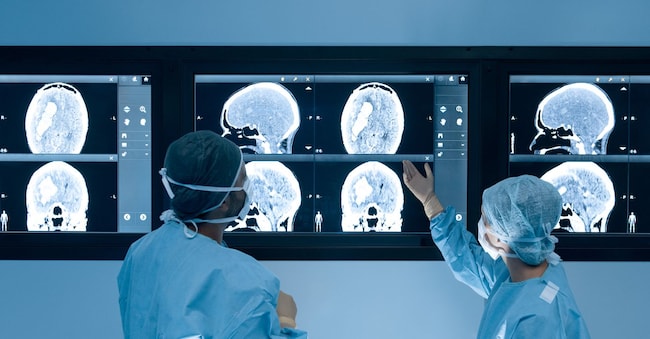
“Time is Brain”. Time is brain. This is the first rule in the chaos of a stroke, because it is essential to recognise the symptoms and signs of brain damage very quickly and then initiate treatment. In the case of an ischaemic stroke – the most common type – thanks to the possibilities offered by drugs and treatments that clear blockages in blood vessels, it is possible to restore the supply of blood and oxygen to the neurons in the affected area. However, even though the neurons can recover thanks to the restored flow of nutrients, it is not always possible to regain as much function as one might expect. Thus, even if emergency treatment has been optimal, many people may experience sensory or motor after-effects linked to the ischaemia in the long term. A mystery, one might think. Now, however, science is shedding light on what happens. And it reveals that behind the disabling effects of a stroke there may lie a sort of ‘kamikaze’ mechanism within the brain itself, which triggers the formation of microclots that block blood flow in the very small arteries, causing problems that damage tissues even long after the initial problem has been resolved. This is the finding of a study conducted by experts from the University of Colorado Boulder and the University of Antwerp, published in PNAS, the journal of the US National Academy of Sciences, and coordinated by Debanjan Mukherjee of the US university and Frederik Denorme of the University of Antwerp.
What happens with ‘no reflow’
It is well known that removing a clot – the cause of a stroke – does not always fully restore blood flow to the brain. “This is known as the ‘no-reflow’ phenomenon.” “We need to distinguish between recanalisation and reperfusion: reopening the large artery does not always lead to reperfusion of the tissue,” explains Massimo Del Sette, Head of Neurology at the IRCCS San Martino-AOM in Genoa. This ‘no-reflow’ phenomenon, i.e. the failure of reperfusion, is observed in around 20 per cent of treated patients.” In short: simply removing the clot is not enough to resolve all the problems affecting the neurons. And the study attempts to uncover what actually happens. By analysing the central nervous system of mice, the experts observed what actually happens after the blood clot is removed via endovascular thrombectomy, a procedure designed to remove the clot itself. They found that although blood flow resumed rapidly after the procedure, in many animals it proved to be irregular and, at times, the blood even flowed backwards. Not only that. Whilst the brain was trying to divert the blood round the initial blockage, tiny clots formed at the point where the disrupted blood vessels converged. “In short, to understand what happens in this retrograde flow that damages circulation, we need to focus on tissue inflammation and microthrombosis in the most peripheral branches of the vessels,” explains Del Sette.
The Perfect Storm
To understand what lies behind clot formation, Mukherjee’s FLOWLab has recreated the scenario on a computer using a simulation on an artificial 3D brain with artificial blood. This research has shed light on the role of von Willebrand factor, a protein best known for its role in blood clotting and haemorrhage control. In its resting state, von Willebrand factor is coiled up like a ball of string inside the blood vessels, waiting for alarm signals from the body to cause it to uncoil and begin forming clots to stop the bleeding. In a brain affected by a stroke, this ‘ball of string’ unravels and the aggregated mass becomes a filament that attracts platelets, forms new clots and blocks blood flow even after the original clot has been removed. Not only that: the study has shown that the brain’s inflammatory response to stress interferes with the protective mechanisms that normally keep the clotting activity of proteins under control, creating what the authors describe as ‘a perfect storm’ of collateral damage.
Towards the healthcare of the future
Moving from the laboratory model to humans, there are also observations suggesting that this phenomenon may also be observed in humans. However, further research is needed to determine why blood flow is not restored in some stroke patients, whilst it is in others. The study did, however, find that stroke patients with higher blood levels of a pro-inflammatory compound called Interleukin 6 had a more hyperactive von Willebrand factor and a poorer long-term prognosis. This paves the way for future targeted therapies aimed at these mechanisms, in combination with emergency treatments for ischaemic stroke. “We have further evidence that microthrombosis can be triggered by von Willebrand factor, which, in experimental models, has been shown to be inhibitable,” concludes Del Sette. “But we are only at the beginning. Potential therapies targeting the ADAMS 13 protein or Interleukin-6, which have shown efficacy in experimental animal studies, have raised high expectations, but the same efficacy in humans has not yet been demonstrated.”

