
A stronger supply chain is needed for the objectives of the House Plan
Crucial will be the production structure: companies and skilled labour

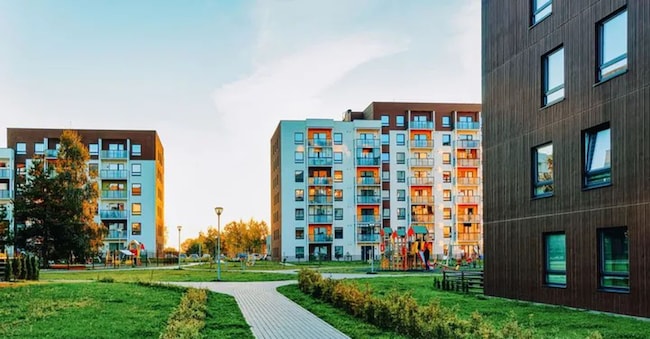
The government's initiative to tackle the housing emergency with a systemic approach is a fundamental step. The increasing difficulty of access to housing for workers, students and young people, who are not in a position to access either public housing or market housing, risks alienating a section of citizens. The Plan therefore addresses not only fragile households and individuals, but also this 'grey segment', which contributes to the social and economic resilience of cities.
The context is that of a residential market with a long-standing structural shortage of new supply: purchases and sales of new homes account for less than 10%. Added to this, for the construction sector, is a contraction of investment in housing (-15.5% in 2025), and a slowdown in building permits.
The supply chain
In this perspective, the first element to be assessed, in addition to consistency with social objectives, is the compatibility between expected volumes and the capacity of the supply chain. Without a reinforcement of the production structure, in terms of companies, skilled labour, capital and pipeline continuity, the risk is that the limitation is not only in the availability of resources, but in the concrete possibility of transforming them into building sites and homes.
Fundamental is the knowledge of the different social, economic and urban dynamics of the Peninsula as well as the mapping of the public real estate stock in order to identify priority units and compendiums.
Private capital and taxation
The design of theinvolvement ofprivate capital is ambitious, but the approach raises some questions. Focusing on large-scale operations, with very high investment thresholds and a specific focus on foreign capital, risks excluding a significant proportion of domestic players. The most delicate point for the sustainability of the programmes concerns the combination of affordable housing share and discount level.

