Climate change

Summer of extreme events costs Europe over 40 billion

Research tries to come up with an immediate estimate of the losses caused by heatwaves, droughts and floods made more frequent and severe by global warming: in 2025 the damage to Italy would be 12 billion

by Gianluca Di Donfrancesco

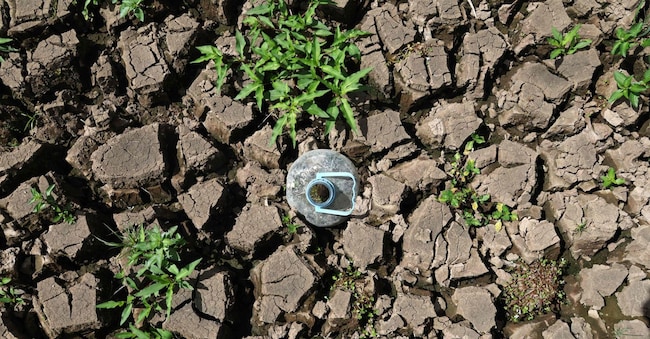
Siccità (AFP)

2' min read

Translated by AI
Versione italiana

2' min read

Translated by AI
Versione italiana

Determining the economic losses caused by natural disasters is always a complex operation: a joint study by a researcher at the University of Mannheim, Sehrish Usman, and two economists at the European Central Bank, Miles Parker and Mathilde Vallat, tries to estimate those attributable to the heat waves, droughts and floods that hit Europe this summer. The result: EUR 43 billion in 2025 alone, which is assumed to rise to EUR 126 billion by 2029.

A 12 billion bill for Italy

For Italy, the losses caused by this summer's extreme events are estimated to be close to 12 billion in 2025, and are expected to exceed 34 billion by 2029. For Lombardy alone, the bill would be 2.5 billion and 7.65 billion in 2029.

Loading...

For France, the study indicates damage of 10 billion in 2025 and around 34 billion in 2029. The other country particularly affected is Spain, with losses of over 12 billion in 2025 and almost 35 billion in 2029.

In all, heatwaves have been recorded in 96 regions of the European Union, which have consequently experienced a drop in productivity in the most exposed sectors, such as construction and reception. The damage associated with the study is close to 7 billion.

Drought phenomena affected 195 regions, where they damaged crops, resulting in losses of EUR 29.4 billion.

The floods, which affected 53 regions, damaged infrastructure, buildings and crops: the estimated damage in this case is 6.5 billion.

Added to these direct losses are those resulting from the disruption of supply chains.

"Conservative estimates"

"The true costs of extreme weather events emerge slowly because they affect lives and livelihoods through a wide range of channels beyond the initial impact," Usman says. "Official estimates of the impact," he adds, "are often delayed." The goal of the newly presented research is "to provide timely estimates of the impact of summer 2025 extreme events on economic activity.

According to the authors of the study, the figures presented are conservative, for example because they do not include phenomena such as forest fires. Yet, even so, the damage estimate for the summer of 2025 far exceeds the estimate calculated for the whole of 2024 by the reinsurance company Swiss Re, according to which the direct economic losses from all natural catastrophes last year, including the catastrophic flooding caused by Cyclone Dana in Spain, would amount to 31 billion.

According to the study's authors, however, the macroeconomic costs "of catastrophes far exceed" the damage and loss estimates typically made by reinsurance companies, which do not include a wide range of factors: reduced productivity and production in the construction and reception sector due to heatwaves; the loss of production that occurs when factories are damaged; human costs; costs to government budgets; inflationary phenomena; and spillover effects through trade relations and supply chains.

as global warming accelerates, making climate disasters stronger and more frequent, investments in adaptation, i.e. in infrastructure and mechanisms that help reduce damage, and mitigation measures, i.e. the reduction of greenhouse gas emissions through the greening of production and consumption systems, are increasingly urgent.

Copyright reserved ©
Loading...

Brand connect

Loading...

Newsletter

Notizie e approfondimenti sugli avvenimenti politici, economici e finanziari.

Iscriviti