
President of Ancc-Coop: 'Supermarkets closed on Sundays to cut costs'
Ernesto Dalle Rive, president of Ancc-Coop, explains the bottlenecks in the sector: 'Household consumption will be cold in 2026'

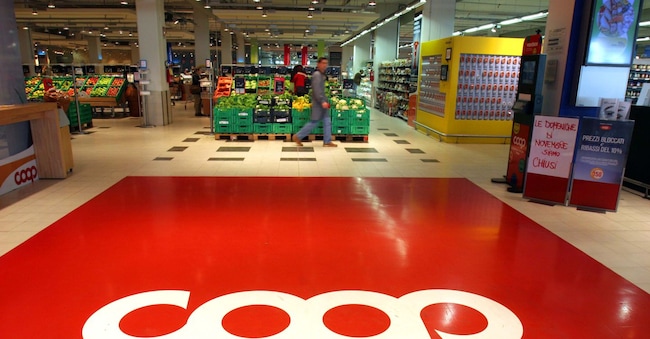
Towards a year that promises growth in the order of decimals: 0.2% for GDP and 0.3% for consumption. "Italy in 2026 will be a country with insignificant growth, close to zero, with consumers with a spending capacity compressed by compulsory expenditure," remarks Ernesto Dalle Rive, president of Ancc-Coop to which 72 consumer cooperatives belong, with 2024 revenues of 16.4 billion, more than 57 thousand employees in more than 2,200 supermarkets chosen by 9 million customers every week.
In addition, large retailers are leaving behind a difficult 2025 marked by falling sales volumes and suffering margins. The most direct way forward is the limiting of costs and the search for new revenues, for example, in the service area. Solutions are being explored to sustain turnover.
"As Coop we are making a reflection that we would like to share with the large-scale distribution system: the closure of supermarkets on Sundays in order to arrive at a shared drop point that could provide for six days of shop opening," says Dalle Rive. It was the 'Save Italy' decree of the Monti government that introduced Sunday and holiday shop openings. "The main companies in the Coop system now view Sunday closures favourably and we want to see if it is possible to open discussion tables with Federdistribuzione and the Association of Modern Distribution (Adm), if a shared vision can be arrived at."
The decision would make it possible to contain the cost of labour - on Sundays the surcharge is at least 30% of the salary - and recover productivity and efficiency, which according to the Coop Studies Office for the entire Italian large-scale distribution system could be worth between 2.3 and 2.6 billion. Resources that could be used to increase promotions 'and give an answer to our employees who do not want to have to work on Sundays,' adds Dalle Rive. Our surveys show that a part of the purchases would move to the other days of the week'. For Coop, about one in three Italians do not do their shopping on Sundays.
As mentioned above, 2026 promises to be a difficult year for consumption due to international geopolitical tensions, with a mix of concern and uncertainty affecting at least six out of ten Italians, according to two Coop Research Department surveys carried out in December: one in collaboration with Nomisma on a representative sample of the Italian population and the other among opinion leaders in the Coop Report community.

