
Surface Pro 11 enters the age of artificial intelligence: now Microsoft believes in it more
We tried Windows on Arm on the new Surface Pro 11 devices and liked it, too bad the price is still too high.

2' min read
2' min read
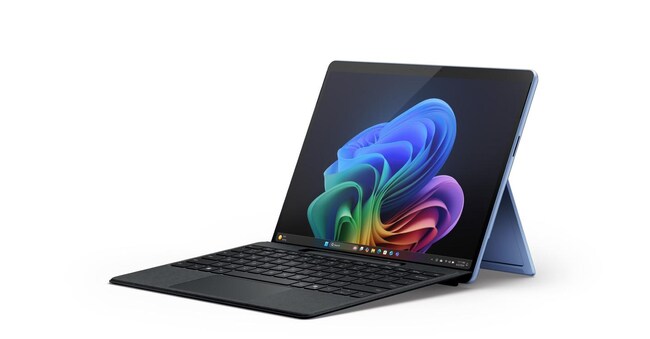
When the Surface devices were born, Microsoft had an ambitious idea: to fuse the productivity of a Windows laptop with the autonomy and responsiveness of a tablet. It has taken 11 incarnations and the new Qualcomm Snapdragon X chips to come convincingly close to that goal. But I'd say we're there. I've been using a Microsoft Surface Pro 11 with ARM architecture, a 10-core Snapdragon X Plus CPU, a 512GB SSD, 16GB RAM and a 13-inch display for a fortnight now. It is the first machine with the Copilot+ brand and therefore capable of exceeding 40 TOPS (trillion operations per second).
It is a machine that marks a discontinuity from other models. At last Redmond really seems to believe in it. For the first time, the display is a really bright OLED, the best for switching from a TV series to a video game. Even the Flex Keyboard is finally the best Surface keyboard ever: wide, tall keys and the ability to continue working even when detached from the device. Compared to the past, we are on another planet. Let's say that, from a construction point of view, we are facing a finally mature and convincing product.
When it comes to applications, a necessary premise must be made. The ARM architecture is damn fast and works well with most applications. Not all of them, however, run well, because ARM machines have to emulate those designed for x86, they consume more power and in some cases crash. It is a matter of time, but if you have apps that are indispensable for work, you should make sure that everything works properly. Otherwise, better to rely on Intel processors.
Another premise, the last one: these kinds of machines, two-in-one, which allow you to be a tablet and also a laptop, are always a compromise. I would never give up my super-powerful, uncompromising laptop, just as my tablet remains unbeatable for autonomy. The Surfaces are products that do several things well together. The bar with these Snapdragons has finally really been raised. But the price is still far too high: 1499 euros is a lot. Also because, to date, the numerous artificial intelligence innovations (Cocreator, Restyle Image, Image Creator, Live Captions and Windows Studio Effects) are interesting and fun, but they still don't make a difference. There is no wow effect, at least for now. Although Windows Studio Effects, which applies visual effects and audio/video enhancements during video calls or recordings, including creative filters and the Eye Contact teleprompter, is already a really interesting application for content creators.
To beat Apple and its Macs, more applications and some original ideas will be needed. But perhaps it is only a matter of time. Certainly, the Surface stands to be the most surprising and convincing incarnation of the AI PC.


