The case

Susie Wiles, White House chief of staff: 'Trump has alcoholic personality'. Then the reversal

Wiles disputes the Vanity Fair article from recorded interviews and speaks of quotes taken out of context. The White House defends it, while author Chris Whipple claims the work is correct and Trump downplays the case
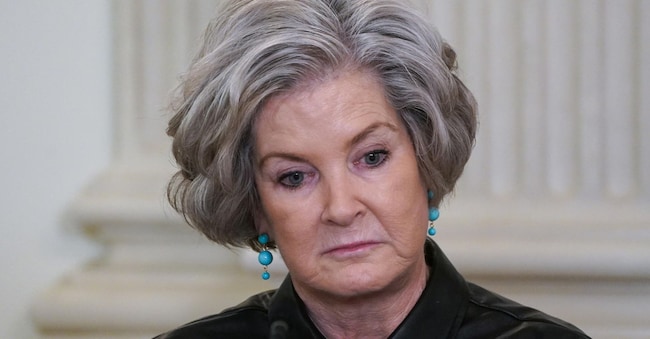
La capa di gabinetto della Casa Bianca Susie Wiles. EPA/WILL OLIVER / POOL POOL

4' min read

Translated by AI
Versione italiana

4' min read

Translated by AI
Versione italiana

President Donald Trump? A "high-functioning alcoholic personality". J.D. Vance? A long-time 'schemer'. These are some of the phrases attributed to Susie Wiles, White House chief of staff, in the profile published by Vanity Fair and based on a series of interviews. Wiles claims, however, that those quotes were taken out of context and inserted into a narrative constructed by omitting relevant passages, while the White House has intervened in her defence. Chris Whipple, author of the article, rejected the accusation and reiterated that the interviews were recorded.

The story stems from a two-part piece published on Tuesday 16 December by Vanity Fair and built on a series of interviews with Wiles conducted over the past year. The political point, even before the individual phrases, is the rarity of the operation: Wiles is described in the chronicles as a figure usually careful not to expose himself, which is precisely why the publication of such direct assessments has sparked alarm and curiosity in Washington.

Loading...

"Alcoholic personality"

The most controversial sentence is the one in which Wiles compares Trump to a 'high-functioning alcoholic' on a personality level, even though he is a notorious teetotaler. In the story, she connects this to her own family history: having had an alcoholic father, the famous commentator Pat Summerall, she would be 'expert' in handling 'big personalities'.

Trump's reaction: "Fantastic"

In the face of the uproar, the president did not publicly question the head of his staff. Interviewed by the New York Post, he said that Wiles "did a fantastic job" and downplayed the idea of an internal crisis, acknowledging that he had a"possessive, dependent-type" temperament, and claiming to have used a similar description of himself in the past.

The raw nerve

In the course of the interviews, Wiles admits that "there may be an element" of retaliation in judicial initiatives against adversaries or figures considered enemies, conceding that from the outside "it may look vindictive". Among the examples cited in the reconstructions is the affair related to former FBI director James Comey and, in another passage, the fraud charges against New York Attorney General Letitia James, which Wiles is said to have pointed to as a case in which the logic of retaliation appears most obvious.

Epstein and Clinton: 'The president was wrong'

Another sensitive point: according to the published story, Wiles says there is no evidence to support Trump's allegation that Bill Clinton visited Jeffrey Epstein's private island, going so far as to acknowledge that on this the president was 'wrong'. It is one of the rare passages in which the chief of staff frontally contradicts a statement by the president on such a sensitive issue.

The stilettos on Vance, Musk, Bondi and Vought

Wiles does not spare the insiders either. He calls J.D. Vance a long-time 'schemer' and suggests that his evolution from Trump critic to ally was 'political'. The vice-president then reacted publicly by downplaying and defending the woman's loyalty. Elon Musk, on the other hand, is a 'weirdo', an 'avowed ketamine user', adding that the Usaid cutback operation had left her 'appalled'. And on the Attorney General Pam Bondi, Wiles claims that he 'completely botched' the handling of the Epstein dossier, talking about binders handed over to conservative influencers 'full of nothing' and the famous 'client list' that, in his version, would not exist at all. Also entering the picture is Russell Vought, listed as co-author of the Project 2025 blueprint and head of the Office of Management and Budget, described by Wiles as a right-wing 'hardliner'.

Deportations, graces and tariffs

The interviews are not just a catalogue of personal judgements. Wiles recounts several times that she was unable to get her recommendations through. On deportations, he says the administration should "look deeper" to avoid mistakes. On pardons, he says he advised Trump not to pardon the most violent perpetrators of the 6 January 2021 assault, to no avail. And on tariffs, he describes a 'huge' rift between advisers and claims to have tried to get relevant announcements postponed.

Venezuela

One of the most sensitive passages concerns Venezuela. Wiles hints that the campaign of attacks against boats, officially presented as anti-drugs, is part of a political pressure to bend Nicolás Maduro, with the idea of "continuing" until he gives in. At the same time, he acknowledges thatany direct military action against Caracas would require a passage with Congress, recalling an institutional limit that contrasts with the image of a president convinced he can do anything.

Morte regista di Harry ti presento Sally, Trump: Rob Reiner era squilibrato ossessionato da me

Why now

The echo in Washington was immediate. Various reports tell of staff and allies being 'in shock', with the story bouncing around in chats and a question being repeated:why would Wiles, considered a prudent strategist accustomed to a low profile, have accepted such wide-ranging and potentially explosive conversations? In the hours that followed, there was talk of possible misunderstandings with the journalist about what was 'on the record', a calculated choice or, on the contrary, a management error.

The White House's countermove and compact defence

Wiles reacted on X accusing Vanity Fair of constructinga "hit piece" (an attack article) with "significant context" ignored to paint a "chaotic and negative" narrative of the administration. Spokeswoman Karoline Leavitt publicly defended her, arguing that Trump has no more loyal adviser and that the entire administration is united in support of the chief of staff.

Making the rift sharper is the journalist's reply. Whipple defended his work by claiming that the interviews were recorded and that the quotations remained in context, pointing out that the harshest reactions would not dispute the facts reported on their merits.

Copyright reserved ©
Loading...

Brand connect

Loading...

Newsletter

Notizie e approfondimenti sugli avvenimenti politici, economici e finanziari.

Iscriviti