
Sustainability and environment, EU agreement on cutting rules: burdens only for large groups
Agreement between Council and Parliament in the name of simplification. Von der Leyen: 'Savings of up to 4.5 billion without giving up our values'

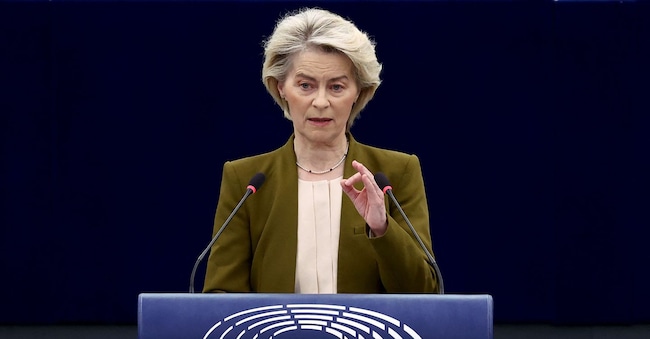
The European Union is set to revise another piece of its climate regulations and scale back the directive on corporate sustainability reporting, freeing more than 80 per cent of the companies that would have been subject to compliance. Environmental, social and governance requirements, which go under the acronym ESG, will also be revised and relaxed.
"Savings of 4.5 billion"
After the negotiating position expressed last month by the Europarliament, with a vote that split and brought the 'Ursula majority' between popular, socialist and liberal parties to the brink of collapse, the dossier returned to the trialogue (the informal negotiation between the institutions) and on the night of Monday 8 to Tuesday 9 December the representatives of the states and parliament reached a new compromise.
The agreement on the so-called Omnibus I simplification package, proposed by the Commission in February, reflects the change of course ratified in the Assembly, thanks to the convergence on the most radical amendments between the EPP and the right-wing and extreme right-wing groups (Patriots, Conservatives and Sovereigntists): yet another episode of rethinking, if not outright abjuration, of the Green Deal. And it will certainly not be the last: in the deregulation effort produced by the Commission, there are at least ten other simplification projects coming up in various fields.
Ursula von der Leyen expressed satisfaction: 'I welcome the political agreement on the Omnibus I simplification package. With savings of up to EUR 4.5 billion it will reduce administrative costs, cut red tape and make compliance with sustainability rules easier". For the Commission President, this will make it 'easier to do business in Europe while remaining true to our values'.
US pressure
Step forward or step back, the revision of the directives comes under strong pressure from the United States, with which the fronts of confrontation have only been adding up since Donald Trump took office in the White House. Yet signals of dissatisfaction immediately came from the other side of the Atlantic. Large US giants operating in the Union remain, in fact, subject to extraterritorial regulations. A spokesman for Exxon Mobil stated that this 'is completely unacceptable and the Trump administration has made it clear that this is not a basis for trade talks. We expect a common sense solution in the near future'.


