

The sustainability of the healthcare system also depends on radiology
Medical imaging now plays a strategic role in the organisation of healthcare: it requires the ability to make the best use of resources, to make the most of expertise and to invest in innovation

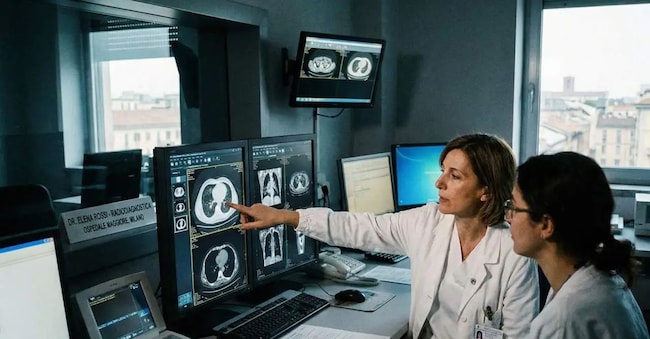
Ensuring high-quality healthcare for an ageing population, with increasingly complex care needs and limited resources, is one of the main challenges facing our country. The solution cannot simply be to increase spending; it must also involve making better use of available resources, harnessing expertise and investing in innovations that deliver tangible benefits. In this context, medical radiology can make a decisive contribution.
This was one of the key messages to emerge from the 52nd National Congress of the Italian Society of Medical and Interventional Radiology (SIRM), which concluded on 8 November at the Allianz MiCo in Milan. Over 8,500 professionals took part in four days of scientific discussion, characterised by a programme of exceptional quality and an extraordinary turnout of young people.
Quality and efficiency in radiology
Medical imaging now plays a strategic role in the organisation of healthcare. Clinical decisions increasingly depend on the availability of accurate and timely information. Detecting a condition at an early stage, selecting the most appropriate treatment and monitoring its effectiveness not only improves patient outcomes but also helps to avoid delays, hospital admissions and unnecessary procedures. The value of radiology cannot therefore be measured solely by the number of examinations carried out, but above all by the contribution it makes to the quality and efficiency of the entire healthcare pathway.
AI that needs to be governed
This role is set to grow in importance thanks to artificial intelligence, one of the key themes of the Congress. New applications are already making it possible to optimise image acquisition and analysis, reduce the time taken for certain examinations and, under specific conditions, limit exposure to radiation. The benefits extend to both the public and the organisation of healthcare services. However, technological innovation must be properly managed: it requires investment, training and a careful evaluation of the results. The aim is not to replace doctors, but to enable them to devote more time to clinical work, complex decision-making and their relationship with patients.
Interventional procedures
Interventional radiology also offers a practical solution to the need to combine quality and sustainability. In selected patients, minimally invasive, image-guided procedures make it possible to treat various conditions with less impact on the body, reducing hospital stays and recovery times in some cases. Oncological applications are a significant example of this development. Radiologists no longer play a role solely in the diagnostic phase, but are directly involved in defining and implementing treatment strategies.

