
Search

Syphilis on the rise in Europe: more cases among young people and less prevention

Lorenzo Giacani, who heads the leading laboratory on the disease in Seattle, takes stock of infections and risks: 'Sex education the first weapon of defence'

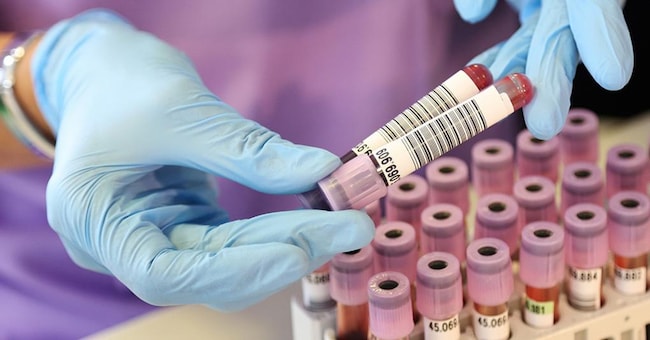
 age fotostock / AGF

4' min read

Translated by AI
Versione italiana

4' min read

Translated by AI
Versione italiana

The danger of the spread of syphilis is also affecting Italia. In a post on Instagram, infectivologist Matteo Bassetti warns of 'a worldwide alarm regarding syphilis'. The alarm at the moment, he denounced, also concerns Italia, where 'there is an impressive increase in cases especially among the youngest, we are also talking about 15-16-17 year-olds'.

Infections recorded in Europe

Data from the European Centre for Disease Prevention and Control (ECDC), updated to 2023, indicate a widespread increase in cases, with Spain and Germany leading in absolute numbers (over 10,000 and 9,000 infections), followed by Italia with 2,538 diagnoses.

Loading...

However, if we look at the incidence on the population, the geography changes: Luxembourg and Malta lead the ranking, while Italia slips to nineteenth place with 4.3 cases per 100,000 inhabitants. A figure that should not, however, reassure. After a phase of relative stability between 2006 and 2015, in fact, infections in our country have been growing steadily again since 2016, interrupted only temporarily by the effects of the pandemic.

Of particular concern is the increase among younger people: in the 15-24 age group, cases have almost doubled in just one year, from 129 to 234. Most of the diagnoses concern men who have sex with men, but the spread also affects the heterosexual population.

The Research Review

From Seattle, the University of Washington researcher from Italy, Lorenzo Giacani, who heads the main laboratory studying syphilis clarifies trends and potential risks.

"We are facing a resurgence of syphilis that does not depend on a change in the virulence of the bacterium or its susceptibility to antibiotics, but more on social and behavioural factors," explains the professor at the University of Washington. Social and sexual networks are now much larger thanks to digital platforms, while there is a reduction in condom use. At the moment, the most critical geographical area in terms of number of cases remains sub-Saharan Africa'.

In the laboratory led by Giacani in Seattle, four researchers, one PhD student and four undergraduate students are working on the study of the biological mechanisms of the disease and the search for a vaccine. The group has achieved results of international significance: among them, the development of a method to genetically manipulate the syphilis pathogen, Treponema pallidum, which has made it possible to create attenuated strains of the bacterium. A discovery that earned the scientist the American Sexually Transmitted Disease Association Achievement Award, one of the most coveted prizes among those who study sexually transmitted diseases.

Another significant contribution of the team concerns the identification of a mechanism by which the bacterium manages to evade the immune system: T. pallidum is able to recruit a human serum protein, Factor H, to its surface, thus facilitating its spread through the blood to the various organs.

Also affecting the growth in cases is a change in risk perception. The greater availability of therapies against HIV and prevention tools such as PrEP has contributed to lowering the threshold of attention towards other sexually transmitted infections, especially those such as syphilis, which are of bacterial origin and treatable with antibiotics. 'Sex has become freer, but not always more aware,' Giacani notes.

Treponema pallidum is a highly infectious micro-organism capable of spreading rapidly in the body. It is mainly transmitted sexually, although non-sexual transmission is possible and documented. In addition, syphilis can be transmitted from mother to foetus during pregnancy, with even very serious consequences for the unborn child.

Early diagnosis is difficult

One of the most insidious aspects of the disease is the difficulty in recognising it. It is no coincidence that it is called 'the great mimic': symptoms can vary greatly and can be confused with other diseases. The first manifestation is often a painless lesion that tends to disappear spontaneously, giving the illusion of healing. In reality, the bacterium has already spread through the body, paving the way for subsequent stages that may involve the skin, nervous system and internal organs.

Yet, if diagnosed early, syphilis is easily curable. 'The reference therapy remains penicillin,' explains Giacani. 'In the early stages, a single administration is often sufficient, while in more advanced cases, longer and more complex treatments are required.

The problem, therefore, is not so much treatment as prevention and early diagnosis. In this sense, the experts indicate a number of priorities: strengthening sex education, expanding access to testing, especially for young people, and counteracting the stigma that still accompanies these infections.

'We need a change of approach,' Giacani concludes. 'We must continue to invest in research, but also and more aggressively in information and accessible services, because syphilis is preventable and curable in all its stages, but the consequences of an untimely diagnosis can be serious and permanent for the individual's health'.

In a context where there is still no effective vaccine, prevention remains the main weapon: condom use, regular testing and increased risk awareness. A commitment that concerns not only health systems, but also society as a whole.

Copyright reserved ©
Loading...

Brand connect

Loading...

Newsletter

Notizie e approfondimenti sugli avvenimenti politici, economici e finanziari.

Iscriviti