

Siracusano: 'Prevention and continuous care against childhood distress'

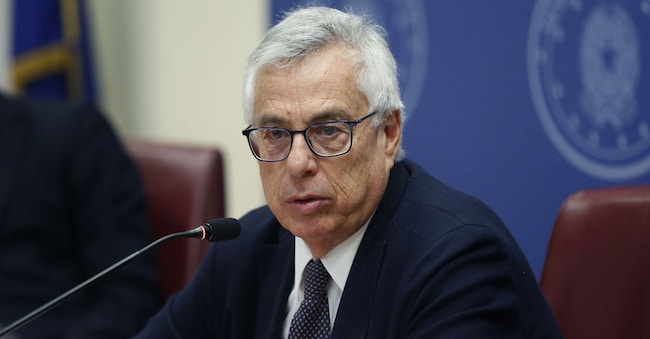
"All the data show us an extremely precocious youth suffering - with as many as six out of ten young people showing clear signs of distress and disorder - that also begins with a very early approach to substances of abuse". Alberto Siracusano, psychiatrist coordinator of the Mental Health table at the Ministry of Health and president of the Higher Health Council, on the new 2024 Report comments in particular on the new generations emergency.
What actions should be envisaged?
A targeted strategy is needed: the number of admissions to the emergency room has grown a lot and this is also why today we need in-patient facilities that are adequate to the demand for treatment of the young population. In the Mental Health Action Plan, the Pansm 2025-2030, we devote ample attention to this issue, especially for the 'transition' period from paediatric to adult age and so as to allow continuity of care, especially for neurodevelopmental disorders, which are the most widespread. Then, there is the great theme of prevention.
How to act in this sense?
From the nursery school onwards, a culture of mental health must be developed, necessary to intercept signs of distress as soon as possible, to be taken care of with a multi-professional approach. A great effort is needed: the spotlight must be turned on right from pregnancy - starting with the mother's possible distress - and from the first years of the child's life.
Let's stick to the alarms of the 2024 Report: is it still the post-Covid effect that is making itself felt or is the picture now consolidated?
It is a phenomenon that Covid has exploded, starting however with a sociological and anthropological change. That includes a determinant such as loneliness, now present in a highly disturbing way at all ages but epidemic in youth. The so-called 'loneliness', in young people, is not a mere sense of loneliness but a not feeling connected with others and with oneself.
Is the current network of facilities able to intercept the new demand for care?
Today the services are insufficient. A change of pace is needed and the National Mental Health Plan proposes this, starting with investment in child neuropsychiatry. Creating integrated pathways - also in the Health Homes - will make it possible to intercept distress at an early stage. More generally, we need to identify sentinel-places, which include schools as well as these socio-sanitary centres on the territory: we need to increase our attention in order to catch both 'psychic' and clinical signals such as gastritis or headaches, which are often somatisations of stress and anxiety.
How much do social media impact?
All the data tell us that the use of devices must be regulated because social media, especially in a condition of loneliness, influence relationships. If, as happens more and more often, artificial intelligence becomes the best friend, replacing empathic, relational and affective relationships, then the anthropological change is alarming.
What do you think of drastic decisions taken in other countries, such as banning smartphones?
Banning has never solved the problems: what is needed is rather a great educational-cultural effort and above all the recovery of values, within a framework of emotional-affective containment that allows us to recover the 'meaning of life'. Without which bewilderment, insecurity and anxiety prevail.
When will the Mental Health Plan come to life?
We are now entering the implementation phase: by the summer the decree for the allocation of funds to the regions will arrive, to be allocated primarily to recruitment and prevention.

