

‘The reconstruction of Syria: a fragmented market in which Italia can bring its pragmatism to bear’
Joseph Bahout analyses the investment landscape in the country following Assad’s fall. “The economy remains influenced by political ties, institutional weakness and regional competition. For Rome, unlike Paris, opportunities will depend on diplomacy, careful risk management and a targeted approach.”

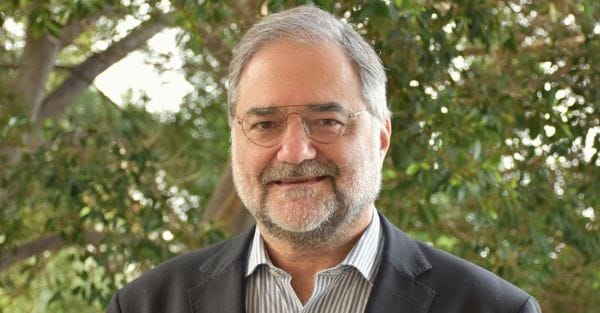
‘Despite the fall of the Assad regime, the relationship between the business world and political power has not disappeared. It is a link that must be understood within its historical context. Since the 1970s, the Syrian business community has been closely linked to the country’s political leadership. The economic liberalisation of the 1990s gave rise to a new class of entrepreneurs close to the regime, whilst Bashar al-Assad’s rise to power further concentrated wealth and influence around figures such as Rami Makhlouf”, explains Professor Joseph Bahout, director of the Issam Fares Institute for Public Policy and International Affairs at the American University of Beirut (AUB), to 24Ore NextMed. A former researcher at the Carnegie Endowment for International Peace in Washington, a lecturer at Sciences Po in Paris and an adviser to the French Ministry of Foreign Affairs, Bahout – whom we met in Beirut – has made a significant contribution to Middle Eastern studies and is the author of numerous publications, as well as a regular commentator in the international media.
Professor, let’s stay on the subject of Syria. How does the new system differ from the previous one?
‘It has not completely severed its ties with the past, but it has different characteristics. Major projects and investments continue to require direct access to the Syrian political leadership. At the same time, a sovereign wealth fund has become one of the main instruments through which the state can finance reconstruction. Its resources include assets confiscated from figures of the previous regime and settlement agreements concluded with businesspeople seeking authorisation to return to Syria. This is not simply a continuation of the clientelist capitalism of the Assad era, nor is it a truly open and competitive market. The country is developing an intermediate model, in which private enterprise exists, but key economic decisions remain influenced by political authority.”
What is the most pressing challenge facing Syria?
‘The most pressing problem is the shortage of capital. Years of war, sanctions and economic decline have left the state with limited resources. International investors, too, are adopting a cautious stance. Saudi investment has so far been limited and subject to political conditions. Qatar has provided financial support to cover public sector wages, whilst the United Arab Emirates has expressed interest in major projects, particularly in the property sector. The banking sector presents a further obstacle. Syrian banks are not yet operating at a level capable of supporting large-scale reconstruction, international payments or normal commercial lending activities. More generally, the country’s administrative capacity has been severely compromised. Ministries, courts and public bodies have lost staff and expertise. Some officials have been removed due to their links with the previous regime, whilst many qualified Syrians remain abroad because they do not yet feel confident enough to return. For foreign companies, these weaknesses raise practical questions. Who has the legal authority to approve a project? Which court will ensure that a contract is enforced? How can ownership of a property be verified? How can profits be transferred out of the country? Until these issues are addressed, Syria will struggle to become a predictable business environment.”

