
Table grapes: a new export record (nearing one billion) and rising domestic sales
The figures presented by Ismea at the Regina di Puglia event confirm the widespread appreciation for Italian table grapes

Key points
Sales of Italian table grapes are on the rise. In the first six months of 2026, domestic purchases rose by 24 per cent in volume and 18 per cent in value, whilst exports in 2025 increased by 16 per cent in volume (437,000 tonnes) and 8.5 per cent in value (€973 million). The figures presented by Ismea at the ‘Regina di Puglia’ event confirm the global appreciation for Italian table grapes, which have managed to increase their international turnover by 31% over a five-year period, bringing their share of the total to 61%, despite a concurrent 6.3 per cent decline in the volume exported.
Production in good shape (and 2% imports)
Last year the production of Italian-grown table grapes reached 978,000 tonnes and the total supply exceeded one million tonnes thanks to imported grapes (2 per cent of the total), which are increasing year on year, as they make it possible to extend shelf life and to purchase grapes even out of season.
The domestic retail sector accounts for 37 per cent of the grapes available in Italia, whilst foreign markets purchase 44 per cent (the remainder goes to the processing industry). The main buyers are European countries, with Germany and France alone accounting for half of Italian exports. However, in light of the new international geopolitical landscape – which has led to the closure of the important Russian market and logistical challenges in global markets – Italian producers are expanding their reach and aiming to win over consumers in central and northern Europe and the Middle East as well.
Seedless varieties continue to expand
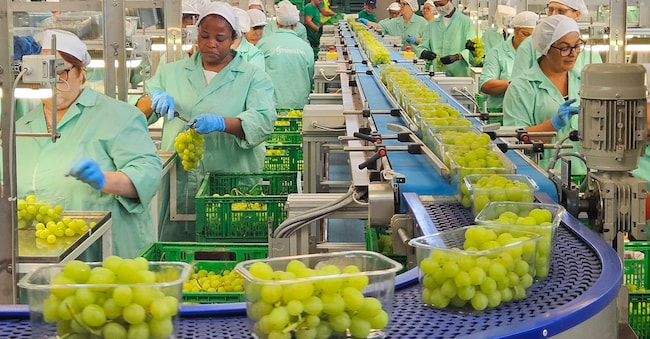
The market is being driven by seedless grapes, which have made it possible to reach a wider audience. This is confirmed by an analysis of household purchases in Italia, which are shifting towards packaged grapes, mostly seedless (+5.2%), and increasing in frequency (+1.1%). Compared with other fruit and vegetables, table grapes have a loyal consumer base, particularly among households with children under 16 (Generation Alpha), who are the biggest spenders and have increased their purchases by 35% over the past two years.
Thanks to constant innovation in grape varieties, seedless grapes have also made it possible to extend the marketing calendar, adapt to climate change and command higher prices, particularly abroad, whilst continuing to increase turnover despite the decline in export volumes.

