

‘Taiwan and Europe are united by the right and the desire to share technology amongst democracies’
Following China’s reaction to Taiwan’s vice-president attending the European conference in Ventotene and the EU Commission’s removal of the logo, Hsiao Bi-Khim stated: “Our government reaffirms its commitment to peace, but also to investment in defence.” And ahead of Xi’s visit to the US, she added: “The United States remains Taiwan’s most important security partner. And the island will continue to contribute to the semiconductor supply chain for the EU, Japan and partners who share the same values.”

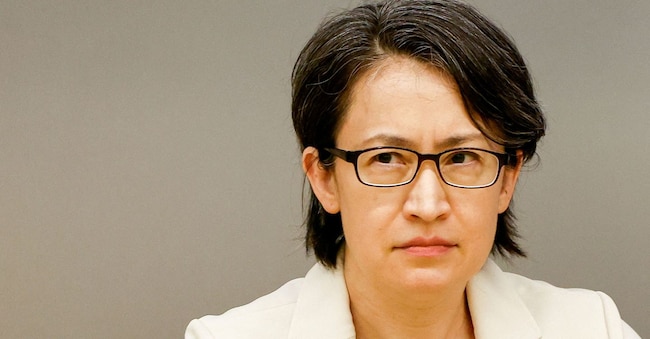
A twenty-seven-hour journey, characterised initially by absolute secrecy and extensive security measures, and subsequently by fierce diplomatic protests led by Beijing at the highest institutional levels: when, on the evening of Friday 11 September, the Vice-President of Taiwan Hsiao Bi-khim took to the stage at the Second Ventotene European Conference on Freedom and Democracy at the invitation of the Vice-President of the European Parliament, Pina Picierno, the controversy surrounding her first European trip was already making headlines around the world. And to illustrate just how crucial Taiwan is, shortly afterwards – according to reports from the Japanese news agency Kyodo – China even threatened to cancel Xi Jinping’s trip to Washington, scheduled for 24 September, should the United States proceed with further military supplies to the island. Whilst the Taiwanese state aircraft was flying to Italia along a secret route, China expressed its opposition in the strongest possible terms: ‘We have lodged solemn protests with Italy and the European Union over this trip,’ said the spokesperson for the Foreign Ministry in Beijing, Mao Ning. “The authorities of the Democratic Progressive Party and certain politicians among them certainly spare no effort in attempting to attract attention wherever they go. This sort of behaviour is deplorable and, ultimately, entirely pointless.” The response came shortly afterwards: “The European Parliament and our free and democratic institutions do not allow their agenda to be dictated by either Beijing or Moscow. Ventotene is a place of freedom, debate and democracy,” said Vice-President Picierno, also taking issue with the European Commission, which withdrew its logo from the event following Chinese protests. Tensions surrounding the Taiwan issue are nothing new, but there has been a steady increase over recent months: in December, for example, China carried out its largest-ever military exercises around the island, complete with a simulation of a total blockade, and the firing of live missiles into the border waters has now become routine. Beijing, as is well known, regards Taiwan as a ‘rebel province’ to be brought back under Chinese control ‘by any means necessary’, and opposes any overseas travel by Taiwanese politicians, whom it considers to lack any legitimacy. Although Taiwanese officials periodically visit European countries that do not recognise the island for informal consultations, an official visit such as that of Hsiao and a meeting with a European institution such as Picierno constitutes a serious offence to the Chinese Communist Party.
The ‘next Ukraine’?
And yet, when Hsiao takes to the stage at the Ventotene conference, he has the composed air of someone accustomed to navigating tensions for decades. Fifty-five years old and slender, she answers questions in a firm voice, first drawing the now-worn comparison between what has happened in Ukraine and what might happen in Taiwan in the future, in the event of a Chinese invasion: ‘The situation in Ukraine serves as a very painful warning for us,’ says the vice-president. ‘It reminds us that we must do more to ensure that Taiwan does not become the next Ukraine. For us, war is not an option; we must do more to ensure that peace prevails.’ Hsiao explains that to guarantee peace, the Taiwanese government, led by the Democratic Progressive Party, has established four pillars: “The first is to increase and expand our defence capabilities. The second is to continue strengthening our economic position, including maintaining an indispensable role in global technological development. The third involves pursuing partnerships capable both of maintaining a peaceful and stable status quo, such as the current one, and of preventing unilateral overturns of the status quo through force and coercion.” On the fourth point, she is very explicit: “In our relations with the other side of the Strait, we maintain a principled stance, namely that we will not engage in provocation, but at the same time we will not bow to pressure aimed at altering our freedoms and our way of life.” “As a government, we have a responsibility to preserve, protect and defend our democracy.”
The Trump-Xi summit
Taiwan has historically been linked to the United States through the Taiwan Relations Act, under which the US – whilst not directly recognising the island’s independence – maintains economic relations with Taiwan, reserving the right to provide military supplies and also maintaining strategic ambiguity regarding potential intervention in the event of aggression. But whilst this ambiguity has served as a deterrent, the erratic behaviour of Donald Trump cannot help but raise some doubts: on 24 September, Chinese President Xi Jinping is due to fly to Washington for a summit with the US President, and the island of Taiwan will be one of the key topics, provided that a new supply of US military equipment does not provoke Chinese retaliation and the cancellation of the summit. Taiwan, as is well known, has managed to establish itself as of fundamental strategic importance, not only because of its geographical position but, above all, because of its place at the heart of the global technology supply chain, where ‘the rebel island’ produces over 60 per cent of the world’s semiconductors and over 90 per cent of the most advanced ones, making its contribution indispensable to all the technologies we use every day and, of course, to the race towards Artificial Intelligence. “We have been through a very intense period of renegotiating agreements with the United States on tariffs, trade and also investment. But thanks to our negotiators, who were very determined and tenacious, we have reached an agreement that is acceptable to both us and the United States. And we will continue to do so, to expand economic and technological cooperation’, says Hsiao.
The Vice-President has no doubts about the importance of US strategic and military support: ‘The United States continues to be Taiwan’s most important security partner. This is a partnership that has lasted for decades. The United States expects Taiwan, as well as other countries in the Indo-Pacific, and – I believe – also in Europe, to take on greater responsibilities in the field of defence. We believe these are legitimate expectations, because we are the ones with the greatest stake in our own security and the defence of our democracy, and we also share a common interest with others in the region in ensuring that stability is maintained.’ But Hsiao knows that her island plays a vital role in global technological development, and she has no intention of downplaying this in negotiations with the US: “The agreements reached stipulate that Taiwan will continue to contribute to the global supply chain in the technology and semiconductor industries, and as it expands its presence, the United States will be an important destination for these products, as will Europe, Japan and other partners who share the same values, so that together we can build stronger and more resilient ecosystems.”
The role of Europe
According to Hsiao Bi-Khim, Taiwan and Europe share a number of common interests: ‘We have a common interest in ensuring that differences are resolved peacefully. We have a common interest in ensuring that democratic aspirations are respected and that larger countries do not decide the future of smaller countries through coercion and threats. Whether it is Ventotene or Taiwan, I believe that no island is too small to make its voice heard, and that no island or society is too small to deserve respect’. “That is why it is so important for Taiwan to be part of this conference: looking to the future, Taiwan and Europe are working together to defend the values we hold dear,” concluded the Vice-President of Taiwan. At the end of the Ventotene Conference, with the Taiwanese delegation’s flight already having departed and the Vice-President of the European Parliament having received an official invitation to the island, the controversy surrounding the meeting is far from over. “We are seeing a Europe that is not rising to the challenge of our times,” said Picierno regarding the withdrawal of the Commission’s logo following Chinese protests. “This is why, on Monday, I will table a question to the President Ursula von der Leyen, to find out the reasons behind this decision.”

